Why high-hydration sourdough needs stretch-and-fold, not more flour
Wet dough is not failing dough. At 75 percent hydration and up, stretch-and-folds build the structure that more flour and harder kneading usually ruin.
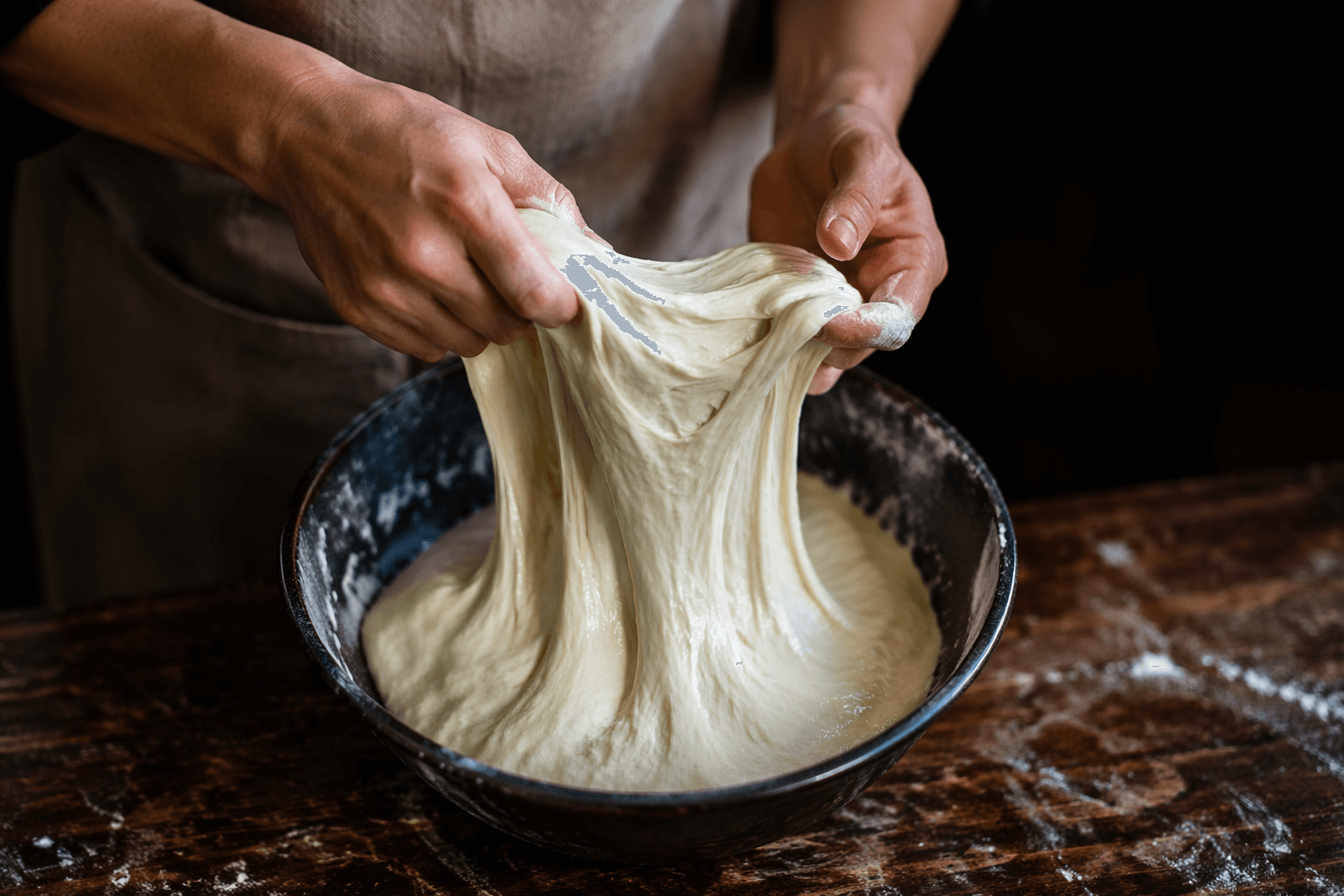
At 75 percent hydration and especially above 80 percent, a sourdough can feel sticky, slack, and hard to shape and still bake into the light, open loaf you wanted all along. When a dough feels sticky, slack, and hard to shape, the instinct is to dust in flour or knead harder. At 75 percent hydration and especially above 80 percent, that usually fights the very looseness that gives a loaf its open crumb.
Why wet dough behaves differently
Slack dough resists kneading, clings to your hands, and slumps before it ever looks polished. King Arthur Baking treats that behavior as a handling problem, not a dough failure, and the same logic shows up in the breads bakers love for their irregular holes, from ciabatta to pane toscano. Those loaves are not accidental; they rely on water staying available inside the dough long enough for fermentation to do the real lifting.
The shift is mental as much as technical. High hydration is not asking you to tame the dough into a tight ball, because that tightness can work against an open crumb. Instead, the dough needs time, careful folding, and a fermentation window that lets structure build without squeezing the gas out.
What stretch-and-fold actually does
The core move is simple: every 30 minutes during bulk fermentation, wet one hand, stretch one side of the dough up and over itself, rotate the bowl, and repeat. The goal is not friction-based strengthening, the way heavy kneading tries to work the dough into shape. It is organization, helping the gluten network align as it develops.
The Perfect Loaf uses stretch-and-folds during bulk fermentation to strengthen dough, equalize temperature, trap a little air, and keep development going when the dough has not been fully mixed or kneaded. For dough at 80 percent hydration, that matters even more, because shaping becomes very difficult once you move beyond that point. In Maurizio Leo’s ciabatta work, restrained handling produces a loaf that comes out soft, incredibly open, and light in hand.
How to read the dough after each fold
After the first fold, expect a dough that still looks loose and a little shaggy, but less like a puddle. It should stretch without tearing immediately, then settle back into the bowl with a bit more body than it had before. If it still feels impossible, that is normal at this stage, not a cue to add flour.
By the second and third folds, the dough should begin to show quiet signs of structure. It often looks smoother on top, holds itself together a little better at the edges, and feels more elastic when you lift a side. What you are looking for is not stiffness, but cohesion: a dough that is still soft and wet, yet no longer collapsing the moment you let go.
That is also the point where restraint matters most. If you keep forcing folds long after the dough has started to strengthen, you can knock out the gas that fermentation has built.
When to rest, and when to stop chasing tightness
The Delicious recipe runs bulk fermentation for four to six hours, and that long stretch is part of the point. A high-hydration dough needs time to develop, and the regular 30-minute folds give you checkpoints without turning the process into a battle. There is no single trick that creates an open crumb, because the result comes from several steps across the whole bread-making process.
That is why flouring away the slackness often backfires. Adding too much flour can stiffen the dough before it has fermented enough to build internal lift, and aggressive kneading can tear the delicate network that folding is helping organize. If you are working with an ultra-high-hydration dough, even a nearly two-day timeline for a whole-wheat sourdough can be part of the recipe, not a sign that anything is wrong.
Hydration, flour strength, and the shape of the crumb
Hydration is one of the biggest reasons sourdough loaves behave unpredictably. Higher hydration is commonly linked with a more open crumb and a flatter loaf, while lower hydration tends to produce a finer crumb and a more upright shape. A long-running hydration experiment comparing 66 percent, 69 percent, 73 percent, and 76 percent showed clear effects on both loaf structure and crumb, which is exactly why water percentage is such a powerful lever.
Flour choice matters too. King Arthur Baking typically works with flour in the 11 percent to 13 percent protein range for open-crumb bread, and it cites its all-purpose flour at 11.7 percent protein and bread flour at 12.7 percent. That range gives you enough strength to hold fermentation gases while still letting the dough stay supple enough for an open interior.
The mistakes that flatten the crumb
The most common error is trying to make wet dough feel like low-hydration dough. More flour, harder kneading, and overly aggressive shaping can all squeeze out the loft that the dough is trying to create on its own. Another mistake is treating the dough like a single-variable puzzle, when the better crumb comes from the combination of hydration, folding, fermentation, proofing, and flour strength.
The better habit is to watch the dough, not the clock alone. If it is gradually becoming smoother, more cohesive, and slightly more elastic after each fold, you are on the right track. If you keep chasing a firm, dry, easy-to-handle mass, you will usually end up with the opposite of the dramatic oven spring you were trying to earn.
This article was produced by Prism’s automated news system from verified source data, official records, and press releases, then run through automated quality and moderation checks before publishing. The system is built and supervised by the people who set the standards it runs under. Read our full AI policy.
Did this article answer your question?