Why sourdough may be easier to digest than regular bread
Sourdough can be gentler on digestion, but the benefit depends on fermentation, ingredients, and portion size. It is not a free pass for celiac disease or oversized servings.
What “easier to digest” really means
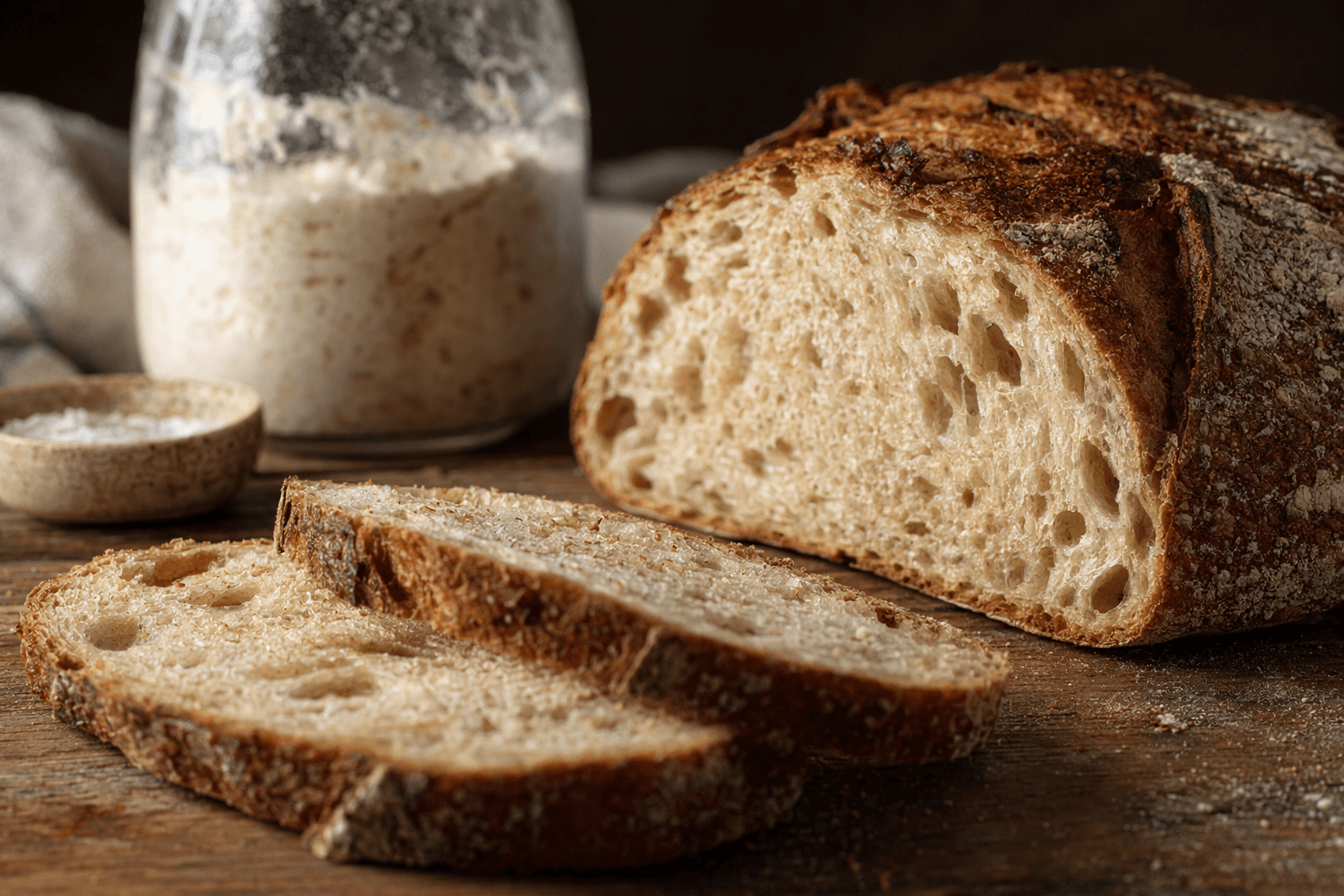
Sourdough earns its reputation because the dough does some of the work before it ever reaches your plate. During slow fermentation, the starter and its microbes partially break down gluten and starches, which can make the finished bread feel gentler on digestion for some people. That is the core idea behind the buzz: not that sourdough is magic, but that time and fermentation change the bread in ways your gut may notice.
That said, “easier to digest” is not the same as “easy for everyone.” Some people notice less heaviness after eating sourdough than after conventional yeast-risen bread, while others do not feel much difference at all. The best way to think about it is as a possible edge, not a guarantee.
Who is most likely to notice a difference
People with mild sensitivity to certain breads are the most likely to notice sourdough’s benefits. The fermentation process can soften the impact of starches, which is why some diners report steadier blood sugar or less post-meal sluggishness. It may also improve nutrient absorption by making minerals more available and proteins somewhat easier to digest.
The catch is that individual response varies. A 2017 Cell Metabolism paper found that bread response can be person-specific and tied to the microbiome, and it did not find universal benefits from artisanal sourdough over industrial white bread. In plain terms: your friend’s gut win is not automatically your gut win, and that is normal.
What the research says, and what it does not say
The evidence base is encouraging, but it is still modest. A 2022 systematic review in Advances in Nutrition looked at 25 clinical trials involving 542 participants and found sourdough may help with glycemic response and gastrointestinal immune response. Another systematic review through June 2021 included 18 studies on sourdough bread, glycemic control, and satiety. A 2021 study in Foods looked at eight sourdough breads and found that, under certain fermentation conditions, sourdough could reduce estimated glycemic index and in vitro starch digestibility.
There are also fresh studies still underway. A 2024 clinical trial in people with metabolic syndrome and a 2026 registered crossover trial in adults with prediabetes show the question is still active, not settled. The most honest reading is this: sourdough can move the needle, but the size of the effect depends on the bread, the fermentation, and the person eating it.
What fermentation changes in the loaf
If you want the practical version, fermentation time matters. Longer fermentation gives enzymes and bacteria more time to act on the dough, which can change how starch behaves and how much gluten remains partially broken down. That is one reason a slow-fermented loaf may feel different from a quick bread that simply borrows the sourdough label.
Ingredients matter too. A true sourdough made with wheat flour is still a wheat bread, and wheat flour itself brings gluten and starch to the table. If you are comparing loaves, look beyond the word “sourdough” and ask how long the dough fermented, what flour blend was used, and whether the loaf includes seeds, whole grains, or added sugar.
Portion size changes the health picture fast
Sourdough’s health halo can make it feel like a blank check. It is not. Even if fermentation lowers the glycemic response, a large serving can still push blood sugar higher than a smaller one, especially if the bread is eaten on its own.
A more realistic way to use sourdough is to treat it as one part of a balanced plate. One or two slices with eggs, yogurt, beans, fish, nut butter, or vegetables usually plays very differently in the body than a thick stack of toast eaten alone. If you want the benefits to translate into real-world eating, the serving size matters as much as the starter.
A simple way to think about your own tolerance
You do not need a lab to figure out whether sourdough suits you. Start by comparing a familiar serving, such as one slice at breakfast or half a sandwich at lunch, and notice how you feel over the next few hours. People who are sensitive to heavier breads sometimes report less bloating or a steadier energy curve with a properly fermented sourdough loaf.
If you are tracking blood sugar, the most useful comparison is not bread versus no bread. It is sourdough versus the regular bread you already eat, with the same portion size and the same meal context. That is where the real differences show up.
When sourdough is not the right bread
This is the part that needs to stay blunt: traditional sourdough is not gluten-free. The U.S. Food and Drug Administration says foods labeled gluten-free must contain less than 20 parts per million of gluten, and foods made from wheat, rye, barley, or their derivatives generally cannot carry that claim unless they meet that standard. The Celiac Disease Foundation is equally clear that traditional sourdough made from wheat flour is not safe for people with celiac disease.
That means the word “sourdough” does not cancel out gluten. If you have celiac disease or severe gluten sensitivity, you still need bread specifically labeled gluten-free. No amount of fermentation turns a wheat loaf into a safe substitute.
The takeaway for everyday bakers and eaters
Sourdough may be easier to digest because fermentation partially breaks down gluten and starches before you eat it. That can mean a gentler feel for some people, a lower glycemic response in some studies, and possibly better mineral availability. But the size of the benefit depends on fermentation length, loaf ingredients, and your own body.
For most home bakers, the most useful rule is simple: choose a well-fermented loaf, pay attention to portions, and pair bread with a balanced meal. For anyone who must avoid gluten, sourdough is still just bread unless it is specifically labeled gluten-free.
This article was produced by Prism’s automated news system from verified source data, official records, and press releases, then run through automated quality and moderation checks before publishing. The system is built and supervised by the people who set the standards it runs under. Read our full AI policy.
Did this article answer your question?