Why the Float Test Fails and Five Better Sourdough Starter Readiness Signs
The float test sends bakers to the oven with starters that are spent or simply misread. Five measurable, repeatable signs do the job with far less guesswork.
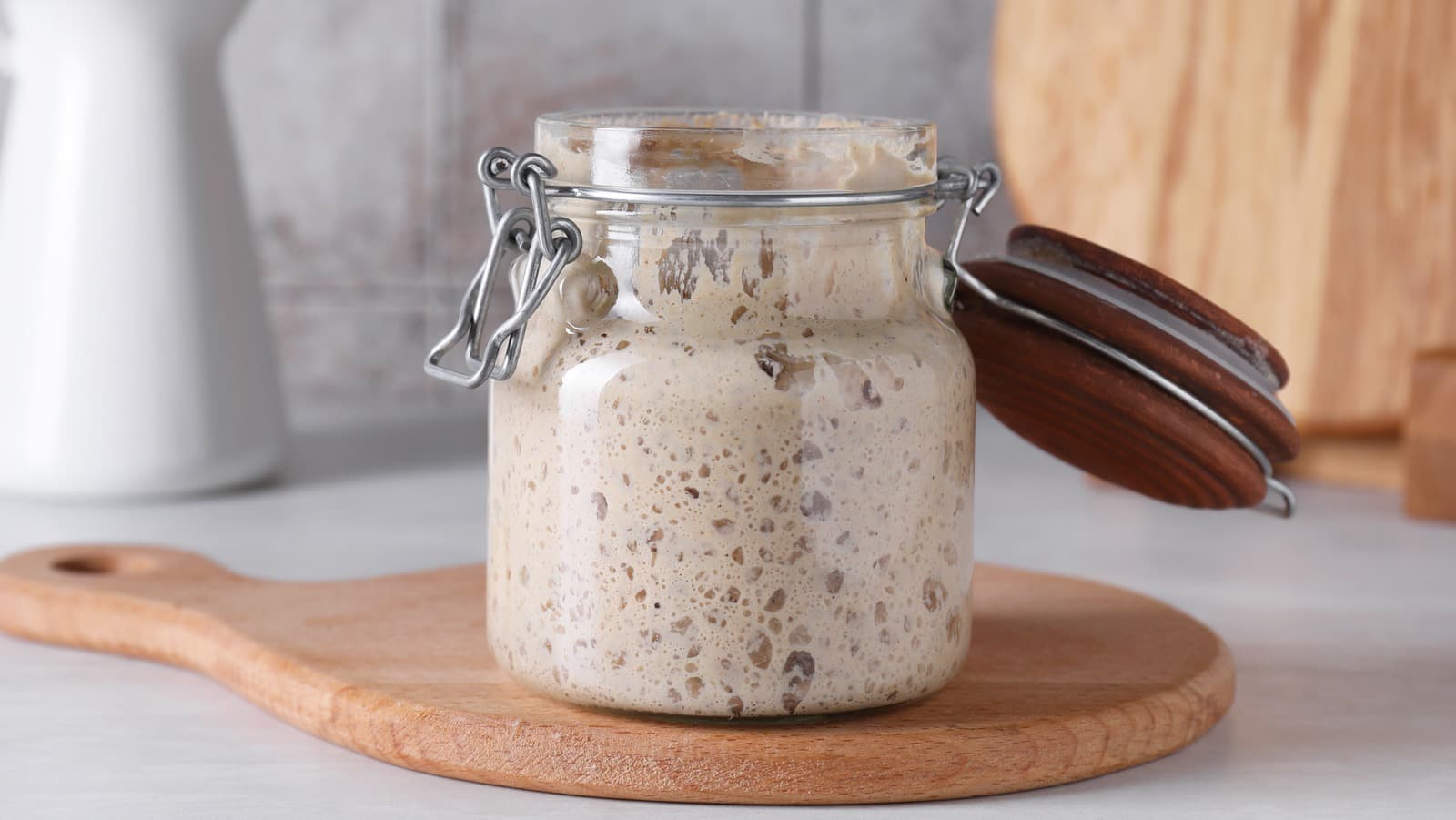
The starter sitting on your counter right now might be giving you false confidence. Drop a spoonful into a glass of water, watch it bob to the surface, and most beginner guides will tell you to start mixing. That buoyant little blob has become one of home baking's most trusted gatekeepers, and it is also one of the most unreliable ones.
The float test works on sound physics: an active starter produces carbon dioxide, those bubbles get trapped in the gluten network formed by flour and water, and the whole mass becomes less dense than water. But both partially risen yeast dough and growing starter that is not yet ripe will float in water. The test cannot distinguish between a starter on its way up and one that has already peaked and crashed. Worse, if your starter is past its peak but still viable, you get a false negative; if the starter was stirred prior to performing the test, or you have not fed it beforehand, those results also skew unreliably. And for high-hydration starters specifically, a looser gluten structure means less gas is trapped in the web, so the starter can sink even when yeast populations are near maximum activity.
The fix is not a better single-moment test. It is a fundamental shift in what you treat as evidence.
Sign 1: Predictable Doubling in a Known Window
Volume doubling is not a binary event you observe once and move on from; it is a pattern you train yourself to read across time. The practical benchmark is consistent doubling within a 4 to 8 hour window when the starter is fed at a 1:1:1 ratio (one part starter to one part flour to one part water, by weight) at a room temperature of 70 to 75 degrees Fahrenheit. A perfectly ripe starter is very bubbly and reliably doubles in size within 6 to 8 hours of feeding.
The operational method is simple: use a straight-sided jar, mark the level right after each feeding with a strip of tape, and check it hourly. The critical number is three. Three consecutive feedings with a predictable doubling window under the same temperature and ratio conditions is the real signal of starter readiness, replacing the single spoonful dropped in water. One strong rise can be a good day. Three in a row is a stable ecosystem.
Sign 2: Peak-and-Fall Behavior
A starter at full activity does not just rise; it rises to a defined dome, holds briefly at that apex of maximum CO2 production, and then collapses back down as the available sugars are exhausted. Signs of a starter at peak include a domed top, maximum internal bubbles, and a slight jiggle when shaken; after peak, the starter collapses and becomes more acidic, and using it at peak gives the strongest oven spring.
This arc matters enormously to your finished loaf. Catching your starter at or just before that dome is when you have maximum leavening power available for your dough. A starter that shoots up and falls back within two hours at room temperature, or one that never achieves a clear dome, is telling you something about your feeding ratio or temperature that deserves attention before bake day. The tape-marked jar turns this from a guessing game into something you can actually observe and document.
Sign 3: Aroma and Acidity as a Health Signal
Smell the jar after each feeding cycle. A healthy, ready starter near peak activity carries a clean, mildly sweet and slightly tangy aroma, the pleasant sourness of a well-balanced fermentation where lactic acid bacteria are producing organic acids alongside the yeast's CO2 contribution. What you do not want to detect is a sharp acetone or nail-polish-remover note.
The acetone smell is fine in the sense that it just means the starter is more sour and hungry. It signals that the yeast has burned through available food and acetic acid production has overtaken lactic acid fermentation, not that the starter is contaminated or ruined. Adjusting the feeding cadence, or feeding more frequently with cooler water, resolves the smell within a cycle or two. Actual contamination looks different: pink or orange streaks, fuzzy surface mold, or a genuinely putrid odor rather than a sharp, acidy one. Knowing this distinction saves starters that bakers abandon prematurely every day.

Sign 4: Bubble Structure Throughout the Mass
Surface foam is easy to spot and easy to misread. What you are actually looking for is a network of bubbles distributed through the entire body of the starter, visible from the side of a clear glass jar. Lots of small bubbles throughout the starter and a foamy surface indicate active fermentation and enough gas production. A weak starter may bubble but collapse quickly, which is exactly the situation the float test cannot catch: the bubbles are there, the structure to sustain them is not.
Vibrant starters have big bubbles and sweet or sour tastes and aromas resulting from fermentation. A mature, ready starter in a clear jar looks almost sponge-like in cross-section when held up to light: airy, webbed, and consistent from top to bottom. This internal structure reflects the yeast population density and gas retention ability that your dough needs. Surface-only activity, with a flat or unbubbly interior, suggests the microbial balance is still developing and the starter needs more time and more feedings before it will reliably lift a loaf.
Sign 5: Consistent Post-Feed Performance Across Three Cycles
Bakers traditionally determine a starter's maturity by assessing its sensory characteristics, including visual appearance and flavors; in scientific research, starter maturity is assessed via the stability of the starter's pH, rise, or microbiota, in which certain species of bacteria and yeasts consistently appear at certain times. What this means in practical terms for a home baker is that your goal is reproducibility, not a single passing grade.
A sourdough starter is a living ecosystem of wild yeasts and lactic acid bacteria. "Ready" means yeast populations are near peak activity and capable of providing consistent lift, not that they happened to produce enough gas for one spoonful to float at 8 a.m. on a Tuesday. Keeping a brief log of feeding time, ambient temperature, and the window in which the starter doubles takes under a minute per entry and gives you the three-feeding pattern data you actually need. Three cycles of consistent peak-and-fall behavior, predictable doubling windows, clean aroma, and distributed bubble structure: that is a starter you can bake with confidence.
The Ready-to-Bake Checklist (screenshot this before your next bake)
Your starter is ready when all five of these are true:
- It has doubled in volume within a consistent window (target 4-8 hours at 70-75°F on a 1:1:1 feed) for three consecutive feedings
- It has reached a clear domed peak and then begun to fall, showing a defined rise-and-drop arc
- It smells pleasantly sour or mildly yeasty, with no sharp acetone note (if you smell acetone, feed it; don't discard it)
- Bubbles are distributed throughout the entire mass, not just clustered at the surface
- The behavior above has been consistent across the last three feeding cycles under the same temperature and ratio
If even one item is missing, keep feeding. The loaf is not going anywhere.
The float test will not disappear from beginner tutorials anytime soon, and it is not entirely without value as a rough first-pass check. But it was never designed for high-hydration starters, it cannot distinguish a rising starter from a spent one, and it rewards a single moment of buoyancy rather than the repeatable, measurable fermentation performance that actually predicts a good bake. The bakers who stop chasing the float and start tracking the pattern almost universally report fewer failed loaves and a much clearer intuition for when their starter is genuinely alive and ready. That intuition is not magic; it is just observation, applied consistently, over three days instead of three seconds.
This article was produced by Prism’s automated news system from verified source data, official records, and press releases, then run through automated quality and moderation checks before publishing. The system is built and supervised by the people who set the standards it runs under. Read our full AI policy.
Did this article answer your question?