Why Your Sourdough Fails, and How to Fix Common Problems
Most sourdough failures come down to a few readable clues: starter strength, fermentation timing, and temperature. Learn the symptom, change the process, and the next loaf gets better.
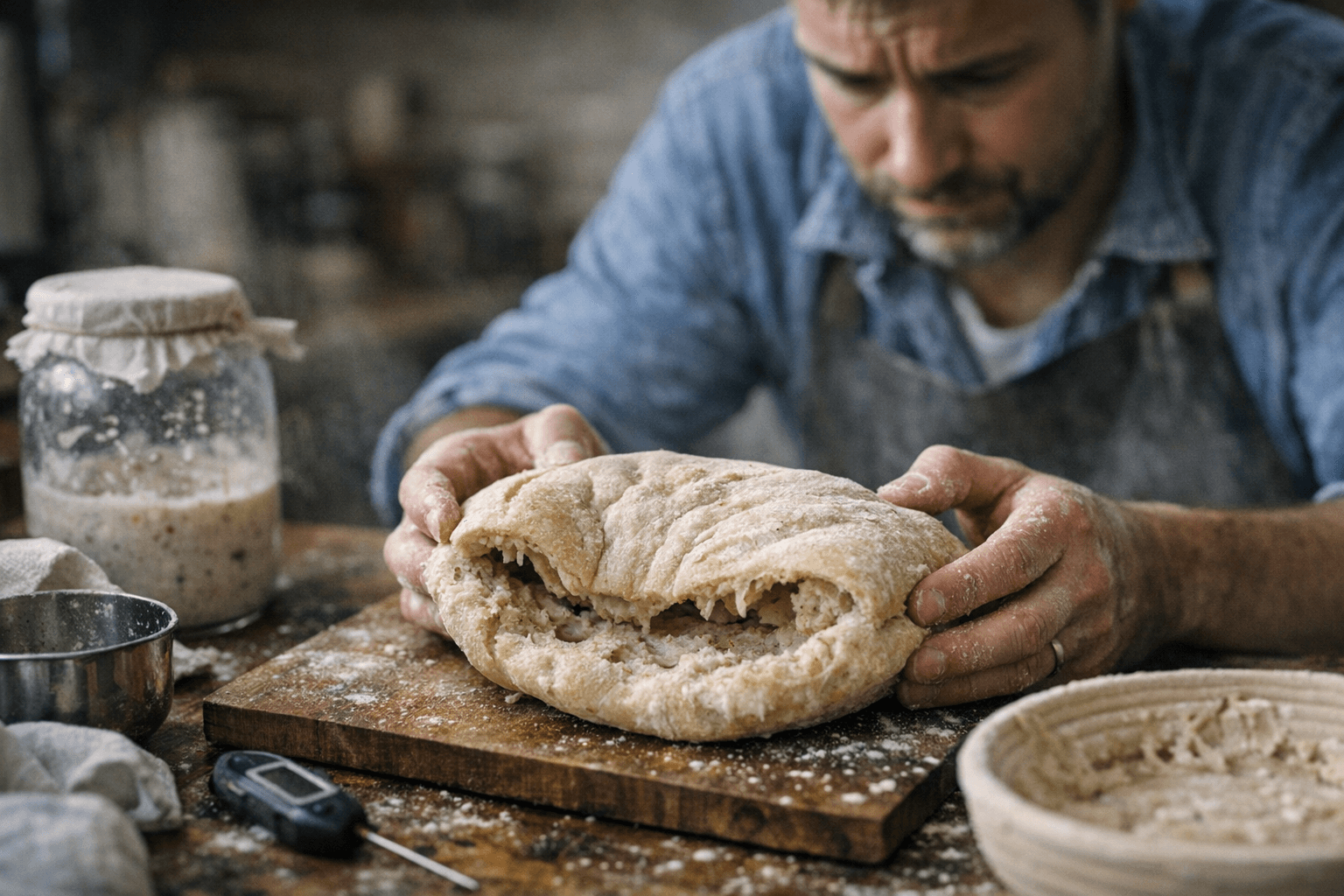
The fastest way to save a sourdough loaf is to stop treating it like a mystery. Amy Coyne, who has baked sourdough since 2013, still adjusts and troubleshoots her dough often, and that is the useful truth hiding behind every misshapen boule: this bread is meant to be observed, not obeyed blindly. King Arthur Baking says sourdough questions are among the most common calls on its Baker’s Hotline, which explains why so many bakers keep running into the same frustrations, from a loaf that spreads like pancake batter to a starter that seems to have gone silent.
When the starter is the weak link
If your dough never really gets moving, start with the starter before you blame the flour, the shaping, or the oven. A fully developed starter is, in King Arthur’s words, “really pretty darn hard to kill,” but that does not mean it is always ready to bake with. A refrigerated starter is ready for use or storage when it becomes bubbly and expanded within 12 hours after feeding, and that is the first checkpoint to watch if your loaves keep coming out flat or heavy.
A weak starter usually shows up long before the loaf hits the oven. If it is sluggish, your dough may stay dense because fermentation never built enough gas or strength in the first place, and University of Minnesota Extension adds another useful marker: a well-fermented starter should have a pH of 4.6 or lower. That gives you a more measurable way to think about readiness, especially if your starter looks active but still seems to underperform.
Dense crumb, heavy loaf, flat shape
Dense bread usually means the dough did not ferment long enough, or it fermented unevenly and lost structure before baking. In the sourdough world, that can point to underproofing, overproofing, weak gluten development, or a starter that never got strong enough to lift the dough properly. If the loaf is heavy and tight, the answer is rarely “more force”; it is usually “better timing and stronger fermentation.”
A flat or spread-out loaf often tells a different version of the same story. The dough may have been left too long, the structure may have weakened, or the starter may not have been able to create enough lift to hold shape. The fix is not to guess harder next time; it is to watch whether the dough has actually grown, relaxed, and gained enough strength during proofing to support itself.
Sticky dough and the gluten problem
Sticky dough can make you feel like you have failed before the bake even begins, but it usually signals a process issue, not a lost batch. Weak gluten development leaves dough slack and hard to handle, which can happen if the dough has not been mixed or folded enough, or if fermentation has outrun the structure. When the dough feels sticky and unruly, the real question is whether it has built the network it needs to trap gas and hold shape.
Temperature matters here too. Dough that is too warm can loosen quickly and become difficult to work with, while dough that is too cold may feel tight and underactive. If you are trying to force a schedule that ignores your kitchen, the dough will tell on you fast, usually through stickiness, poor handling, or a loaf that refuses to hold form.
Poor rise and no oven spring
Proofing is the stage where the dough ferments, yeast consumes sugars and starches, carbon dioxide expands the dough, and the loaf typically doubles or nearly doubles in size. King Arthur says first rise, or bulk fermentation, often takes about 1 to 2 hours depending on the dough and environment, which is why a clock alone cannot tell you whether your dough is ready. If you bake too early, the loaf may stay dense; if you wait too long, the structure can collapse before it reaches the oven.
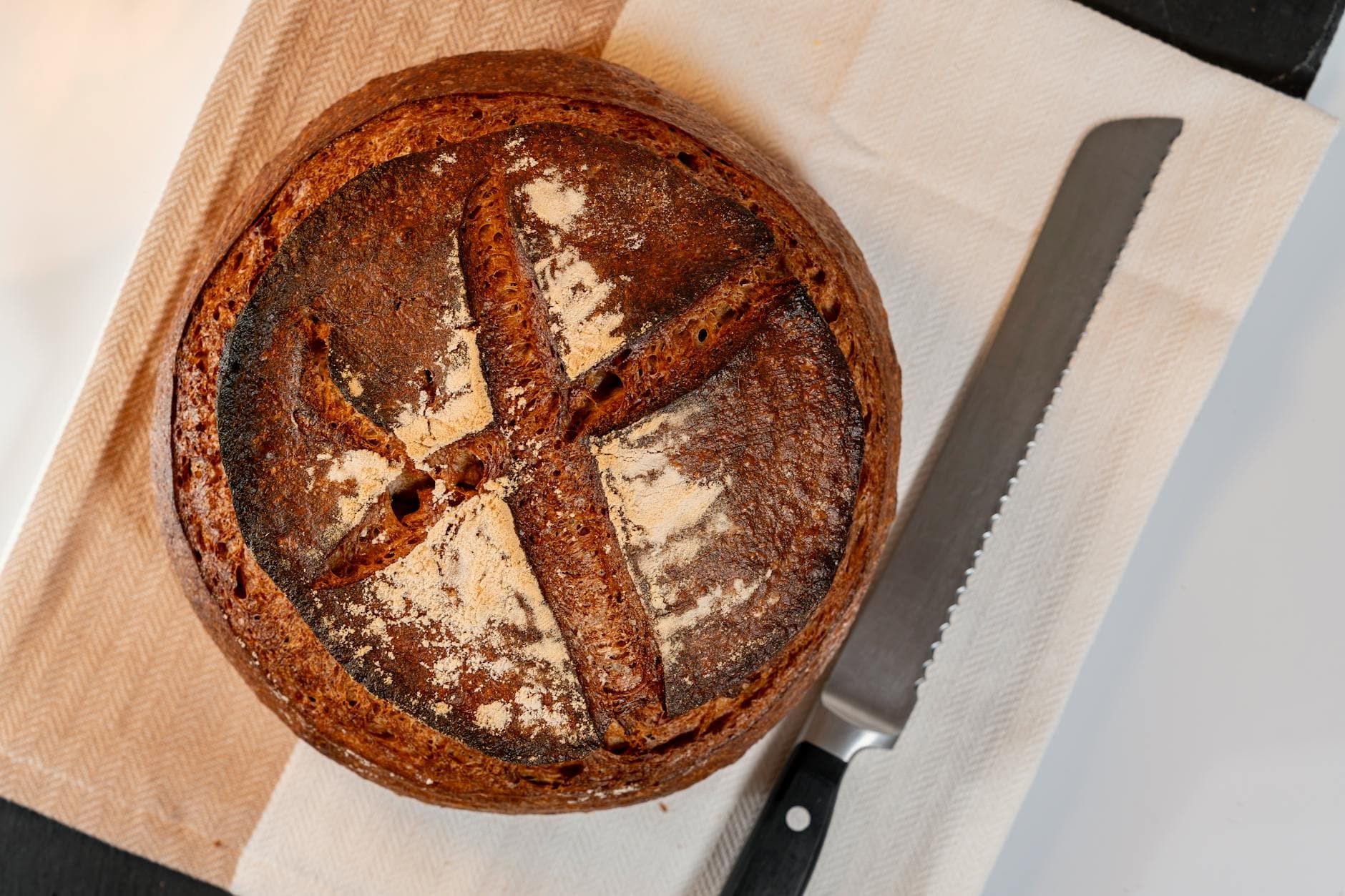
Oven spring fails when the dough enters the oven without enough strength left to expand. That can happen after underproofing, when the dough has not produced enough gas, or after overproofing, when the structure has gone slack and can no longer spring upward. If your loaves keep baking up pale and low, the next bake should focus less on the recipe timing and more on how the dough looks and feels at the end of bulk fermentation.
Temperature is the hidden dial you keep turning
Temperature management is one of the biggest reasons sourdough works beautifully one day and misbehaves the next. If the dough is too cold, fermentation slows and the loaf can lag behind your schedule; if it is too warm, fermentation speeds up and can run past the point where the dough still has structure. That is why the most practical sourdough advice is so often the least glamorous: keep track of your environment, not just your formula.
Temperature also changes flavor. King Arthur notes that refrigerated dough tends to produce more acetic acid than lactic acid, which makes the loaf more sour. So if you want a sharper tang, cold fermentation helps; if you want a milder loaf and more predictable timing, warmer dough usually moves faster and tastes less sharp.
Why sourdough keeps teaching the same lesson
Sourdough is built from flour, water, and wild yeasts, and Encyclopaedia Britannica notes that starters can last indefinitely when maintained as culture for future bakes. That is part of the charm and part of the frustration: you are not managing a fixed ingredient, you are tending a living system that changes with every feed, every room temperature shift, and every long rest in the refrigerator. Britannica also notes that San Francisco has long been culturally tied to sourdough flavor, which is a reminder that this bread has always carried place, climate, and habit inside it.
The best troubleshooting mindset is not fear, it is pattern recognition. If the starter is bubbly and expanded within 12 hours, the dough has a better chance of rising. If the loaf is dense, flat, sticky, or shy in the oven, the fix is usually somewhere in the chain before baking, whether that means a stronger starter, a better proof, or less faith in the clock and more attention to the dough itself. Once you learn to read those clues, sourdough stops feeling like a test and starts behaving like a conversation.
This article was produced by Prism’s automated news system from verified source data, official records, and press releases, then run through automated quality and moderation checks before publishing. The system is built and supervised by the people who set the standards it runs under. Read our full AI policy.
Did this article answer your question?