Colorado's Cloud Seeding Programs Shape Snowpack for Ski Resorts and River Basins
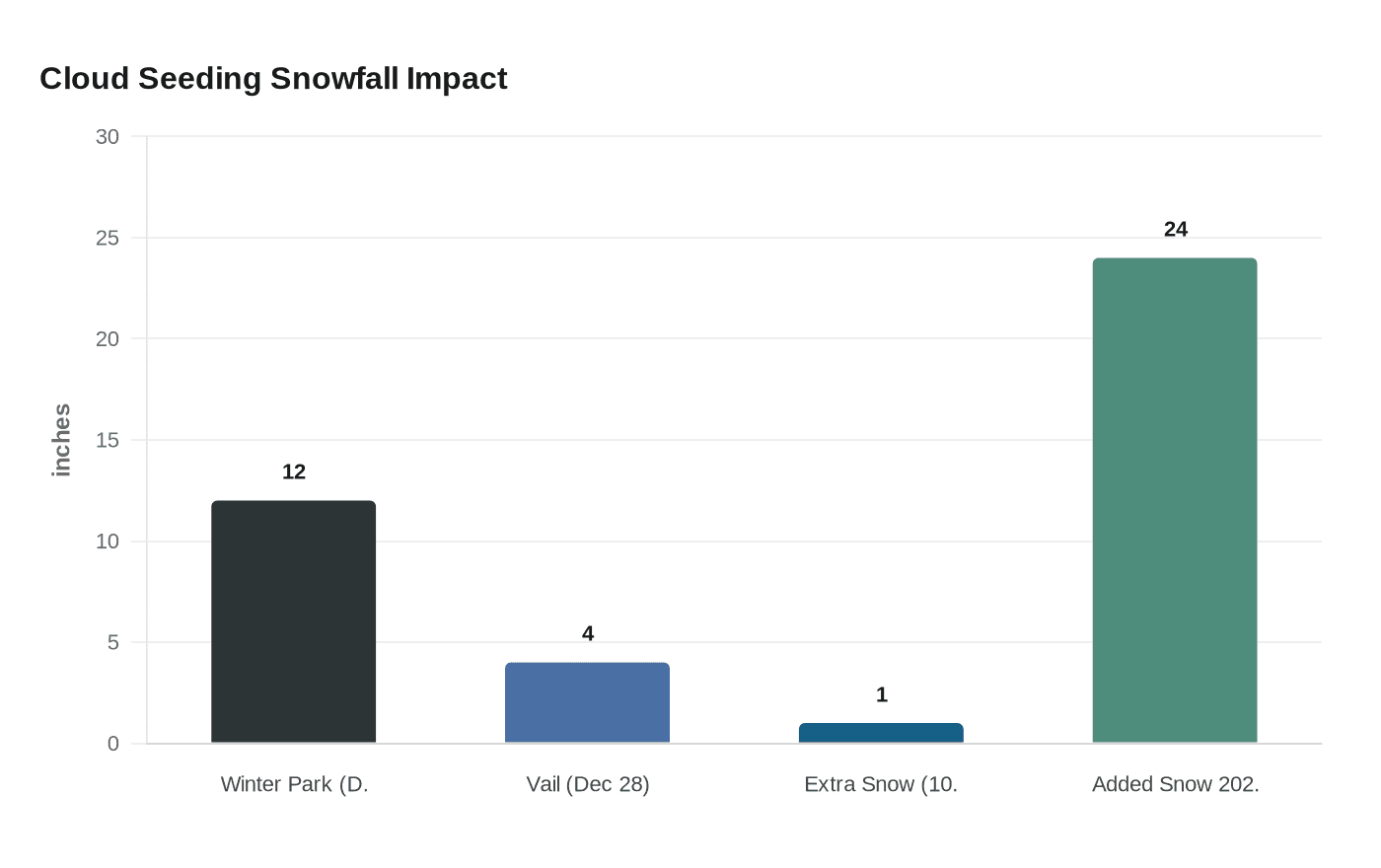
Winter Park's cloud-seeded storm dropped 12 inches when Vail got 4 — Colorado's 7 permitted programs are quietly reshaping ski seasons and river flows across the Southwest.
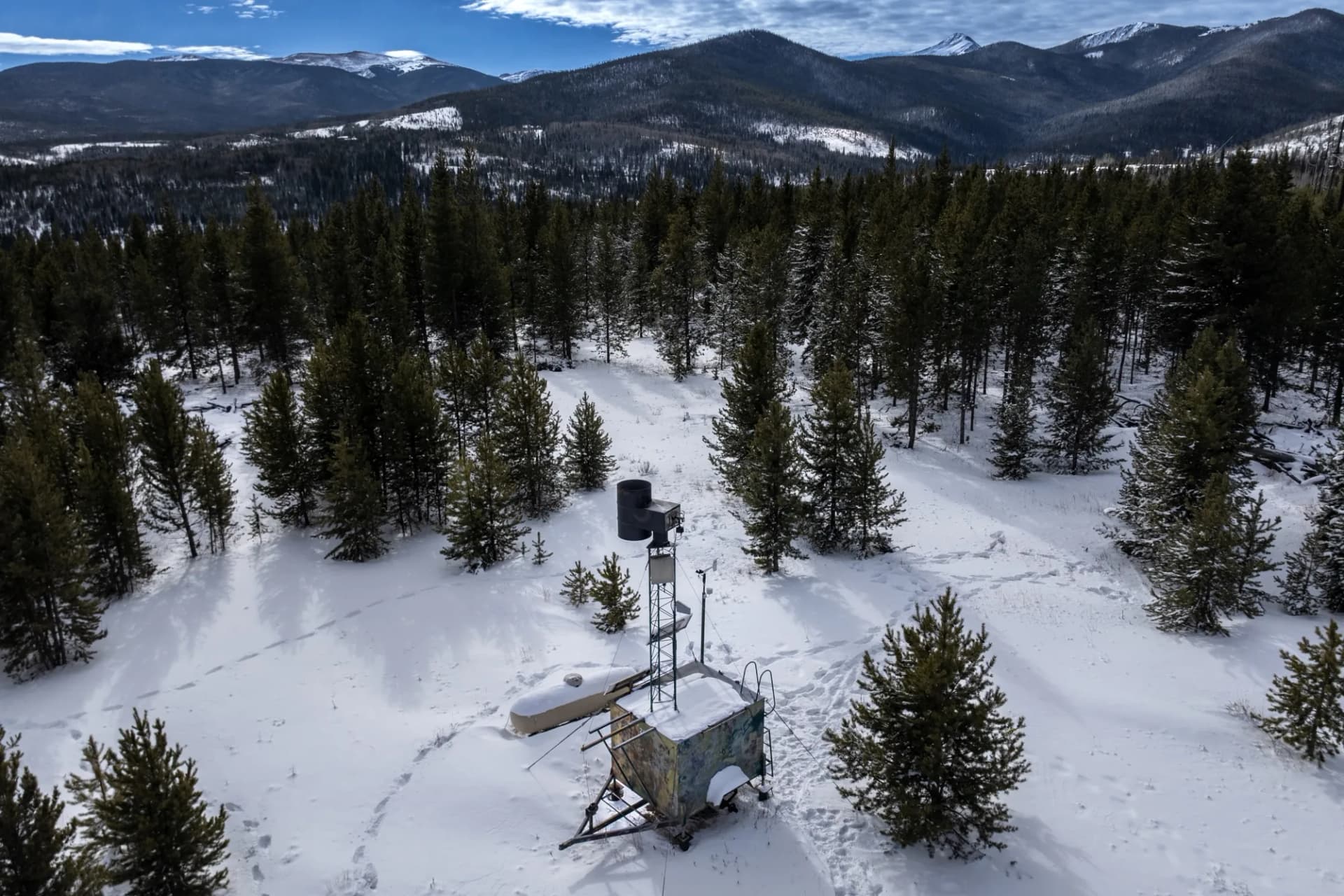
Winter Park Resort got 12 inches of snow on December 28. Vail got 4. The difference wasn't luck or microclimate — it was a contraption that looks, as one reporter put it, like "a meat smoker strapped to the top of a ladder," burning silver iodide into the sky a few miles upwind of the chairlifts. That single storm snapshot captures exactly what Colorado's cloud seeding programs are doing, and why they matter to anyone planning a Southwest mountain adventure.
What Cloud Seeding Actually Does
Cloud seeding is a weather modification method designed to enhance snowfall in storms that are already forming. The mechanism is elegant in its simplicity. "We spray a minute amount of silver iodide across a propane flame. It's carried up into the clouds, and the ice crystals grow big enough to fall as snow," said Andrew Rickert, program manager for Colorado's Weather Modification Program. Crucially, this isn't cloud creation. "Cloud seeding doesn't make clouds, it's about getting more snow out of a storm," said Joe Busto, cloud seeding program manager with the Colorado Water Conservation Board.
Cloud seeding is most successful in specific conditions, and managers do not seed every storm. Water managers focus on storms carrying a lot of moisture. Air temperatures, wind, and height of the clouds are all factored into the decision-making process to determine if a storm will be seeded. When conditions align, the results are measurable: independent scientific studies show when conditions are right, cloud seeding can boost snowfall by 5 to 15 percent — roughly equal to getting an extra inch of snow out of a 10-inch snowstorm.
Colorado's Seven Permitted Programs
The Colorado Water Conservation Board has seven permitted ground-based cloud seeding programs in the state, from Vail to Grand Mesa. Cloud seeding has been happening in Colorado since the 1950s, and state scientists say it's one tool that can help boost snowpack during our changing winters. The regulatory framework has been in place nearly as long: in 1972, the Colorado General Assembly passed the Weather Modification Act, which required weather modification projects to be regulated and permitted by the Colorado Water Conservation Board.
The geographic reach of these programs is significant. The Colorado River District manages the Central Colorado Mountain River Basin cloud seeding program, which operates along the northern and central Rocky Mountains of Colorado. In total, the district manages 24 cloud-seeding generators seeding clouds over portions of Eagle, Grand, Pitkin, and Summit counties. Partners include member agencies of the Front Range Water Council, the Colorado Water Conservation Board, ski areas, and water utilities in Arizona, southern California, and Nevada. That funding coalition underscores how far downstream the stakes reach: the snow Colorado's mountains collect doesn't stay in Colorado.
Why It Matters for Ski Resorts
The 2025-2026 ski season arrived with an uncomfortable jolt. In January 2026, Vail Resorts Inc. said it would miss revenue projections due to subpar snowfall. The dramatic lack of precipitation "limited our ability to open terrain" and crimped spending by both locals and destination guests, according to CEO Rob Katz.
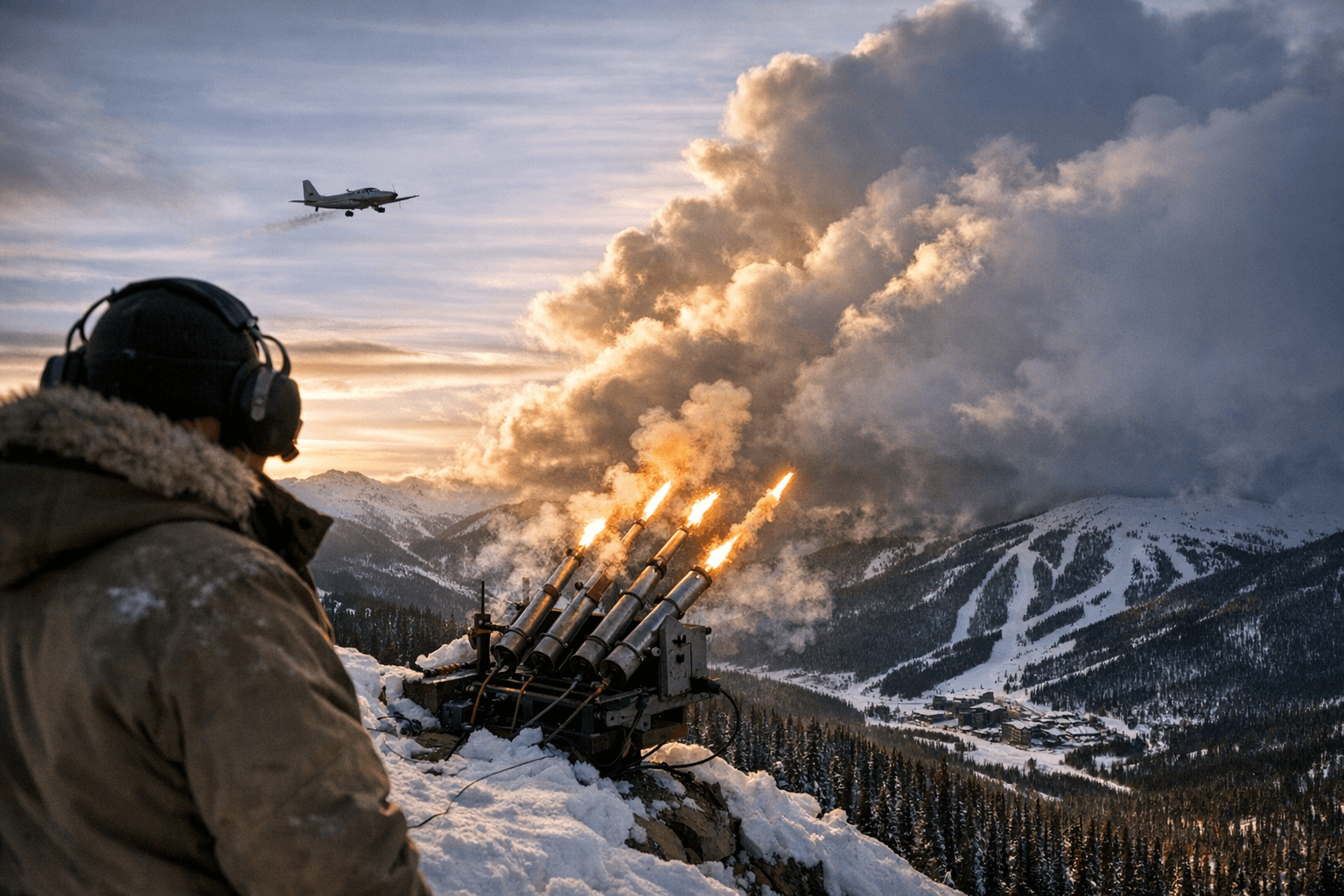
Against that backdrop, Winter Park, operated by Vail rival Alterra Mountain Co., is one of a growing number of groups in the American West doubling down on cloud seeding, from state governments and ski hills to utilities and watershed management agencies. Winter Park has emerged as one of the state's biggest cloud seeding cheerleaders; only 10% of the mountain is covered by snowmaking gear, and there are no plans to install more. Instead, the resort leans on seeding. In 2023, the Winter Park generators burned for the equivalent of five straight days, planting an estimated 24 inches of powder on the slopes that wouldn't have been there otherwise, according to the Desert Research Institute. That equates to 13% of what would have fallen naturally.
While the Colorado River District's primary goal in participating in cloud seeding is to increase water supply, cloud seeding has secondary benefits: improving snow conditions for winter recreation, such as skiing, snowboarding, and snowmobiling, and improving runoff conditions that benefit summer recreation such as rafting and fishing. That dual benefit is the thread connecting powder days in January to river flows in July.
The River Basin Equation
Colorado is home to the headwaters of eight major river basins, so downstream states rely on Colorado snowpack for their water. The Colorado River Basin is experiencing long-term drought driven by rising temperatures, which is drying up the water supply that more than 40 million people rely on as drinking water for communities, to power economies, and to sustain habitat.
The math on what cloud seeding can contribute to that crisis is concrete. Cloud seeding can increase a storm's snowfall by up to 15% and associated stream flows up to 5%. That added snow could equal up to 80,000 acre-feet of water annually once it melts, which is about enough water to serve roughly 160,000 households on average per year. A 15-year statistical look at programs across the state reinforces the long-term signal: a statistical comparison over 15 years shows a 2% to 5% annual increase in snowfall in basins that use cloud seeding over those that don't.
For the cloud seeding programs that benefit the Colorado River Basin, about half of the Colorado Water Conservation Board's cloud-seeding funding support comes via contributions from Lower Basin states that are interested in augmenting Colorado River snowpack to bolster flows in the river. The Colorado River's Lower Basin states of California, Arizona, and Nevada send about $1.5 million each year to Utah, Wyoming, and Colorado for cloud seeding work. The downstream investment is not sentimental; it reflects direct self-interest in what falls on Colorado's peaks.
What the Science Can and Can't Promise
Enthusiasm for cloud seeding runs up against real scientific limits. In its current capacity, cloud seeding work could be useful to add more snow to an individual ski resort, but those efforts would need to get a lot bigger to make a significant impact on the amount of snowmelt that feeds major Western rivers. "Almost all cloud seeding is very local in nature," meaning a lot of seeding operations would be needed to cover an entire mountain range.
There's also the question of funding volatility. When Vail Resorts pulled its $300,000 contribution during the COVID-affected 2020-2021 season, since Vail's program represented about half of the central Colorado permit area's effectiveness, that contribution loss was felt immediately. "We have lost about half of our effectiveness," said Dave Kanzer, deputy chief engineer for the Colorado River Water Conservation District.
Colorado's state climatologist has been candid about what cloud seeding cannot compensate for in a low-snow year. "March and April would have to be essentially record-breaking high snowfall to get back to around average snowpack by the time all is said and done later in the spring," State Climatologist Russ Schumacher said of the current season's deficit. Cloud seeding amplifies what storms bring; it cannot conjure storms that don't arrive.
"With the drought in our state, we need to be doing everything we can, and weather modification is one of the tools in the toolbox we have to try to increase precipitation," said Rickert. "It can't solve everything, but it's the only way to physically add water to a system."
What It Means for Your Mountain Trip
The practical reality for Southwest adventure travelers is this: Colorado's cloud seeding infrastructure is now a genuine factor in season quality. Groups banking on the strategy aim to buoy the $6 billion U.S. ski industry, while keeping rivers and reservoirs at healthy levels come spring. A strong seeding season means better snow coverage at resorts across Eagle, Grand, Pitkin, and Summit counties in December and January, and healthier river flows for rafters and anglers from May through August.
For winter programs, managers keep a close eye on percent-of-normal snow water equivalent, and trigger numbers at certain points of the season determine whether operations are suspended. The goal is never to produce so much precipitation that rapid snowmelt causes flooding in rivers downstream. It's a balance act managed storm by storm, season by season, and the outcome of that balance shapes every powder run and river trip that makes a Colorado adventure worth planning.
The next time a December storm rolls through the Rockies and one resort wakes up to a foot of fresh snow while another 40 miles away gets four inches, you'll know: the difference wasn't just geography. It was science, silver iodide, and a propane flame burning quietly upwind.
This article was produced by Prism’s automated news system from verified source data, official records, and press releases, then run through automated quality and moderation checks before publishing. The system is built and supervised by the people who set the standards it runs under. Read our full AI policy.
Did this article answer your question?