Grand Canyon rescue teams airlift 13 hikers in seven days amid trail detours
A trail detour tied to Transcanyon Waterline construction sent 13 hikers to helicopter evacuations in seven days, with shade and water disappearing from the route.
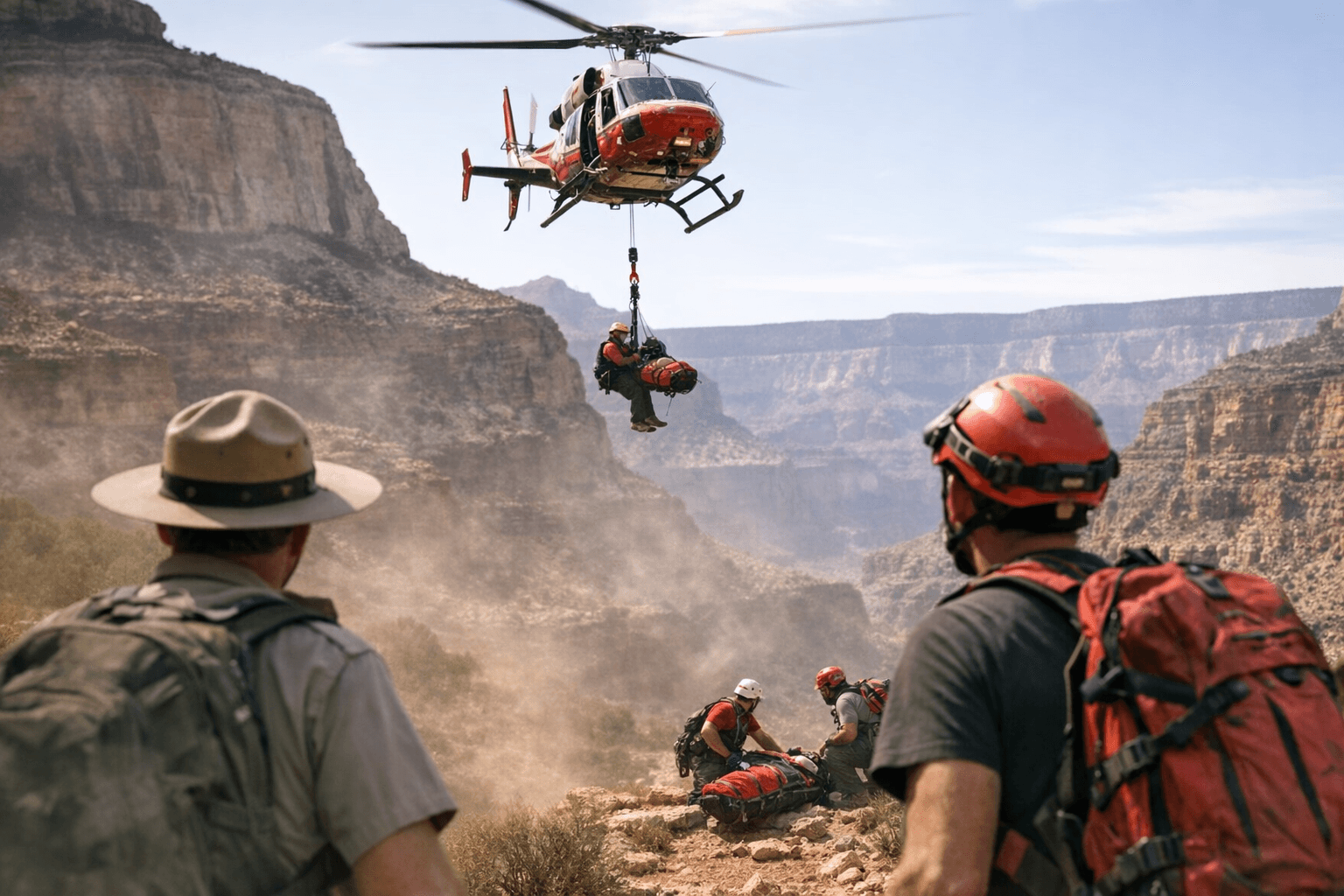
Grand Canyon rescue crews airlifted 13 hikers in seven days after a construction detour pushed people off familiar routes and into hotter, longer, less forgiving terrain. The surge turned a routine summer workload into a strain on search-and-rescue teams, and it exposed the same mistake over and over: hikers underestimated how fast inner-canyon miles become a problem once the shade disappears and the water stops.
Meghan Smith, the park’s preventive search and rescue supervisor, said helicopter medical evacuations are common in summer and the team can average one or two a day during busy periods. Even so, she said 13 in seven days was on the high end. The rescues included a lower-leg injury at mile 35 of the Colorado River and heat-related illness on one of the canyon’s main corridor trails, a mix that showed how quickly one detour can turn into multiple kinds of emergencies.
The pressure came from construction on the Transcanyon Waterline, which closed key trail sections and rerouted hikers into less familiar terrain. The detour added about 4.5 miles on a trail with no shade and no water. Some visitors instead stayed on the South Kaibab Trail, which is extremely strenuous and also lacks shade and water. That choice, combined with the added mileage, left many hikers exhausted, dehydrated, or unable to keep moving before they reached help.
Grand Canyon National Park closed the River Trail, Silver Bridge, and Plateau Point Trail for the waterline project. Bright Angel Trail and Bright Angel Campground reopened on May 15, 2025, but the River Trail, Silver Bridge, and Plateau Point Trail remained closed until Oct. 1, 2025. The park said the Transcanyon Waterline replacement project began in 2023 and was a four-year, $200 million job, part of a system that had required about 85 repairs since 2010.
For visitors, the decision points are straightforward and unforgiving. Start before 10 a.m. or after 4 p.m. Bring extra water and snacks. Plan for delays, because limited staffing, heavy call volume, and safety protocols can slow response times. Grand Canyon Emergency Services has long warned that many visitors underestimate inner-canyon hiking, especially in summer heat, and the park advises against hiking below the rim during excessive heat warnings.
The canyon has seen this pattern before. Search-and-rescue activity doubled between 1983 and 1996, and 1996 alone brought 300 heat-related SAR incidents and 482 total rescues, a spike that helped shape the preventive search-and-rescue program now trying to keep a familiar mistake from repeating itself.
This article was produced by Prism’s automated news system from verified source data, official records, and press releases, then run through automated quality and moderation checks before publishing. The system is built and supervised by the people who set the standards it runs under. Read our full AI policy.
Did this article answer your question?