Low Snowpack and Early Melt Put Lake Powell Inflows at Risk This Spring
Federal forecasters predicted Lake Powell inflows will hit just 36% of average, with the reservoir potentially reaching a critical infrastructure elevation as soon as this summer.

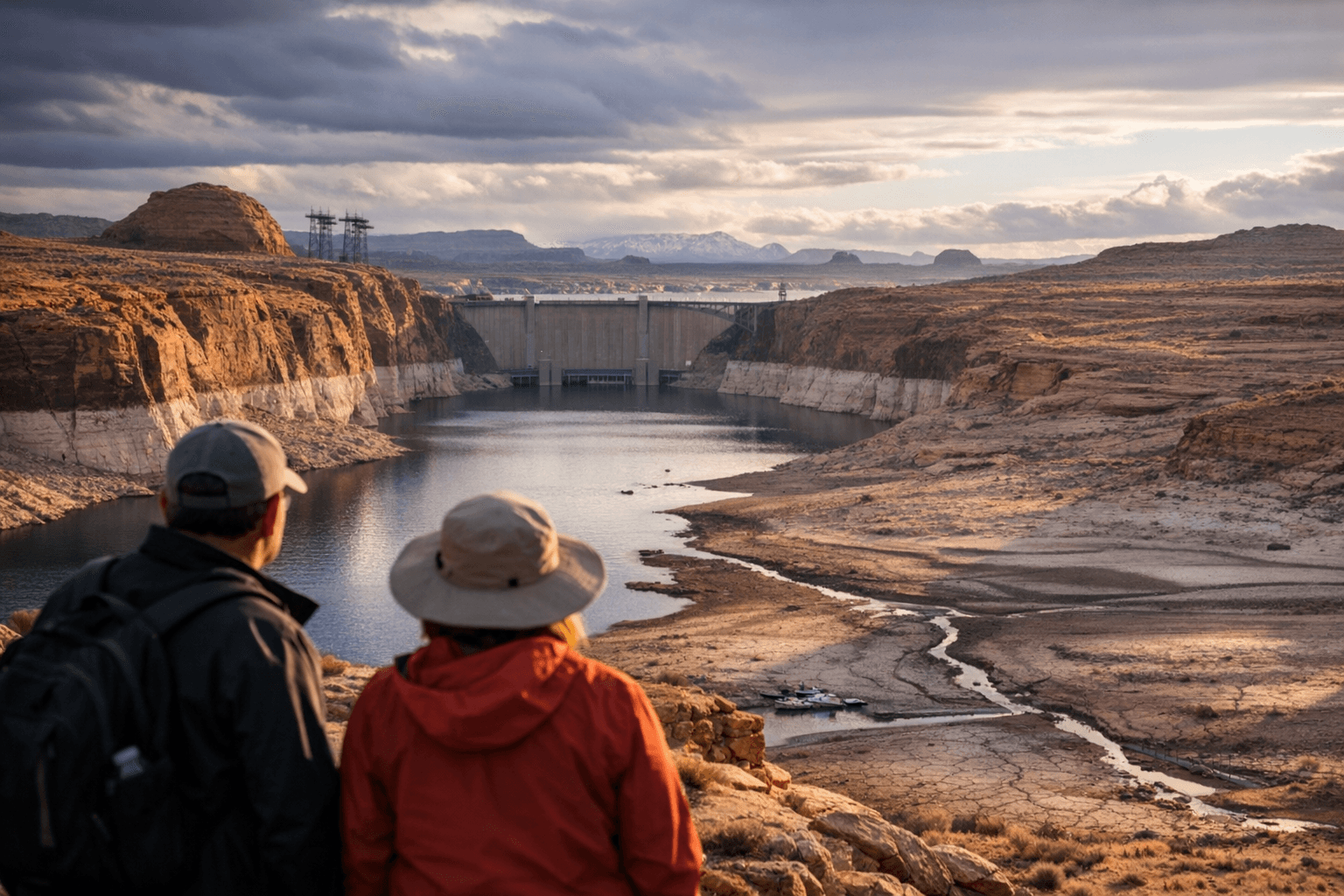
Lake Powell, the Upper Colorado River Basin's largest reservoir, is heading into spring with federal forecasters projecting inflows at just 36% of average, and water managers now warning the reservoir could reach a critical elevation for its infrastructure as soon as this summer.
The forecast reflects record-low snow-water-equivalent figures across much of the Upper Colorado River Basin and an early melt driven by unusually warm temperatures. Arens, a hydrologist quoted in reporting by Rocky Mountain Community Radio, put the situation in stark terms: "I expect that to happen again this year because the added problem this year is that we're even lower than we were in 2022 and 2023 right now, and we have virtually no runoff coming down the Colorado River."
One partial bright spot is soil moisture. Fall rains in the southern part of the basin improved conditions going into the snowpack season, which forecasters say could make what little snow remains more likely to reach streams rather than soak into parched ground. "That's a good thing that the soils are wet," Arens said. "So the meager snowpack that we do have on the ground, a higher proportion of that will make it into the streams than over the past five, six years where it's been really dry going into the snow pack season." In what forecasters call an efficient runoff year, snowpack at 50% of average translates to runoff at roughly 50% of average, meaning the limited snowpack that does exist should largely find its way into rivers and streams.
The efficiency of that conversion, however, is being squeezed by timing. As of early May, 24% of Colorado SNOTEL sites had already reached melt-out, primarily in the southern basins, with those sites melting out an average of 16 days earlier than normal. The median statewide melt-out date fell on May 24th. NRCS forecaster Bell described the consequence plainly: "Lower snowpack volumes and increased temperatures drive early melt, which translates into earlier and likely lower peak streamflow. The potential result is a compressed runoff window and in many cases a muted response in flows."
Statewide, NRCS 50% exceedance forecasts sit at 71% of median across 86 forecast points averaging in the 19th percentile. Colorado western slope basins in the Upper Colorado Region came in at 72% of median. The lowest outlooks are concentrated in the southwest, where the SMDASJ basin is forecast at just 49% of median, the URG at 57%, and the Gunnison at 66%. Arkansas basin streamflows are at 73% of median overall, with Pueblo Reservoir inflow at 71% and the Arkansas River at Salida performing relatively better at 85%.
An early May storm offered a limited reprieve. The system delivered more than 3 inches of moisture at some sites in the Sangre de Cristos and San Juans, including the SMDASJ, URG, and Arkansas River basins, with the Front Range mountains also benefiting primarily east of the divide. Cooler temperatures accompanied the storm, producing observed snowfall at many high-elevation sites and slowing melt rates. Southwest basins typically receive around 7% of their annual precipitation in May, and spring storms that arrive without significant cooling tend to fall as rain on snowpack rather than adding to it. This storm was an exception, though its benefits were not distributed equally across the region.
The reservoir management picture complicates any cushion that upstream releases might provide. In 2021 and 2022, Flaming Gorge on the Utah/Wyoming state line and Blue Mesa in Gunnison County, Colorado contributed releases to support Powell. Navajo Lake in Northern New Mexico has also been identified as a possible release source during shortage conditions. But Arens cautioned that those options carry less weight now: "Navajo and Blue Mesa are significantly lower than they were a couple years ago."
With melt accelerating ahead of schedule, streamflow forecasts deep in negative territory across every major basin, and upstream storage reservoirs diminished, the window for meaningful inflows to Lake Powell this spring is narrowing fast.
Know something we missed? Have a correction or additional information?
Submit a Tip