Moab guide highlights biking, camping, and public-lands planning for visitors
Moab rewards the visitors who book early, choose the right trail for their legs and rig, and learn the public-land rules before they arrive.

What first-time Moab visitors get wrong
The biggest Moab mistake is treating it like a single park stop instead of a sprawling public-lands trip. This is a place where mountain biking, hiking, climbing, river running, and off-road driving all happen across 1.8 million acres managed under different rules, and that patchwork is exactly why first-time planning can fall apart fast.
Book the right camp before you pick the route
Camping is where many trips are won or lost. Moab’s national parks each run their own reservation systems, and the Bureau of Land Management says many developed sites around town are still first-come, first-served, even though some group sites can be reserved through Recreation.gov. That means your lodging decision should come before your trail plan, not after it.
Arches National Park has the clearest advance-planning pressure. In 2026, it does not require advanced timed-entry reservations, but visitors can still run into entrance lines and limited parking on busy days. The park still requires reservations for Devils Garden Campground and for both self-guided and ranger-led Fiery Furnace hikes, so the idea that there is no planning needed this year is only half true.
If you want to camp inside Arches, Devils Garden is the one that needs the earliest action. Peak-season reservations can be made up to six months in advance, and the standard sites are usually booked months ahead. That is the kind of detail that can determine whether your trip starts with a secure base or a last-minute scramble.
Outside the parks, the BLM campgrounds near the Colorado River corridor are the other pressure point. Goose Island has two reservable group sites and individual first-come, first-served sites. Hal Canyon has 11 individual sites and is first-come, first-served. Oak Grove is tents-only and first-come, first-served. Grandstaff is especially competitive and typically fills in the morning from March through October.
The Moab visitor guide’s most useful camping takeaway is simple: if your dates land in spring or fall, assume popular campsites will go early. The BLM visitor guide says most developed campground sites in the Moab area cost $20 per night, so the price is straightforward, but availability is not.
Know which public-land rulebook you are in
The other common first-timer error is assuming every trailhead, crag, campsite, and river access point follows the same system. In Moab, that is rarely true. The BLM Moab Field Office says it manages special recreation permits through quarterly review periods, which is a reminder that access is layered and time-sensitive rather than casual or open-ended.
Canyonlands National Park is a good example of why a map alone is not enough. The park is divided into four distinct districts, and no roads connect them. If you picture Canyonlands as one simple day trip, you can waste a lot of time and fuel trying to move between districts that do not link up by road.
That same public-land reality is why Moab works best as a planning exercise, not a drive-through stop. Trailheads, climbing areas, river put-ins, and dispersed camps can all fall under different managers and different rules. The Moab Field Office covers a huge recreation landscape, and the result is a destination where permits and reservations matter as much as mileage.
Choose your trail like a local, not a postcard
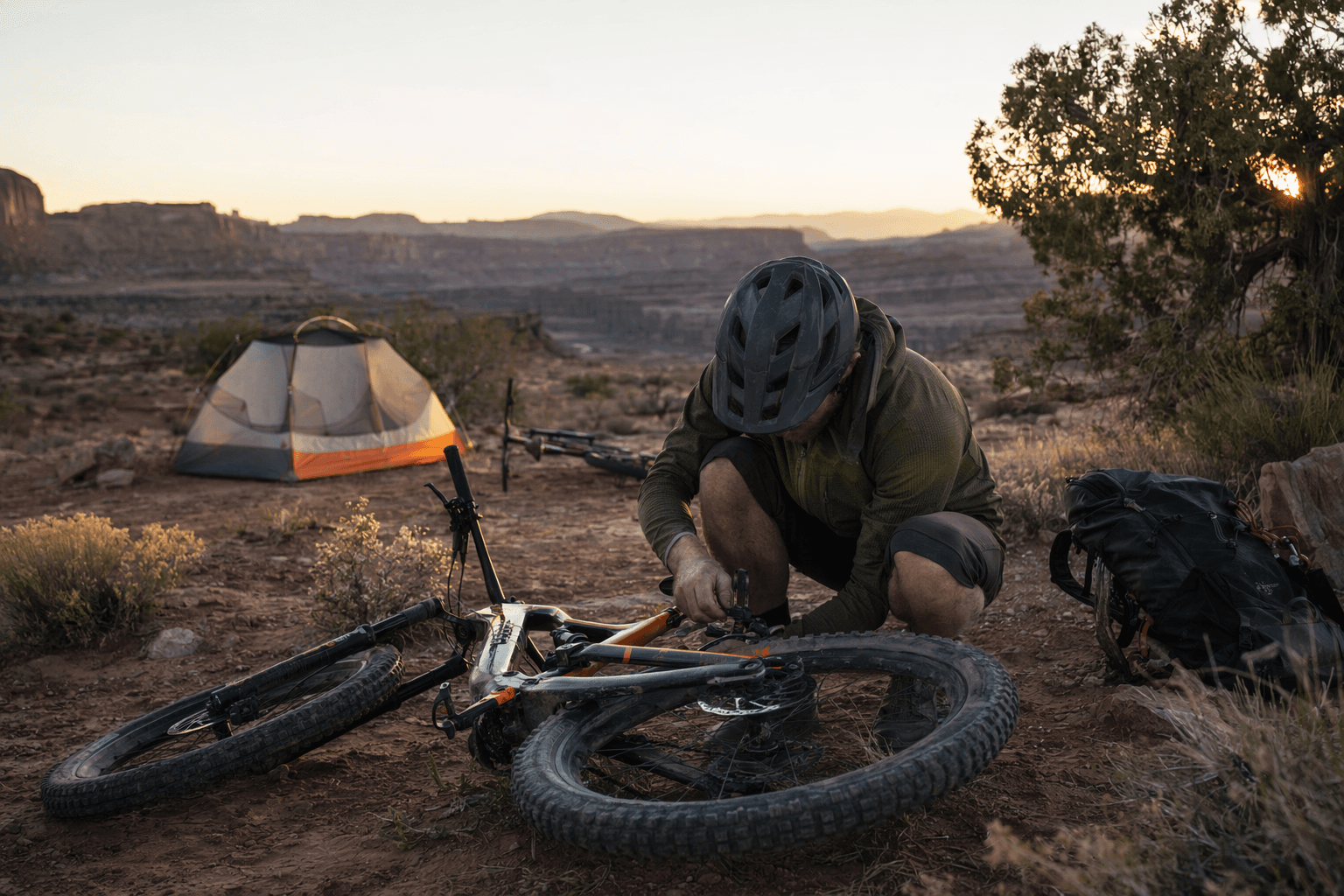
Moab’s trail scene is famous because it has something for nearly every kind of visitor, but not every signature route fits every rider or every day. The Slickrock Trail is a classic example. It was originally established in 1969 for motorcycles, and it remains one of the most recognizable mountain-bike rides in the area. It is iconic, but it is not the casual warm-up many first-timers imagine.
The Whole Enchilada is even more demanding. It drops more than 7,000 feet of vertical from Burro Pass in the Manti-La Sal National Forest to the Colorado River, which makes it an advanced ride rather than a scenic sampler. If your group includes newer riders, shorter legs, or anyone coming from lower fitness, this is the kind of route that should stay on the wish list until the rest of the trip is better matched.
That is the practical way to think about Moab trail choice: match the route to the vehicle, the fitness level, and the crowd tolerance. A visitor arriving in a high-clearance off-road rig will approach the area differently from a family looking for a shorter bike outing or a hiker trying to avoid packed trailheads. Moab gives you choices, but the wrong choice can eat an entire day.
Plan around crowd windows, not just weather
The guide’s seasonal warning matters because Moab’s best weather and busiest traffic often overlap. Spring and fall are the sweet spots for many visitors, which is also when the most popular campsites fill first and parking becomes tighter around the headline destinations. That is why a reservation strategy is not a luxury here. It is part of the trip itself.
Arches is a clear example. Even without a timed-entry requirement in 2026, the park still advises visitors to expect lines and limited parking on crowded days, especially on weekends and holidays. If you arrive expecting a wide-open desert drive-up, you may spend more time in a queue than on the trail.
The same logic applies to the campgrounds around town. First-come, first-served can work well if you arrive early enough, but it is a risky bet for a Friday or Saturday in peak season. The safest approach is to anchor the trip first, then build the daily trail plan around what you actually secured.
Why all this planning still pays off
Moab’s public-lands economy is not a side note. Visitors to Southeast Utah national parks spent $397.6 million in nearby communities in 2023, supporting 5,122 jobs and creating a cumulative regional benefit of $486.1 million. Those numbers help explain why the reservation systems, campground pressure, and permit rules are so tightly woven into the visitor experience.
The upside is that once you understand the structure, Moab becomes much easier to navigate. Book the campsite early, learn which agency controls your route, and choose the trail that fits the rider or hiker you actually have with you. That is the difference between a stressful first visit and the kind of Moab trip people keep planning around for years.
This article was produced by Prism’s automated news system from verified source data, official records, and press releases, then run through automated quality and moderation checks before publishing. The system is built and supervised by the people who set the standards it runs under. Read our full AI policy.
Did this article answer your question?