Mountain Hardwear Alakazam 60 Pack Brings Ultralight Materials to Multi-Day Backpacking
ALUULA fabric impresses in field but two reviewers split hard on whether the Alakazam 60's $595 price tag is earned.
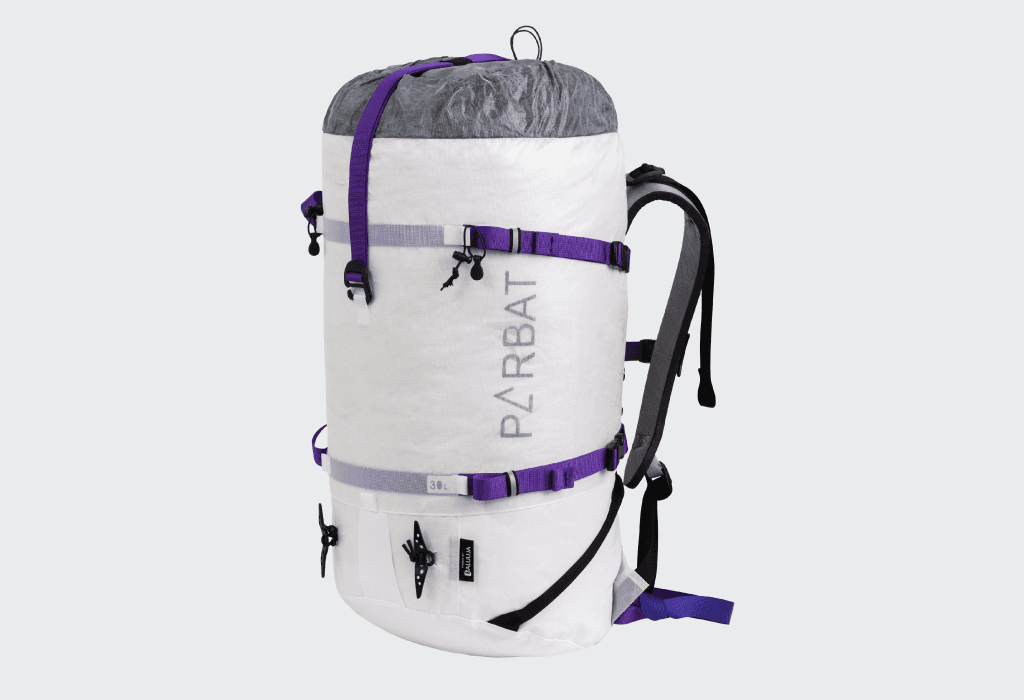
At $595, the Mountain Hardwear Alakazam 60 arrives with serious material credentials and serious questions to answer. The pack is built around ALUULA, described by SectionHiker as "a new ultralight material called ALUULA that's waterproof, extremely strong, and abrasion-resistant." Whether those credentials translate into a pack worth carrying — and paying for — depends heavily on who you ask and how far they walked.
What you're buying: specs and build
The Alakazam 60 is a high-volume, roll-top backpack with wraparound side pockets, available in both a 45L and 60L configuration. The 60L version sits at $595, which places it well above many comparable ultralight options on the market. The ALUULA fabric that defines the pack is visually striking: SectionHiker notes plainly that "the ALUULA material is thin and translucent," a quality that one Treelinereview field tester confirmed from personal experience, writing that "my pack was white and kind of see-through." That translucence is a direct result of how gossamer-thin the material is, which has real consequences for how the pack handles in the field.
Internally, the Alakazam runs a built-in metal frame, dual-density foam back panel, and foam shoulder straps. The Treelinereview tester describes the overall feel as "a cross between the Hyperlite Mountain Gear Southwest and the Gossamer Gear Mariposa," with the metal frame specifically earning praise: "Like the latter, it has a built-in metal frame that carries the weight incredibly well."
ALUULA in the field: a 223-mile test
The most rigorous field data on the Alakazam comes from a Treelinereview account of a thru-hike across the entire 223-mile Ouachita Trail. The tester writes: "I tested it in hot, humid conditions, high wind, dry desert air, mountain forests, and alpine wind. I also tested in the rain and a constant mist that soaked everything." That range of conditions represents a genuine stress test of both the fabric's waterproofing and its durability across terrain types.
The verdict on ALUULA from that outing was clear: "In each case, the ALUULA fabric's waterproofness and durability impressed me." Load performance held up equally well. "The Alakazam backpack handled heavier loads surprisingly well with excellent load distribution," the tester notes, placing it among the best carrying packs in its weight class: "The Mariposa and Alakazam carry perhaps the best I've seen of packs of this weight."
Ventilation, always a concern on a fully waterproof pack, performed adequately under serious conditions. The Alakazam uses dual-density foam in both the back panel and shoulder straps to encourage airflow and wick sweat. Hiking through Southern heat with body and clothing already soaked, the tester found that "the back panel airflow worked pretty well for a waterproof pack," though moisture buildup was observed between layers — visible on the white sample precisely because of the see-through fabric.
Where the pack struggles: packing, compression, and noise
SectionHiker's hands-on review covers the same pack and arrives at a starkly different overall conclusion. The verdict: "the pack's design, features, and real-world performance fail to justify its premium price ($595). It's awkward to pack, noisy to carry, and loaded with features that prioritize novelty over practical comfort, usability, and flexible use."
The core packing challenge comes from the combination of an enormous internal volume and a compression system that barely functions. SectionHiker puts it directly: "Careful packing is required to fill its dimensions with a dense load that self-compresses, since the gossamer-thin ALUULA fabric has so little body and the compression system on this pack (just some side string) is so weak." The practical workaround is to treat the Alakazam like a frameless dry bag with cubes: "packing pods, packing cubes, or tightly compressed stuff sacks could be used to stabilize the load rather than filling the pack with loose items."
The perceived volume problem adds to the challenge. The Treelinereview tester, despite generally praising the pack, notes that "the reported 60L volume of my Alakazam felt a heck of a lot bigger than other 60L packs I've tested." That oversized feel, combined with the lack of internal structure, means a loosely packed Alakazam will shift and slouch in ways a stiffer-bodied pack would not.
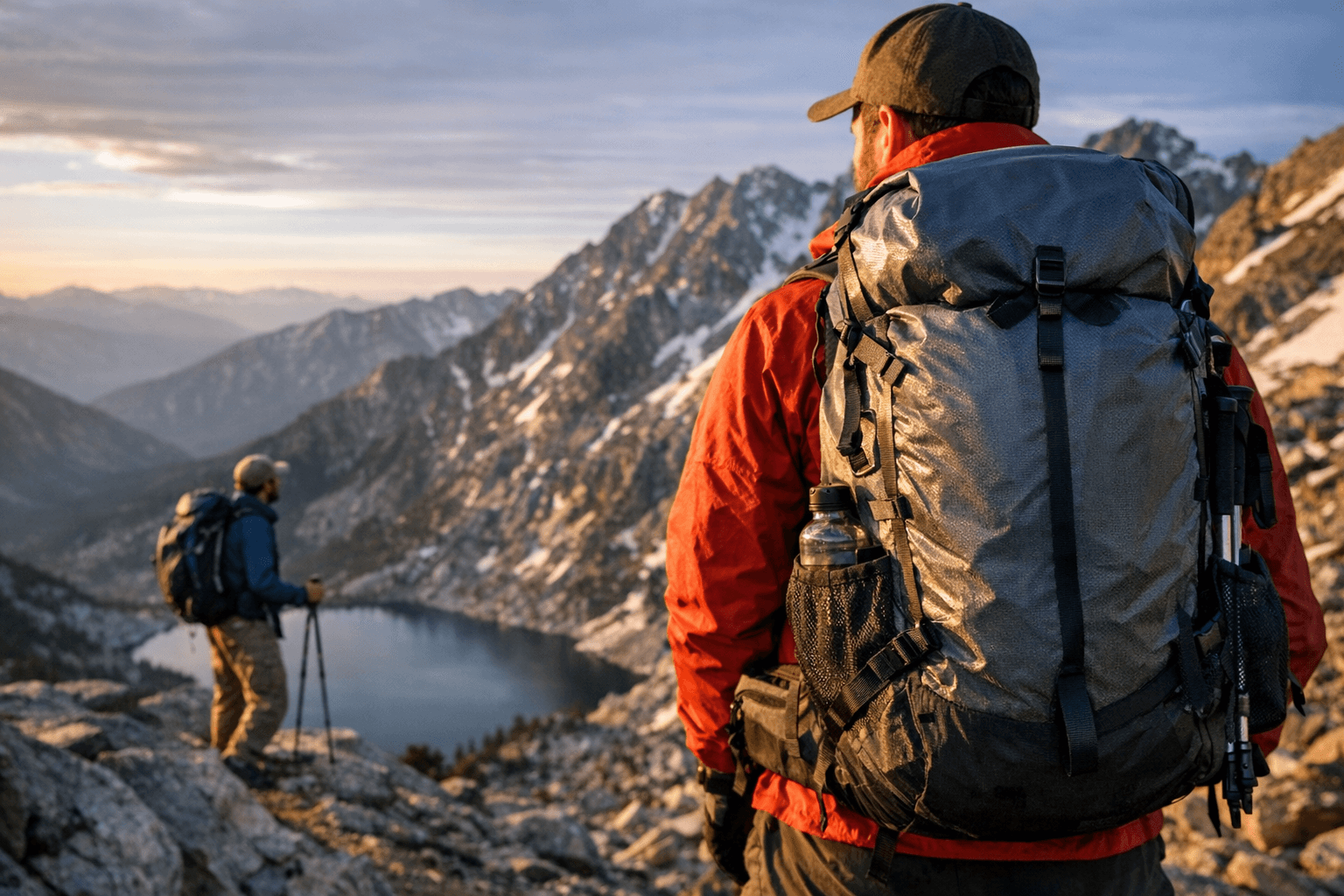
Noise is a separate issue entirely. SectionHiker flags a persistent rustling from the ALUULA fabric during movement: "The fabric on the Alakazm 60 produces a noticeable rustling sound when moving, no doubt in part due to the shifting hip belt action, which is quite annoying when hiking on otherwise peaceful trails."
Storage and organization
The main compartment is genuinely spacious but almost entirely undivided. As SectionHiker describes it: "Except for a hydration pocket to hold a bladder (there isn't a hydration port), the main compartment is cavernous in size and lacks any internal organization." That hydration sleeve detail is worth noting for anyone planning to run a reservoir: the sleeve holds the bladder, but there is no external hose port routed through the pack body.
Where the Alakazam does better is on the exterior. Water bottle pockets are "deep and wide," appearing on both sides, which Treelinereview specifically calls out as an advantage over the Gossamer Gear Mariposa (which has pockets on one side). The abundance of external pockets earned positive marks in the field: "The abundance of pockets made it easy to organize, though the compression system of the pockets could have been better."
For those concerned about packing stability, SectionHiker suggests the 45L version may be a more manageable option: "I suspect that the smaller-volume Alakazam 45 will be easier to pack and more stable because it has less internal volume."
How it compares and what else to consider
The price gap between the Alakazam 60 and its nearest competitors is significant. SectionHiker recommends a direct comparison with three alternatives for anyone prioritizing the same durability, waterproofing, and ultralight combination: "the Hyperlite Mountain Gear NorthRim 55 ($480) and Southwest 55 Backpacks ($420), and the Superior Wilderness Designs Rugged Long Haul 50/60 ($379)." All three undercut the Alakazam by $115 to $216.
The Gossamer Gear Mariposa provides a different kind of data point. At $285, it weighs 1.9 lbs, carries up to 35 lbs, and is built from 100 and 200 denier Robic high-tensile strength nylon. It offers bigger and more functional hipbelt pockets than the Alakazam and uses a buckle flaptop lid closure with a zippered pocket rather than a roll-top clip closure. That context makes the Alakazam's $310 premium harder to absorb unless ALUULA's waterproofing and abrasion resistance are genuinely mission-critical to your kit.
The bottom line
The Alakazam 60 presents a real split: a fabric that demonstrably performs across extreme conditions, paired with a design that creates genuine day-to-day friction. The ALUULA material survived 223 miles of varied terrain and weather without failing; the roll-top compression and cavernous main compartment make every pack job a deliberate exercise. If you're building a kit around weight savings and need reliable waterproofing without a separate pack cover, the material case for ALUULA is legitimate. But at $595, the Alakazam asks you to accept real ergonomic compromises that its competitors, at lower price points, largely avoid.
This article was produced by Prism’s automated news system from verified source data, official records, and press releases, then run through automated quality and moderation checks before publishing. The system is built and supervised by the people who set the standards it runs under. Read our full AI policy.
Did this article answer your question?