Off‑road Industry Groups Press Appeals and Win Administrative Attention on Moab and Mojave Access
The Interior Secretary took direct jurisdiction over the Labyrinth Rims appeal as Easter Jeep Safari drew 30,000 riders to Moab, while 2,200 Mojave OHV miles remain at risk.
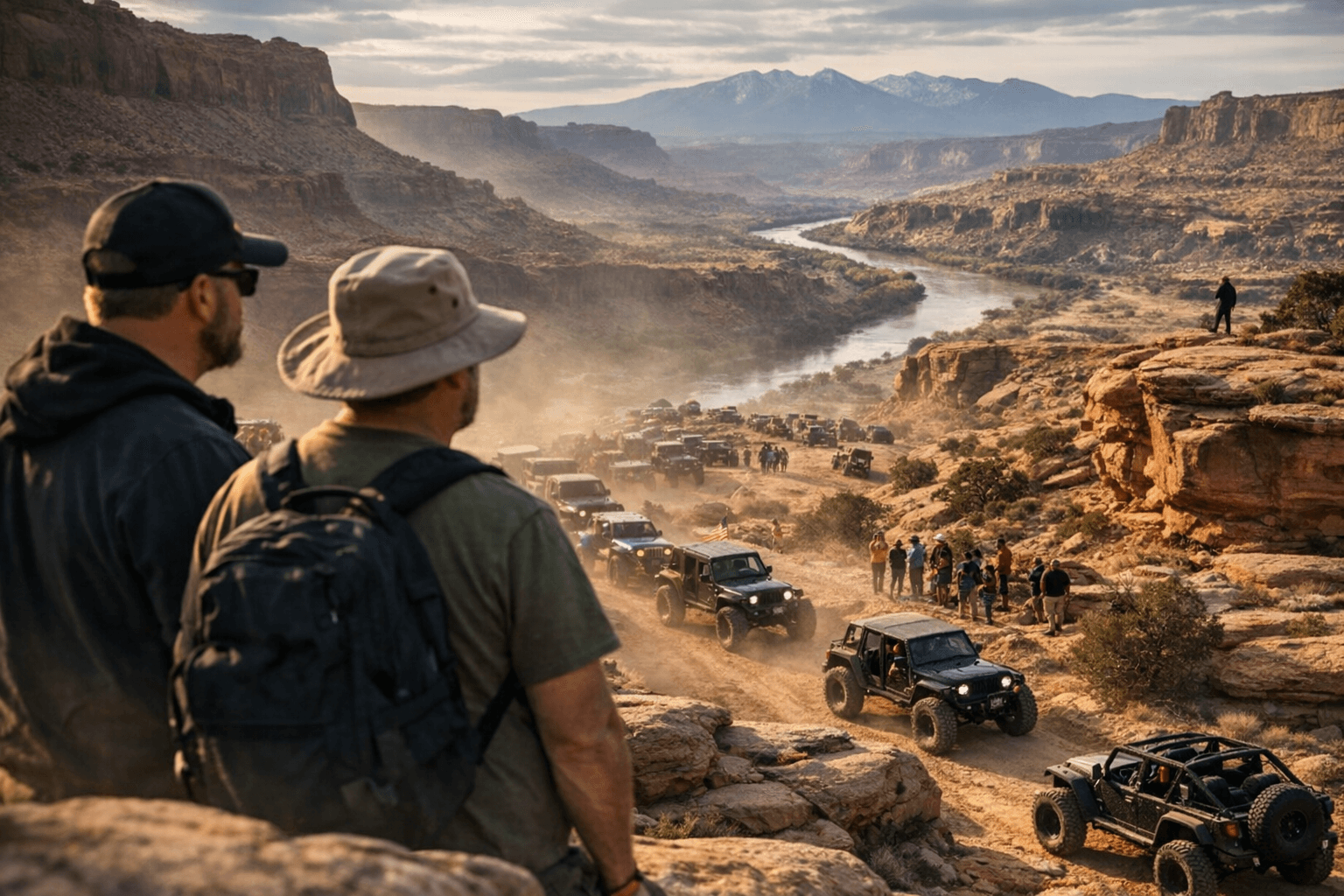
The Secretary of the U.S. Department of the Interior took direct jurisdiction over ORBA's appeal of the BLM's 2023 Labyrinth Rims/Gemini Bridges Travel Management Plan last week, handing the off-road coalition its clearest administrative win in a fight that has reshaped motorized access near Moab since that plan closed more than 300 miles of routes two years ago. The timing was pointed: Easter Jeep Safari, which brings an estimated 30,000 visitors to Moab, was already underway when the news broke.
The Specialty Equipment Market Association and the Off-Road Business Association have been pressing simultaneously on two fronts. In the Mojave, SEMA, ORBA, the American Sand Association, and AMA District 37, organized under the Ecologic Partners Coalition banner, jointly issued a formal statement demanding the reversal of a federal court ruling that would close approximately 2,200 miles of designated OHV routes across the Western Mojave planning area in California. The coalition's challenge targets the science underlying the ruling: they argue the court relied on a flawed assumption that recreational OHV use drives desert tortoise population decline, when peer-reviewed evidence points to predator subsidy effects, disease dynamics, and habitat pressure from utility-scale solar and wind development as the primary culprits.
Here is what both fights mean for your planning calendar. If you are heading to Moab this spring, the contested Labyrinth Rims/Gemini Bridges corridor is still closed. The BLM's 2023 plan left 712 miles of routes open across the 300,000-acre management area and retained 91 percent of the routes used by Easter Jeep Safari, so there is substantial riding available right now. Verify specific route designations with the BLM Canyon Country Field Office before locking in any multi-day itinerary. For a fall 2026 trip, the timeline looks more favorable: in 2025, the BLM itself proposed reopening nearly 150 miles of trails in the Labyrinth/Gemini Bridges area, and the Secretary's direct jurisdiction signals the current administration treats access restoration as a priority.
The Mojave picture is less advanced. The Ecologic Partners Coalition's statement is an opening move in what is likely a prolonged court fight. Until there is a ruling on the science challenge or a revised travel plan, expect the 2,200-mile closure to hold; fall 2026 or later is the realistic window for any material change in available Mojave mileage.
If the contested corridors stay restricted and you need routes now, three alternatives hold up well. The San Rafael Swell, roughly an hour west of Moab along I-70, offers similar canyon-country terrain with substantially less permit pressure and its own network of open motorized routes. Within the Moab area's existing open system, Hell's Revenge and Poison Spider Mesa are unaffected by the Labyrinth/Gemini Bridges closures and deliver the slickrock technical riding the region is known for. White Wash Sand Dunes, also within range of Moab, provides open riding on routes entirely outside the contested travel plan boundaries.
SEMA and ORBA have made clear that policy volatility is now a standard trip-planning variable at both destinations. The administrative attention the Interior Department is giving to Labyrinth/Gemini Bridges is the most encouraging development in months, but routes can shift between open and closed faster than itineraries can be rebuilt. BLM field office confirmation before departure is the most important step you can take before loading up the rig.
This article was produced by Prism’s automated news system from verified source data, official records, and press releases, then run through automated quality and moderation checks before publishing. The system is built and supervised by the people who set the standards it runs under. Read our full AI policy.
Did this article answer your question?