Smart Park Planning Covers Fees, Shuttles, Parking, and Trail Access
"No reservation required" at parks like Zion and Yosemite doesn't mean showing up without a plan. Fees, campground closures, and vehicle limits make 2026 logistics unusually complex.

The "No Reservation" Trap
Dropping a timed-entry reservation system does not make a national park easy to visit. Yosemite, Glacier, and Arches all moved away from hard reservation requirements for 2026, but traffic management didn't disappear with the permit windows. Glacier, for example, is actively managing Going-to-the-Sun Road with parking limits at Logan Pass and temporary vehicle diversions if safety thresholds are reached. Rocky Mountain National Park is keeping its timed-entry system from late May through mid-October. Meanwhile, Acadia still requires a $2 timed-entry pass between 9 a.m. and 2 p.m., bookable through Recreation.gov. The underlying reality at every high-demand park is the same: crowds are managed one way or another, and your arrival strategy is as important as your hiking plan.
Fees Are Higher and More Complicated in 2026
The cost structure at America's most-visited parks changed significantly this year, and it catches international visitors especially hard. Starting January 1, 2026, a $100-per-person surcharge applies to non-U.S. residents at eleven of the busiest parks: Grand Canyon, Yellowstone, Yosemite, Zion, Glacier, Grand Teton, Rocky Mountain, Acadia, Bryce Canyon, Sequoia and Kings Canyon, and Everglades. Annual passes for non-residents jumped from $80 to $250. U.S. citizens and residents still benefit from fee-free days, with ten scheduled in 2026, including May 25, June 14, July 3-5, August 25, September 17, October 27, and November 11, though any park that still requires timed-entry or other permits will enforce those even on free days. Budget your entry costs before you leave home, not at the gate.
Zion's Shuttle Is Not Optional
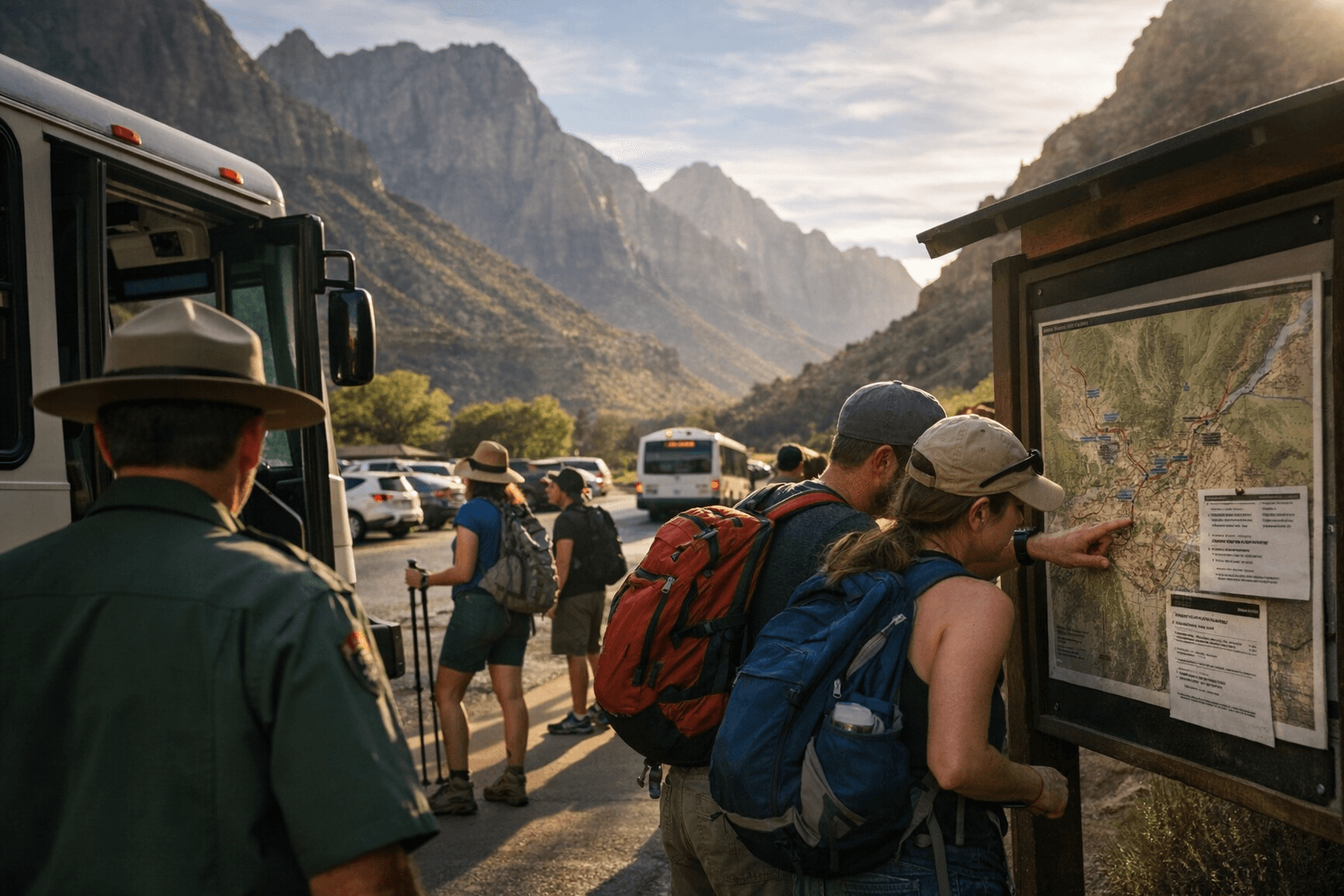
Zion National Park is the defining example of a shuttle-first park in the Southwest, and 2026 brings meaningful updates to how that system operates. The Zion Canyon Line, the free shuttle that runs from the visitor center through seven stops to the Temple of Sinawava trailhead, remains the primary way to move through the canyon during peak season. What's new is a Park & Ride option in the town of Virgin, giving visitors an additional staging point before entering the canyon. Parking in Springdale remains the alternative for those who drive in, with paid on-street spots from 6 a.m. to 5 p.m. daily. RVs, box trucks, and vehicles longer than 24 feet must park on Lion Boulevard. Plan your parking before arrival; the lots fill early on weekends and holiday weekends.
The New Vehicle Size Rules on Zion-Mt. Carmel Highway
Starting June 7, 2026, large vehicles are prohibited on the historic Zion-Mt. Carmel Highway between Canyon Junction and the East Entrance. The 10.7-mile route is off-limits to any vehicle longer than 35 feet 9 inches, wider than 7 feet 10 inches, taller than 11 feet 4 inches, or heavier than 50,000 pounds. Combined vehicles, including trucks with trailers, cannot exceed 26 feet from hitch to rear axle or 50 feet overall. These restrictions come from safety studies validated by the Federal Highway Administration and address years of lane-keeping problems through the historic Zion-Mt. Carmel Tunnel. Large vehicles can still access the park through the South Entrance, but planning an east-side approach requires checking your rig's dimensions before your trip date.
South Campground: Closed Until Late Spring
Zion's South Campground, one of the most convenient in-park options because of its proximity to the visitor center and shuttle access, is in the middle of a full rehabilitation project. Phase 1 construction covers all campsites, drinking water systems, stormwater drains, and comfort stations, with completion anticipated in late spring 2026. Until it reopens, campers targeting the Zion Canyon area need to book Watchman Campground well in advance or look at private campgrounds and accommodations in Springdale and Hurricane. Those are increasingly competitive reservations during spring and early summer, so long-lead booking is essential.
Offline Maps and Paper Backup: Non-Negotiable
Cell service is unreliable throughout many Southwest park valleys, and that includes Zion Canyon, where canyon walls and depth work against signal. Downloading offline maps before you leave town is a baseline requirement, not a suggestion. Apps like AllTrails and Gaia GPS offer offline trail packages, and the NPS website has downloadable park maps. A paper backup of your key route segments is worth the two minutes it takes to print or photograph. This matters most for parking logistics, shuttle stop identification, and trailhead navigation, all of which become guesswork if you're relying on live data in a spotty-service canyon.
Arrival Windows and Trail Stewardship
Early arrival remains the single most effective strategy across every busy Southwest park. Most congestion at trailheads, parking areas, and shuttle queues peaks between 9 a.m. and noon; visitors who arrive before 7 a.m. consistently report shorter waits, cooler temperatures, and better light for photography. This is especially true during early season, when snow melt creates wet and fragile trail edges. Leave No Trace principles apply year-round but carry extra weight in spring when trail surfaces are soft and revegetation is underway. Staying on marked paths, packing out all waste, and yielding to uphill hikers on narrow trails protects the resource and improves the experience for everyone in the canyon that day.
The logistics of visiting a major Southwest park in 2026 require more deliberate planning than in years past. Fees are higher, campgrounds have closures, shuttle timing matters, and vehicle restrictions are real and enforced. Getting those details right before departure means more time on trail and less time problem-solving in a parking lot.
Know something we missed? Have a correction or additional information?
Submit a Tip