Utah Lake Authority warns visitors about seasonal harmful algal blooms
Utah Lake's bloom season is already part of summer planning. Advisories can push paddlers, swimmers and pet owners to change course fast.
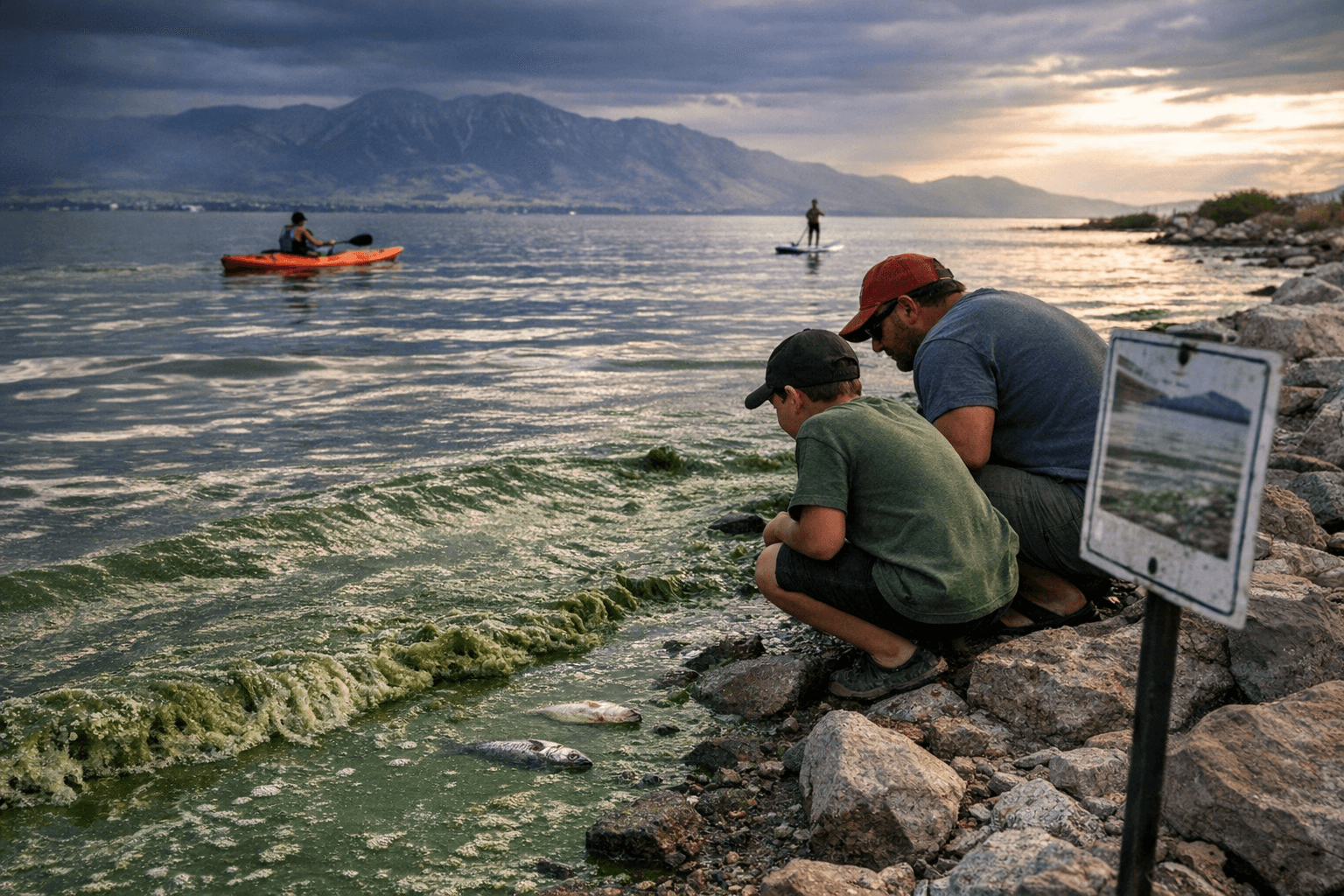
The first thing Utah Lake Authority wants visitors to understand is that a bloom does not have to be a surprise to ruin a day on the water. Its new “HABs Happen” campaign treats harmful algal blooms as part of the warm-weather rhythm at Utah Lake, where a family beach trip, a paddleboard outing or a dog walk along the shore can change fast if the water turns green or clumpy.
The agency says those blooms are naturally occurring cyanobacteria that show up in lakes and reservoirs across Utah and the country. At Utah Lake, they are most common in summer and early fall, but hot weather can create conditions for them earlier. They can look like pea soup or floating clumps that resemble grass clippings, and the point of the campaign is simple: check before you go, not after you have already launched from Sandy Beach, Utah Lake State Park or the north shore.
That caution matters because Utah Lake is monitored for both harmful algal blooms and E. coli, with recreational monitoring typically resuming in June or July and ending on October 31. Under Utah’s updated 2023 HAB guidance, a warning advisory is recommended when toxigenic cyanobacteria exceed 100,000 cells per milliliter or microcystins exceed 8 micrograms per liter. A danger advisory is triggered at more severe levels, when the risk can rise to long-term illness or death. Local health departments can post advisories and close water bodies, which can quickly alter swimming plans, paddle routes and even whether a pet can safely get near the shoreline.
Dogs are especially vulnerable. The Department of Environmental Quality says harmful algae can hurt pets if they drink contaminated water, eat algae mats or lick algae off their fur. Symptoms can include vomiting, diarrhea, stumbling, difficulty breathing and seizures. For families bringing a dog to the lake, that means a bloom alert is not just a nuisance, it is a reason to rethink the outing.
Utah Lake has been under active bloom monitoring since 2014, and state water-quality reports have described it as hypereutrophic, meaning it is overloaded with nutrients that feed seasonal algae growth. The lake was identified in the state’s 2016 Integrated Report as non-supporting for recreational use because of high levels of blue-green algae. Even so, the Utah Lake Authority says it has seen a 50% decrease in algal blooms since 2016, and it is trying to keep that progress visible without downplaying the hazard.
That is the message behind the authority’s spring push, which includes short comedic videos with local actors and fits into the broader “Utah Lake Is My Lake” campaign launched in April 2025. A lakewide bloom on July 28, 2025 showed how fast conditions can shift: officials warned people away from swimming, skiing, wading and drinking the water, while motorized boating and sailing remained safe. At the start of peak season, Utah Lake is still open for adventure, but the smartest trip plan starts with the advisory map.
This article was produced by Prism’s automated news system from verified source data, official records, and press releases, then run through automated quality and moderation checks before publishing. The system is built and supervised by the people who set the standards it runs under. Read our full AI policy.
Know something we missed? Have a correction or additional information?
Submit a Tip