Why guided trips can unlock Utah's national parks
Guided trips do more than simplify Utah's parks: they turn Capitol Reef's heat, elevation, and crowds into a trip you can actually enjoy.
Why a guide changes the trip
The real payoff of a guided trip in Utah is not just that someone else leads the hike. It is that the guide absorbs the friction points that make people hesitate in the first place: route-making, timing, transport, and the low-grade stress of wondering whether you are doing the park “right.” In Capitol Reef, that can mean the difference between a rushed, confusing day and a trip that actually opens up the landscape.
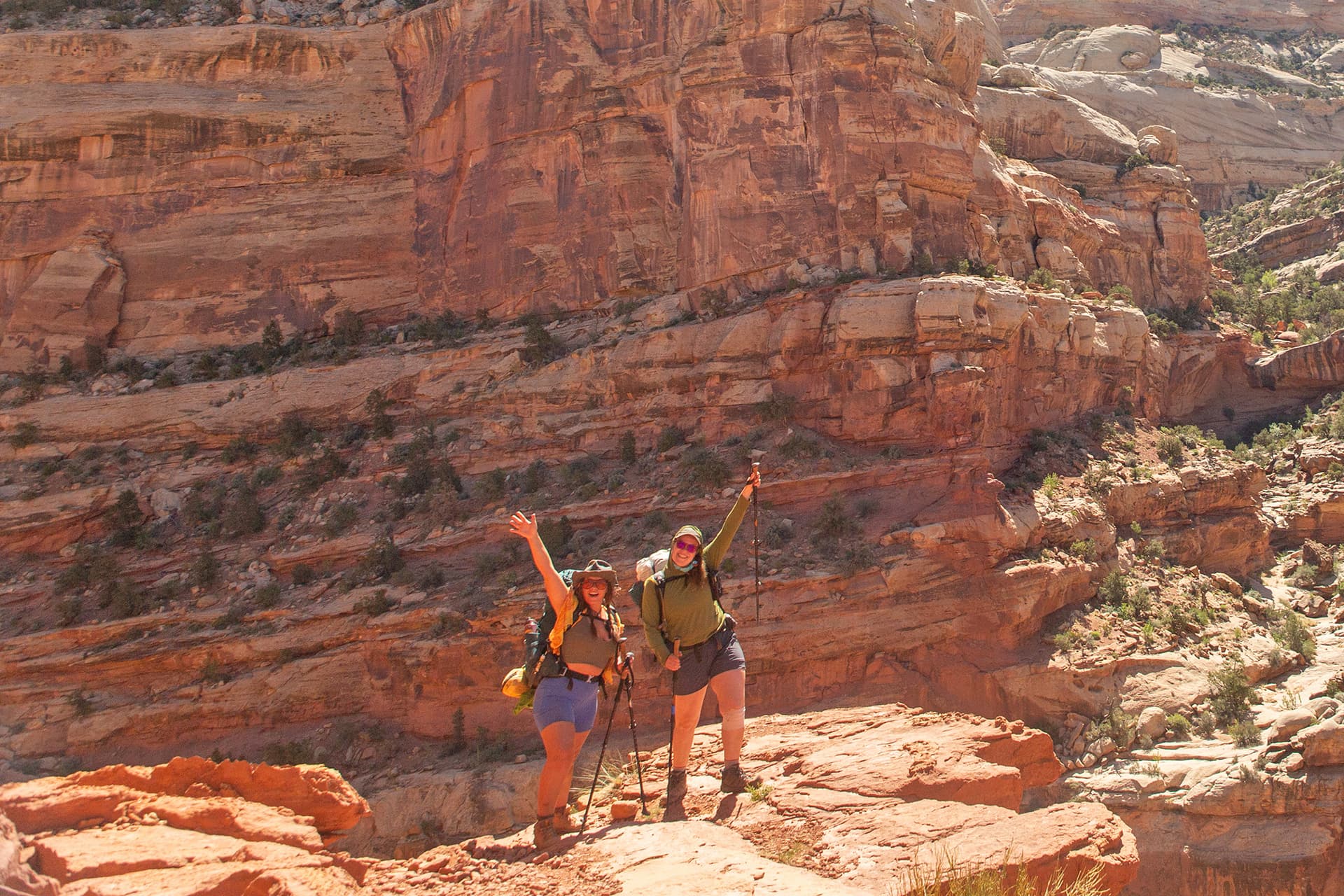
Melissa Fields’ guided outing in Capitol Reef shows the case clearly. Instead of staring at maps, trail notes, and logistics alone, she was able to move through the park with a professional handling the coordination while she focused on the geology, the plants, and the feel of the place. That is the strongest argument for booking a guide in Utah’s national parks: you get to spend your energy on the park itself.
Capitol Reef is a strong place to start
Capitol Reef is a hidden treasure in south-central Utah, centered on the Waterpocket Fold, a geologic monocline that stretches almost 100 miles. The National Park Service says the park was established primarily to preserve geologic features such as scenic rock domes and narrow canyons, which is exactly the kind of terrain where local interpretation matters. Without context, it is easy to walk past the story.
That context matters even more because Capitol Reef is not a simple walk in the park. The park has more than 840 plant species, more than 40 rare and endemic plant species, and six federally listed threatened or endangered species. A guide can turn a short desert walk into a more layered experience, pointing out what is blooming, what is rare, and why a patch of ground that looks dry and plain is actually part of a delicate system.
The timing matters too. Capitol Reef wildflowers such as Utah penstemon and desert Indian paintbrush typically bloom from April through June, which is the kind of detail that can make a shoulder-season trip feel much more rewarding. A guide who knows when to go, where to look, and how fast to move can help you catch that window instead of just hoping for it.
When guided trips earn their keep
Some national park trips are self-explanatory. Capitol Reef is not always one of them, especially if it is your first time in Utah canyon country or you are trying to do more than a quick scenic drive. The park sits at about 5,500 feet, and the National Park Service notes that the average person hikes about 2 miles an hour. In other words, even trails that look easy on paper can feel slower and harder than expected if you are coming from lower elevation.

That is where guided travel becomes practical, not indulgent. It helps when you want:
- A first trip to Utah’s canyon country without guessing at the best route
- A backpacking introduction with someone who can pace the day realistically
- More than what a trail sign can tell you
- A trip that feels personal instead of stitched together from internet tabs
- Help navigating crowds, timing, and the park’s better-use opportunities
This is also why guided trips are not just for luxury clients or expert backpackers anymore. They are increasingly a fit for travelers who want instruction, reassurance, and a deeper interpretive layer without having to build the whole experience themselves.
Who gets the most out of a guide
The mixed group on the Capitol Reef outing says a lot about the appeal. Travelers from New Jersey and California were in the same experience, which is a useful reminder that guided trips work across skill levels and travel styles. You do not need to be an expert hiker to benefit from a well-run outing, and you do not need to be timid to appreciate having the logistics handled.
Families often get the clearest payoff because the guide can keep the day moving without letting fatigue, pacing, or confusion take over. First-timers get the confidence boost. Travelers who are short on planning time get the biggest practical win of all, because one booking replaces a pile of decisions about where to go, when to go, and how ambitious the day should be.
Good Trip Adventures is a good example of how the market is changing. The company guides in 30 national parks nationwide, including all five of Utah’s national parks, and it is women and queer-owned. More than 75 percent of the staff are queer, women, or BIPOC, which gives the company a broader travel-industry significance: the guided outdoor world is no longer built only around the most traditional, most experienced, or most exclusion-minded version of the outdoors.
Why inclusion is part of the value
Good Trip has explicitly positioned itself around inclusive guiding, and that matters more than marketing language. The company has announced queer-and-gender-diverse trips as well as accessible trips led by people with disabilities, which tells you something important about where guided travel is headed. Belonging is becoming part of the product, not an afterthought.
That shift helps explain why guided travel can feel safer and more welcoming for many visitors. If you are nervous about whether you will keep up, whether the terrain will feel intimidating, or whether a trip will have room for your pace and experience level, a guide can lower that barrier immediately. In a park setting as dramatic and demanding as Capitol Reef, that confidence is not a luxury. It is often what makes the trip possible.
The bigger Utah picture
This is not happening in a vacuum. Utah’s national parks generated 13,554,654 visitors in 2022, and those visitors spent $1.656 billion in the state. That spending supported 23,312 jobs and produced a cumulative economic benefit of $2.5977 billion, which is a strong reminder that park travel is not a niche side business in Utah. It is a major part of the state’s outdoor economy.
The pressure on the parks is real as well. Capitol Reef now receives more than 1.2 million visitors annually, compared with about 160,000 per year when many parking lots were designed in the 1960s. That gap tells you why a guided trip can feel less like a splurge and more like a smart trip strategy. When demand is that high, local expertise becomes part of the advantage.
The National Park Service also reported a record 331.9 million recreation visits in 2024, which shows just how packed the broader park system has become. If you are trying to make Utah’s national parks work for a family trip, a first visit, or a short window on the calendar, a guide can help you stop chasing the obvious and start using the park well.
The bottom line
A guided trip in Utah is not about giving up control. It is about handing over the parts that drain the trip before it starts, so you can actually enjoy the part that matters. In Capitol Reef, where the Waterpocket Fold, the wildflowers, the elevation, and the crowds all shape the experience, that trade can be the difference between checking a park off a list and really unlocking it.
This article was produced by Prism’s automated news system from verified source data, official records, and press releases, then run through automated quality and moderation checks before publishing. The system is built and supervised by the people who set the standards it runs under. Read our full AI policy.
Did this article answer your question?