Zion National Park encourages summer visitors to explore by bicycle
Bike the Zion Canyon Scenic Drive and you can skip shuttle waits, slow the pace, and make summer access feel far less crowded.
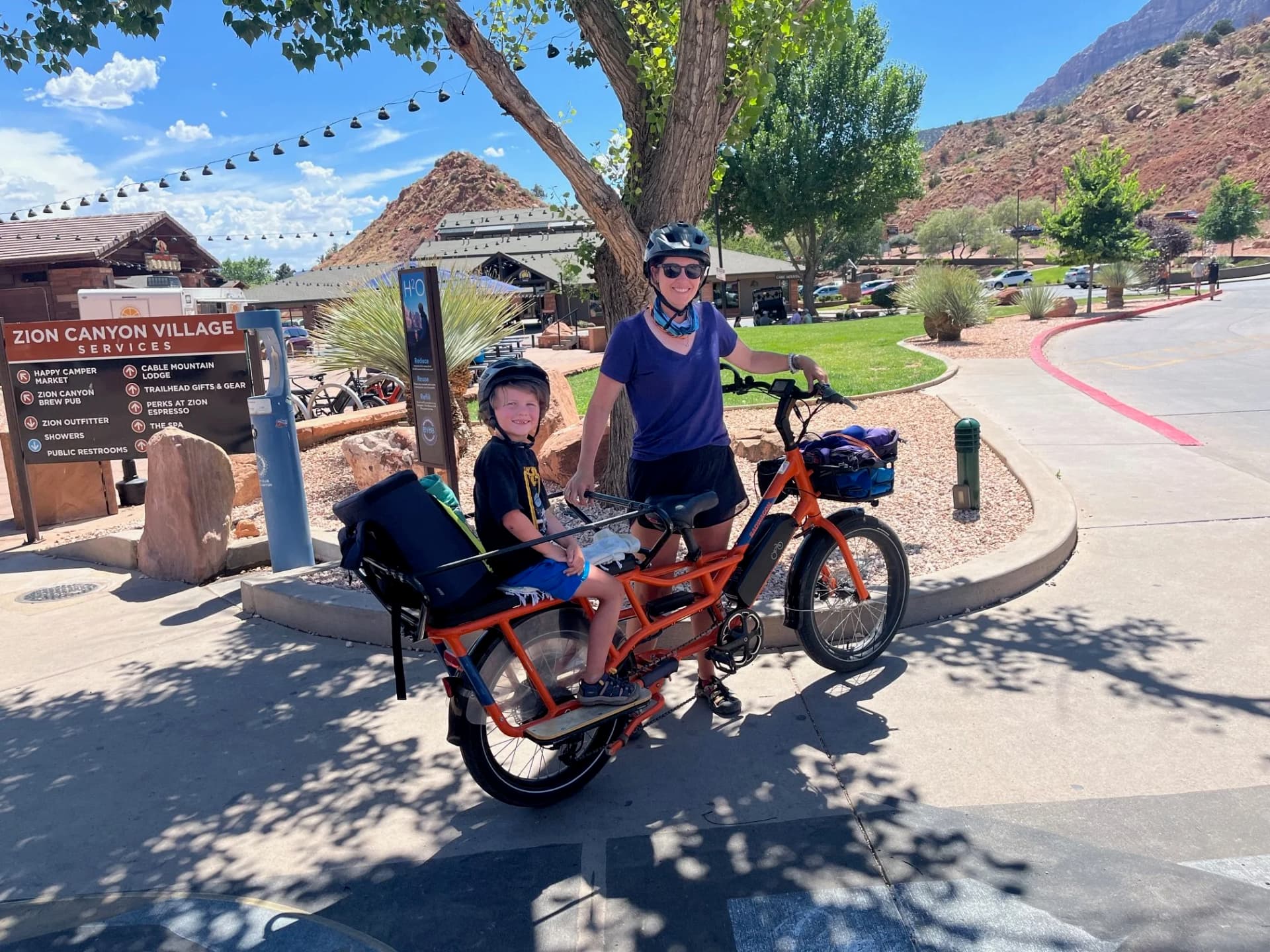
Zion’s summer bike push is really a travel hack: if you want a calmer way through Zion Canyon, a bicycle can beat both the shuttle line and the strain of trying to move a private car into a corridor that is built for congestion. With shuttle season underway and personal vehicles barred from the Zion Canyon Scenic Drive, riding lets you keep your own pace while the rest of the park funnels into the bus system.
Why bicycling changes the day
The advantage is not just speed, it is control. On a busy Zion day, biking gives you a way to linger at pullouts, stop when the canyon light looks right, and avoid shaping your schedule around the next shuttle. The park says visitors can walk or ride a bicycle up the canyon to avoid shuttles, and that matters most in summer, when the road is usually extremely hot and sunny.
This is also a crowd-management story as much as a recreation one. Zion launched its shuttle system in 2000 to reduce traffic and parking problems, protect vegetation, and restore tranquility to Zion Canyon, and visitor-use pressure has only grown since 2010. That pressure shows up everywhere visitors feel it most: parking lots, trails, vegetation, emergency services, restrooms, and roads.
Where bikes work, and where they do not
Zion keeps the rules simple, and that simplicity is part of the appeal. Bicycles are allowed on all park roadways and on the Pa’rus Trail, and the park also allows Class 1 pedal-assist e-bikes on paved road surfaces open to the public and on the front-country Pa’rus Trail. If you are planning a ride, think road corridor and paved access, not trail shortcuts.
The important boundary is the Zion-Mt. Carmel Tunnel. Bikes are not allowed there, and all other park trails and off-trail routes are closed to bicycling. That means a bike trip in Zion is best understood as a way to experience the canyon drive and the paved edges of the park, not as a pass to every destination in the backcountry or across the tunnel.
The practical details that make a bike day easier
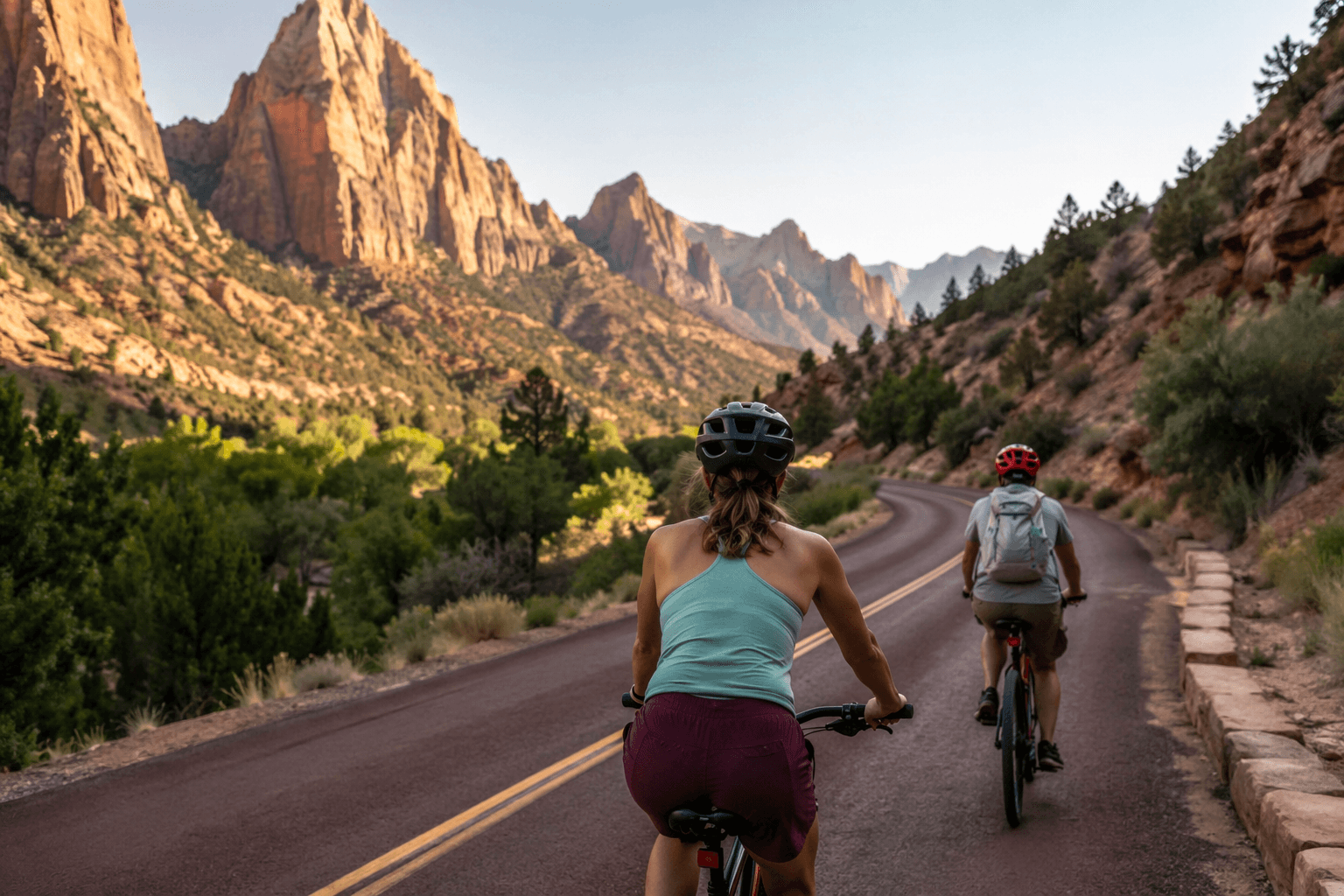
Zion has built enough support into the system that bicycling is more than an improvised workaround. The shuttle buses have bike racks, and each of the park’s nine shuttle stops has a place to lock bikes. That setup makes it easier to combine riding with short shuttle hops if you want to cover more ground without committing to the whole canyon one way or the other.
Two free self-service repair stations are especially useful when you are on a summer ride: one at Canyon Junction, shuttle stop #3, and one at The Grotto, shuttle stop #6. If you get a flat or need a quick adjustment, those stations can keep a canyon day from unraveling. Canyon Junction is the meeting point of the Zion-Mt. Carmel Highway and Zion Canyon Scenic Drive, and The Grotto carries a different kind of history, since it was once the end of the road into Zion Canyon in the early 1920s.
Who biking works for best
The bike option fits visitors who want flexibility more than speed. It is a strong choice if you like to stop often, if shuttle waits frustrate you, or if you want the Scenic Drive to feel like part of the adventure rather than just a transfer corridor. It also works well for active travelers who are comfortable sharing the road with buses and who are happy to trade door-to-door convenience for a more immediate connection to the canyon.
It is less ideal if you are not prepared for heat or if you want the simplest possible logistics. Zion says March through November is its busiest stretch, and all parking lots in Zion Canyon are usually full by 9:00 a.m., which means the road environment gets busy early. In that setting, a bike can be a relief, but only if you are ready for a day that asks you to move with the canyon instead of trying to outrun it.
Heat, safety, and summer timing
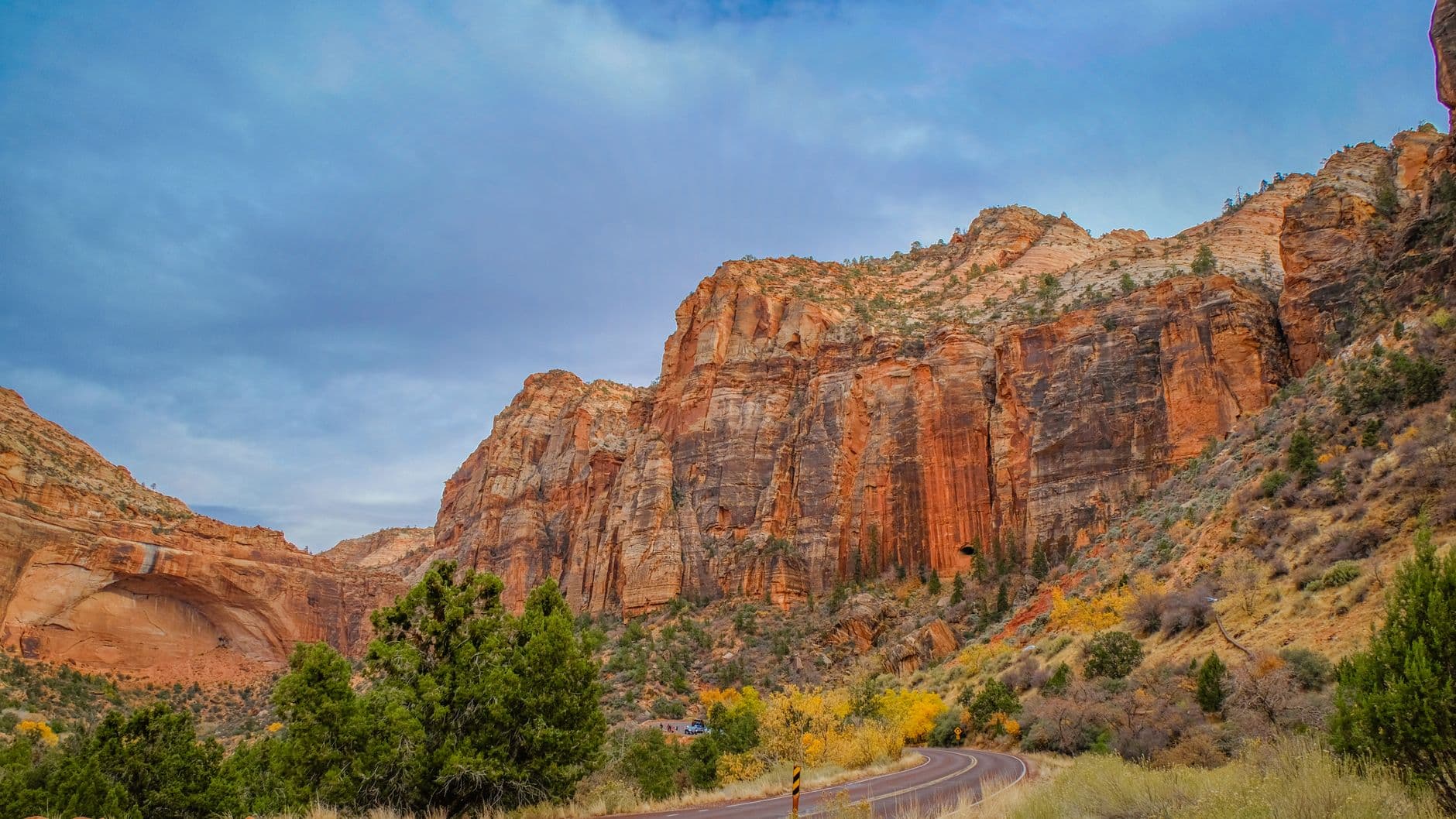
Summer riding in Zion comes with a few nonnegotiables. The road is usually extremely hot and sunny, so water, sun protection, and pacing matter as much as the route itself. The park also requires cyclists to obey traffic signs, yield to pedestrians, and stop when approached by a shuttle bus, which makes road awareness essential in a place where bus traffic and bicycle traffic share the same narrow canyon.
That is one reason the park’s shuttle fleet matters to the bike experience too. Zion now runs 26 electric-powered buses, introduced in 2024, and park shuttle drivers marked the 100 millionth boarding in 2025. Those numbers show how deeply the shuttle system is woven into the Zion experience, but they also explain why bicycling stands out: in a corridor that sees millions of boardings and persistent crowding, a bike gives you one of the few ways to move through the canyon on your own terms.
A canyon shaped by access and pressure
The history behind the bike-friendly corridor helps explain why this advice lands now. The Zion-Mt. Carmel Highway was officially dedicated and opened to the public on July 3, 1930, and decades later the park was still balancing access against damage, congestion, and the strain on facilities. Biking fits that balance because it lowers dependence on the vehicle system without asking the park to give up its core protections for roads, vegetation, and visitor safety.
It also connects to the local economy in a very direct way. In 2024, visitors spent an estimated $774 million in local gateway regions around Zion National Park, supporting 8,560 jobs, so every smart access choice ripples beyond the canyon itself. For a summer visitor, the takeaway is straightforward: if you want Zion Canyon without the shuttle crush, a bicycle on the Scenic Drive can turn a crowded transfer into a slower, better day, as long as you respect the heat, the rules, and the road.
This article was produced by Prism’s automated news system from verified source data, official records, and press releases, then run through automated quality and moderation checks before publishing. The system is built and supervised by the people who set the standards it runs under. Read our full AI policy.
Know something we missed? Have a correction or additional information?
Submit a Tip