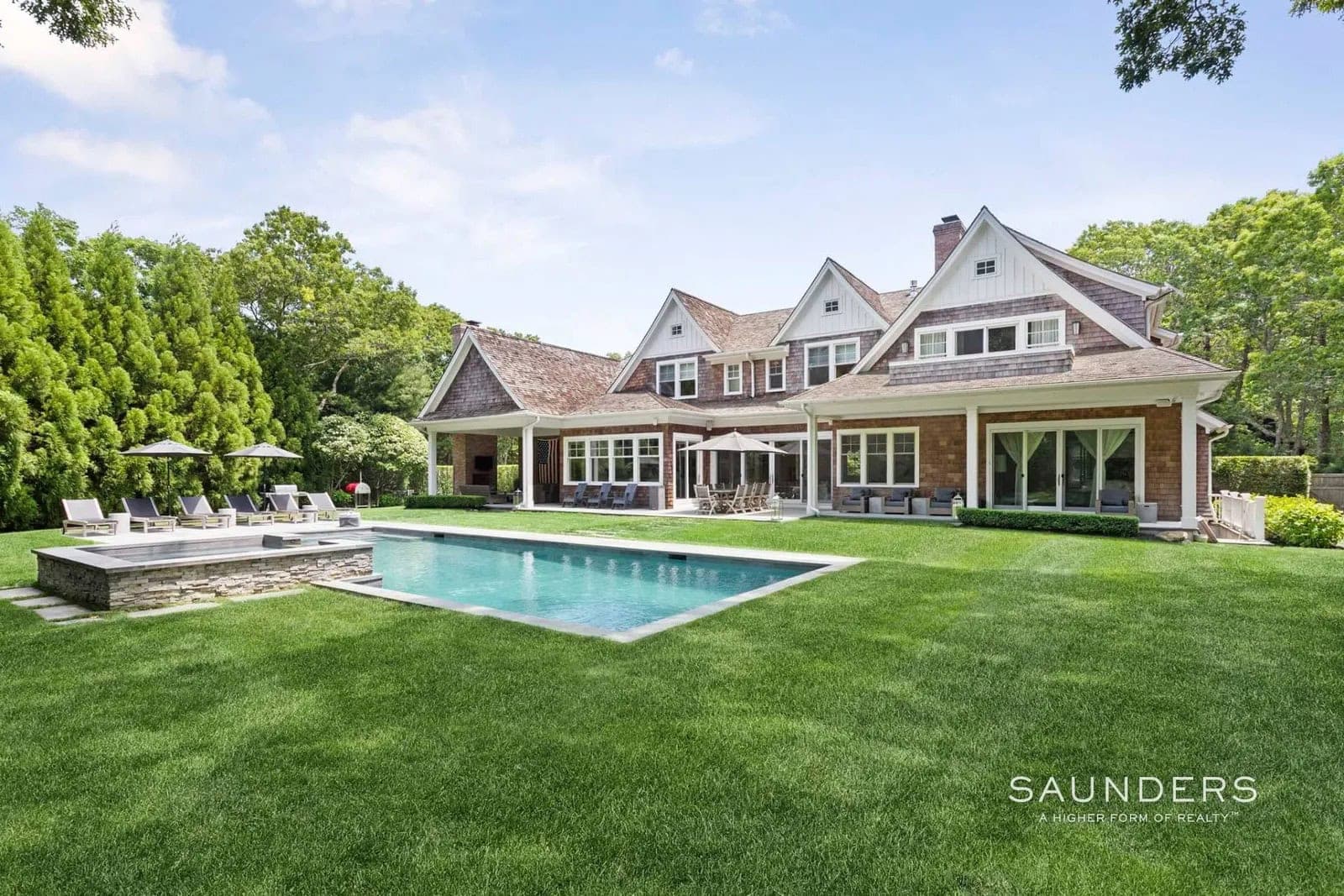
Building a Hamptons Tennis Court Right Requires Coastal Engineering Expertise
Salt air eats standard fencing in 18 months; sandy soils can crack a basic asphalt court in three years. Here's how to build it right on the East End.
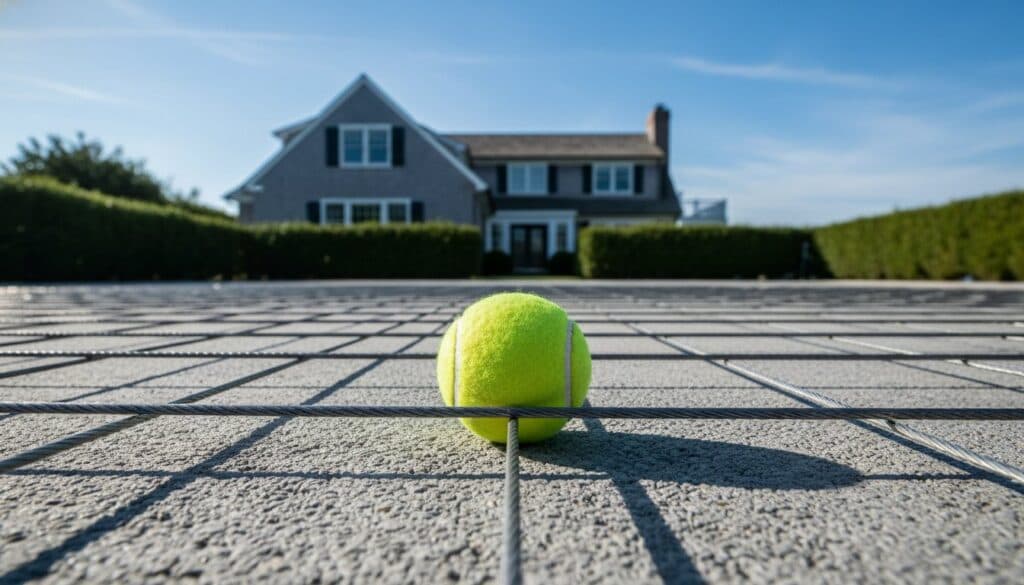
The East End is not a forgiving environment for a tennis court. Long Island logs 30 to 40 freeze-thaw cycles every year, the Atlantic coastline subjects every installed component to corrosive salt spray, the water table in many Hamptons communities sits high enough to destabilize a poorly engineered sub-base, and sandy soils in areas like Amagansett demand compaction ratios that differ significantly from inland builds. A court designed for Westchester or Greenwich will not simply translate here. Treating the project like a standard construction job, rather than a coastal engineering challenge, is how owners end up with cracked slabs, pooling water, and corroded net posts within the first three seasons.
The Coastal Constraints That Drive Every Design Decision
Before any surface or sub-base choice is made, the site itself needs to be fully understood. A thorough pre-construction survey should identify groundwater depth, soil composition, existing drainage patterns, and proximity to tidal influence. Sandy loams, which are common across the East End from Amagansett to Bridgehampton, behave differently under compaction than the clay-heavy soils found further inland. Without proper soil stabilization, typically achieved through geotextiles and engineered base layers, even a premium surface will move, crack, and drain poorly over time.
Salt air is the other variable that most off-Island contractors underestimate. Standard galvanized fencing begins to show white rust within 18 months in a beachfront environment. The specification of 316-grade stainless steel hardware and vinyl-coated chain link is the baseline requirement to resist oxidation. The same logic applies to lighting fixtures, net posts, and any anchor hardware embedded in the slab. Cutting corners on metal specifications to reduce upfront costs is a reliable path to a full fencing replacement within five years.
Water management deserves its own conversation. Hamptons towns frequently impose restrictions around grading and drainage; changes to natural water flow can affect neighboring properties and wetland buffers. Subsurface drainage systems need to be aggressive enough to handle both the drainage demands of a sealed court surface and the freeze-thaw expansion that occurs when water infiltrates any voids beneath the slab. This is not something to engineer after the fact.
Sub-Base: The Decision That Defines the Court's Lifespan
Two engineered approaches dominate premium Hamptons installations, and the choice between them has long-term implications that dwarf the initial price difference.
*Post-tensioned concrete* involves a reinforced slab with tensioned steel cables running through it. The tensioning counteracts the compressive and expansive forces that cause ordinary concrete to crack under freeze-thaw stress and soil movement. Post-tensioned concrete slabs provide a 20-year structural guarantee, resisting the internal pressure of expanding ice. The system is widely regarded by East End specialists as the non-negotiable standard for coastal builds. Smart Sport Surfacing principal Joe Murphy is certified by the Post Tensioning Institute to install post-tension concrete courts.
*Engineered asphalt* is cheaper upfront, and in the right inland setting it performs adequately. On the East End, the calculus is different. High water tables and intense freeze-thaw cycles of coastal Long Island can compromise a standard asphalt or reinforced concrete slab in as little as 36 months. Fissures develop, drainage problems compound, and resurfacing costs begin to accumulate. When total lifecycle costs over 10 to 20 years are factored in, including repair cycles, repeated resurfacing, and performance degradation from early structural failure, the initially cheaper asphalt option frequently ends up costing more than a post-tension build would have from day one.
Surface Selection Matrix: Har-Tru, Hard Courts, and Synthetics
Once the sub-base choice is made, the surface decision shapes everything from player experience to maintenance workload. Each surface type carries specific trade-offs in the Hamptons context.
*Cushioned hard courts (acrylic over post-tension concrete)* are the most common choice for high-end private courts on the East End. Post-tension concrete paired with a multi-layer cushioned acrylic system provides 15% more shock absorption than standard hard courts, protecting players' joints during long matches. Modern cushioned systems consist of multiple resilient layers, liquid rubber and rubber granulates, applied over the engineered slab, and can reduce peak joint impact forces by up to 20% compared to rigid asphalt setups. The cushion thickness can be calibrated: thicker applications soften ball response and slow play, while thinner profiles keep the bounce closer to traditional hard-court characteristics. The right formula depends on who is actually playing and what their priorities are.
*Har-Tru (fast-dry clay)* has a devoted following among East End clubs and private owners who prefer a slower game, better joint comfort, and the aesthetic of a traditional clay court. The maintenance trade-offs are significant, however. Har-Tru requires daily brushing, regular watering to maintain consistency, and, critically, access to adequate water supply. In communities where water restrictions apply, this is a real constraint that must be verified before committing to a clay surface. Har-Tru also requires seasonal shutdown and reopening procedures, and the surface will need more frequent refreshing than a well-maintained hard court.
*Synthetic grass and artificial turf* systems have gained ground in the Hamptons for their low water requirements and year-round playability. Quality synthetic turf built over a properly drained and stabilized sub-base can perform reliably in coastal conditions, provided the infill material and backing system are specified for salt-air exposure. The playing characteristics differ from both hard courts and clay: the ball stays lower and faster, which makes synthetic grass a better fit for certain player profiles and less ideal for others.
| Surface | Coastal Durability | Joint Comfort | Water Demand | Maintenance Load | Best For |
|---|---|---|---|---|---|
| Cushioned hard court | High (on post-tension) | High | Low | Moderate | Most player types |
| Har-Tru clay | Moderate | High | High | High | Club play, senior players |
| Synthetic grass | High | Moderate | Very low | Low | Water-restricted sites |
Permitting and Regulatory Checklist
Hamptons towns enforce zoning rules that directly affect court design, and getting these wrong early can cost months of delay or force expensive redesigns. Key items to confirm before finalizing plans:
- *Minimum lot size:* Tennis courts and pickleball courts are only permitted on lots containing a minimum area of 60,000 square feet in the Village of East Hampton. Verify the applicable threshold for your specific town or village before proceeding.
- *Below-grade requirement:* Tennis courts and pickleball courts shall be constructed at least four feet below grade when measured from the lowest adjacent natural grade. This has significant implications for site prep, drainage engineering, and retaining wall design.
- *Drainage and grading review:* Southampton conducts environmental reviews but does not have a specific process; they may issue wetland permits or require Planning Board input depending on the location. Confirm which review pathway applies to your site before submitting permit documents.
- *Lighting restrictions:* Dark-sky and lighting overlay rules apply in many areas. Specify lighting fixtures from the permitted list and confirm approval before ordering hardware.
- *Historic and overlay districts:* Both towns enforce overlay districts to preserve the historic character of the Hamptons, with restrictions on materials, design style, and even color in some historic areas. Properties in or adjacent to these districts may face additional design review for fencing height and materials.
Build in permit processing time as a hard variable. On the East End, permitting alone can add weeks to months to a project schedule depending on the municipality and the complexity of the application.
Realistic Build Timeline
A premium post-tension concrete court with cushioned surfacing and full lighting is not a six-week project. A realistic sequence looks like this:
1. Site survey and engineering (2-4 weeks): Groundwater assessment, soil analysis, drainage design, and preliminary layout.
2. Permit application and approval (4-12 weeks): Varies significantly by municipality and whether any variance or board review is required.
3. Site preparation and sub-base work (2-3 weeks): Excavation, soil stabilization, geotextile installation, and base compaction.
4. Concrete pour and tensioning (1-2 weeks plus curing): Post-tension concrete requires adequate cure time before surfacing can begin. Rushing this phase compromises the slab's long-term performance.
5. Surface application (1-2 weeks): Cushioned layers, color coating, and line painting.
6. Fencing, lighting, and net system installation (1-2 weeks): Corrosion-resistant hardware specified and installed.
Total realistic timeline from signed contract to first serve: four to six months for an uncomplicated site, longer if permitting is contested or site conditions require additional engineering.
Maintenance: What the First Five Years Look Like
A well-built court still requires a committed maintenance routine to protect its lifespan. Annual and seasonal tasks to plan for:
- Seasonal cleaning of surface debris, moss, and organic buildup, which accelerates in humid, salt-air environments
- Re-line painting on a schedule appropriate to play frequency, typically every one to three years for hard courts
- Annual inspection of fencing, net posts, and anchor hardware for corrosion, particularly after winter
- Drainage system inspection each spring to clear any sediment accumulation
- Multi-year resurfacing plan: cushioned resilient layers typically require a partial refresh cycle before the 10-year mark depending on play volume and climate exposure
The resurfacing interval is not a fixed number. It depends on UV exposure, play intensity, and whether the original installation was done to specification. Courts that were properly engineered at the sub-base level will hold their surface longer because there is no underlying movement cracking the bond.
Red Flags When Vetting Contractors
The East End has no shortage of general contractors willing to build a court. The ones worth hiring are a much shorter list. Watch for these warning signs:
- No local portfolio. Ask specifically for completed installations in Bridgehampton, Amagansett, East Hampton, or Southampton, communities where the coastal soil and climate conditions are comparable to your site. A contractor who cannot show you a long-term installation on the East End is learning on your property.
- No post-tension certification. Proper post-tension concrete installation requires certification from the Post Tensioning Institute. Ask for it directly.
- Vague or missing warranties. A quality contractor should be able to provide written performance guarantees tied specifically to substrate and surface performance, not a generic workmanship clause.
- No drainage plan. Any contractor who cannot articulate a detailed subsurface drainage strategy for your specific site conditions should not be excavating the first foot of soil.
- Lowest bid without explanation. Significant underbids relative to the field usually mean a cheaper sub-base, unspecified materials, or a lack of local expertise in coastal engineering requirements.
The right contractor will ask about your groundwater table before they ask about your preferred surface color. They will raise freeze-thaw dynamics and drainage specifics in the first meeting, not as a sales pitch but as an operational reality they have already solved on other East End properties. On the East End, where a private court is simultaneously a lifestyle asset and a meaningful line on the property appraisal, getting the engineering right from the start is the only version of this project worth doing.
This article was produced by Prism’s automated news system from verified source data, official records, and press releases, then run through automated quality and moderation checks before publishing. The system is built and supervised by the people who set the standards it runs under. Read our full AI policy.
Did this article answer your question?