East Hampton freezes court conversions as tennis, pickleball compete for space
East Hampton Village’s pause on court conversions protects scarce playing space while officials study noise, and it shows how pickleball pressure is reshaping Hamptons tennis.
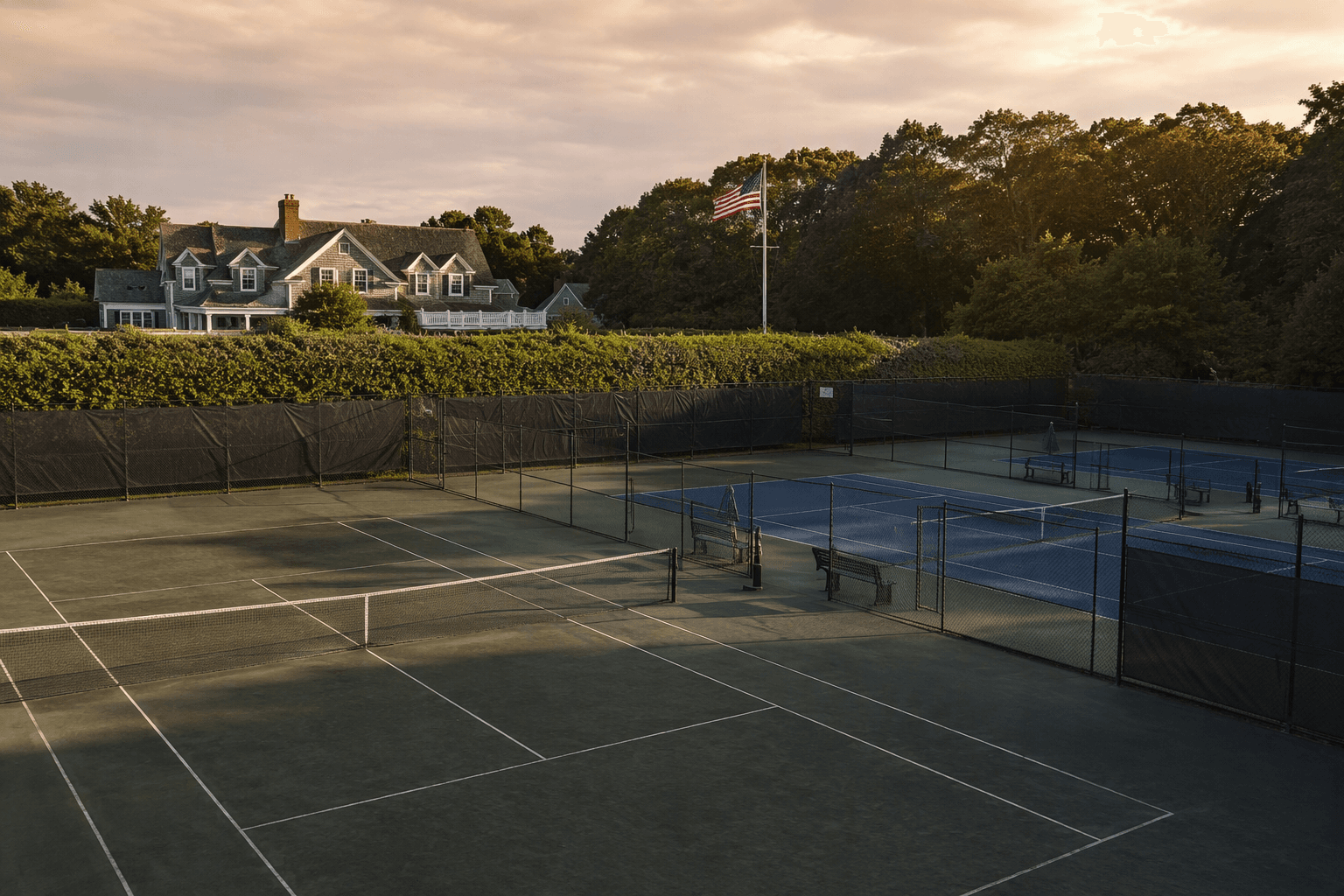
East Hampton Village’s pause on tennis-court and pickleball-court conversions matters because every striped line and every repurposed court changes where people can actually play in the Hamptons. In a place where court space is already limited, the moratorium gives tennis a buffer while the village weighs the noise, access, and neighborhood fallout that come with converting playing surfaces.
What the moratorium does
East Hampton Village’s code includes a chapter titled “Moratorium on Tennis Court and Pickleball Court Conversions,” and the village Board of Trustees met on April 19, 2024 as that policy took shape. A village PDF later said the point was to let the village collect and examine data and expert information concerning the noise associated with tennis and pickleball courts. That is the practical heart of the issue: before a court gets resurfaced, re-striped, or reprogrammed, the village wants time to understand what the change means for nearby homes and for the broader playing map.
For tennis players, that pause is not bureaucratic fluff. A single conversion can remove a place to hit for years, not just for one summer, and in the Hamptons that loss is magnified because new courts are hard to site and expensive to build. Land constraints, drainage, setbacks, and neighborhood compatibility all make court creation a slow project, so the easiest path for a property owner is often to adapt what already exists.
Why one court can shift the whole playing scene
The Hamptons court culture has long been shaped by private clubs, estate lawns, and summer-only demand, but the supply side has become just as important as the social side. When a tennis court gets converted, it affects more than the owner’s backyard or club programming. It changes the number of spaces available for league matches, casual hitting, and weekend guests who may already be working around busy schedules and crowded summer calendars.

That is why East Hampton’s moratorium is better understood as a supply-management tool than as a narrow land-use move. Tennis players want existing courts protected because replacement is difficult. Pickleball players want flexible ways to expand access because their sport has grown faster than municipalities can build dedicated facilities. The policy sits right at that fault line, where preservation and adaptation are competing for the same painted rectangles of asphalt and hard court.
Herrick Park became the local flashpoint
Herrick Park shows how quickly a court conversion can become a public fight. Newsday reported that renovation plans there had included re-striping a tennis court for pickleball, a small physical change that can carry outsized consequences for who gets to use the space and how often. The East Hampton Star later reported on April 27, 2023 that Michael and Barbara Bebon filed an Article 78 petition in Suffolk County Supreme Court to stop lighted pickleball courts in Herrick Park, naming East Hampton Village, its Board of Trustees, and Mayor Jerry Larsen.
That dispute shows the range of concerns that tend to follow court conversion proposals. Noise is the obvious one, especially when lighting extends play into the evening, but traffic, aesthetics, and access quickly enter the conversation too. A moratorium buys time to sort through those pressures before a court becomes a permanent neighbor dispute.
Where players are being pushed now
East Hampton Town’s recreation pages make clear that demand for court time is not hypothetical. The town keeps separate Tennis Information and Pickleball Information pages, and its pickleball listings point to several specific places where the game has already taken hold. Those include three courts at the Springs Youth Association Building, three at the Borden Lane complex, four at the East Hampton Town Campus, and a designated pickleball court at Maidstone Park.
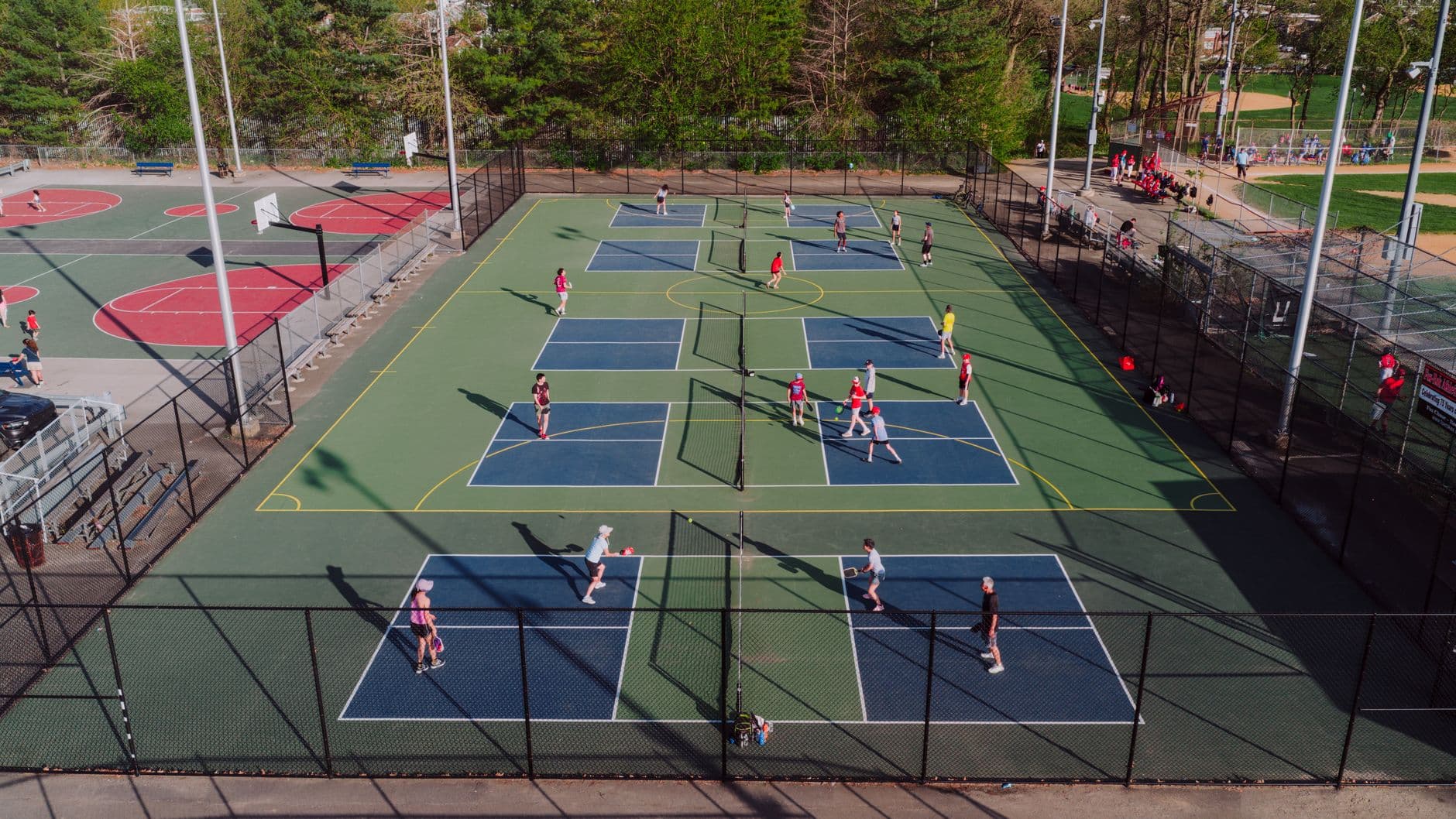
That inventory matters because it shows how East End players are adapting to the existing footprint instead of waiting for entirely new facilities to appear. Pickleball in particular often spreads by taking over or sharing space that already serves tennis, which is exactly why conversion rules have become so important. The town’s listings make the pressure visible: people are not simply asking for more recreation, they are asking where the next court will fit.
The East End is already writing its own playbook
East Hampton is not dealing with this alone. The Village of Sagaponack adopted pickleball regulations in 2022 after a sound-engineering survey, showing another local government using technical evidence to manage noise and court use. North Haven moved in a similar direction on March 20, 2024, when its notice of adoption referenced a local law titled “Moratorium on Pickleball and Padel Courts.”
Taken together, those moves show a pattern across the East End. Towns and villages are no longer treating racquet-sport growth as a simple amenity upgrade. They are deciding when a court is a neighborhood asset, when it becomes a source of friction, and when the safest move is to pause before making a change that cannot easily be undone.
That is why East Hampton Village’s moratorium resonates beyond one board meeting or one park. In the Hamptons, court space is scarce enough that a conversion can alter the playing landscape for seasons to come, and the current fight is really about who gets to shape that landscape before the paint dries.
This article was produced by Prism’s automated news system from verified source data, official records, and press releases, then run through automated quality and moderation checks before publishing. The system is built and supervised by the people who set the standards it runs under. Read our full AI policy.
Did this article answer your question?