Hamptons Tennis Guide: Mastering Har-Tru and Mixed Surfaces in Any Wind
Har-Tru and coastal wind will humble any player who shows up unprepared; here's how to read the East End and actually thrive on it.
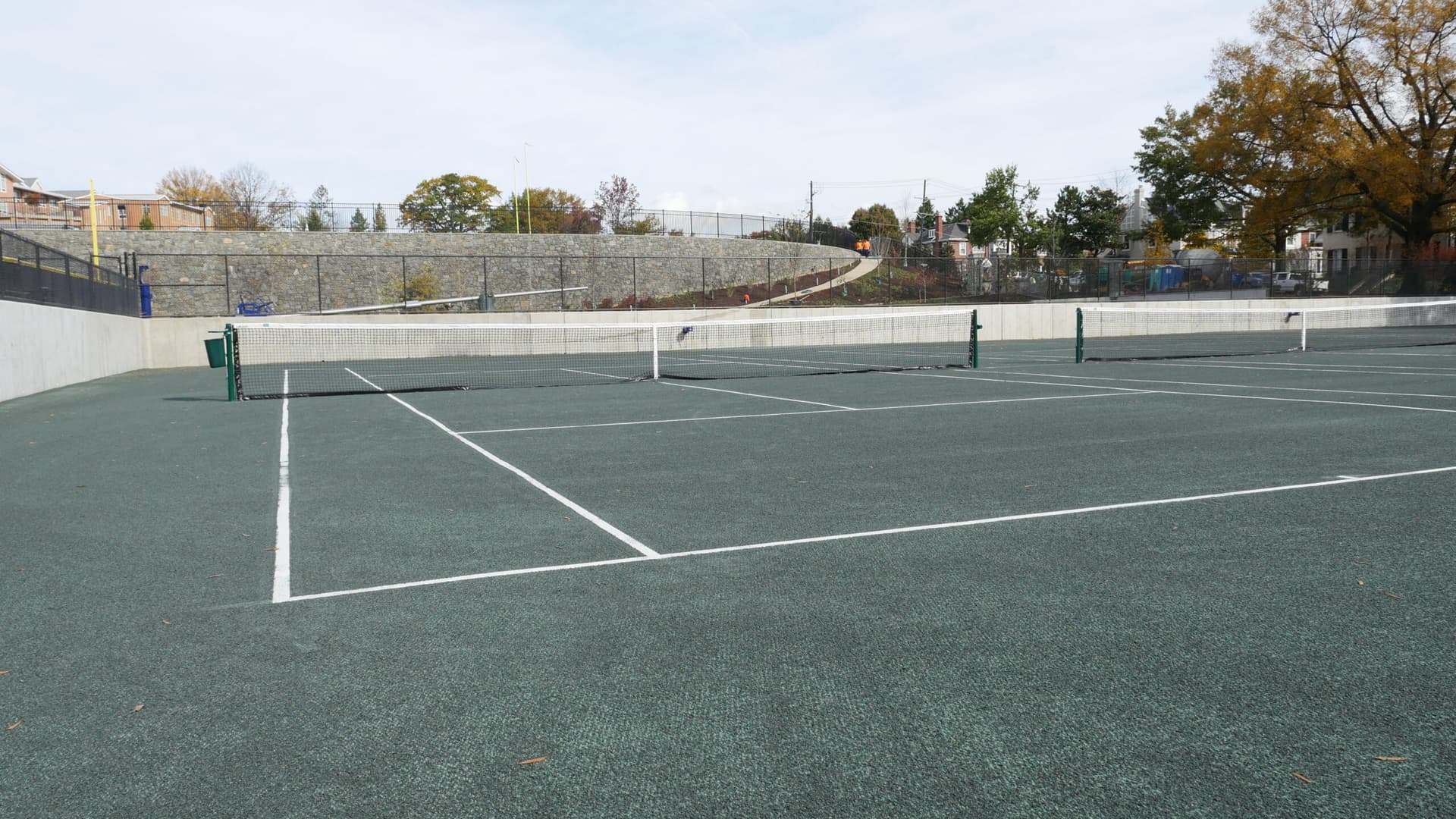
If you've played tennis on the East End for more than one summer, you already know the drill: you step onto a Har-Tru court at, say, 10 a.m. on a Saturday in Southampton, the wind is cutting off the water at a solid 15 miles per hour, and suddenly every shot you've grooved on an indoor hard court feels completely foreign. The ball sits up differently, your footwork is sliding when you want it to grip, and your opponent who grew up on clay is absolutely eating you alive. This guide is about closing that gap.
Understanding what Har-Tru actually does to the game
Har-Tru, the crushed green stone clay surface that dominates outdoor club play across the Hamptons, plays slower and higher than the hard courts most players train on during the winter. The surface is also alive in a way hard courts aren't: it dries out through the day, gets slick near the baseline where players pound it repeatedly, and gets brushed and watered on a maintenance schedule that affects pace noticeably from morning to afternoon. Early morning play on a freshly watered Har-Tru court is significantly slower and more forgiving on the joints than the same surface at 3 p.m. after a dry afternoon. Knowing this, you can start to plan your game around it rather than just reacting to it.
The bounce is the other factor. Har-Tru produces a higher, more predictable bounce than hard courts, which rewards players who can absorb pace and redirect rather than rip through the ball. If your game is built around flat, hard hitting, you're going to need to dial back pace and add more topspin to keep the ball in play. The higher bounce also means your opponents will have more time to run down balls you thought were winners, so point construction on Har-Tru demands more patience.
Mixing surfaces: what it means for East End players
Not every Hamptons club or facility runs all Har-Tru. Some facilities have a mix of hard courts and clay, and if you're playing socially across different venues on the East End, you may switch surfaces multiple times in a single week. That inconsistency is actually its own skill set. The adjustment from hard to clay is significant enough that even mid-level club players notice a real difference in their timing, their footwork patterns, and especially their serve returns. When you're bouncing between surfaces, resist the temptation to play the same game on both. On hard courts, you can be more aggressive earlier in the rally; on Har-Tru, you should be willing to extend points and look for higher-percentage putaways rather than going for broke off the first short ball.
Choosing the right equipment
Footwear is the single most important equipment decision for Har-Tru play. You need a proper clay court shoe with a herringbone sole pattern. Running shoes, all-court shoes, and especially hard court shoes will not only underperform, they'll damage the surface and get you a well-deserved look from the groundskeeper. On Har-Tru specifically, you want a shoe that allows some controlled sliding when you're setting up for groundstrokes, while still providing enough lateral stability that you're not rolling an ankle on sudden direction changes. Brands like Babolat, Adidas, and Nike all make dedicated clay court models, and the difference versus an all-court shoe is immediately noticeable the first time you try to slide into a wide forehand.
String selection matters more on clay than most recreational players realize. A softer multifilament or full natural gut will help you generate the spin and control you need on Har-Tru, where poly strings strung very tight can actually work against you by reducing dwell time on the ball. Mid-tension setups in the 50-55 pound range tend to play well on clay. If you're already a heavy topspin player with a full polyester string bed, you might drop tension by two or three pounds compared to what you'd use on hard courts.
For apparel on the East End, the wind is the variable most players underestimate. A lightweight, fitted top beats a loose shirt every time when you're playing into a 20-mph headwind off the Atlantic; loose fabric creates actual drag and mess on your toss. Breathable layers matter for early morning or late afternoon play when temperatures can swing considerably, even in July and August.
Playing in coastal wind: tactics, not just tolerance
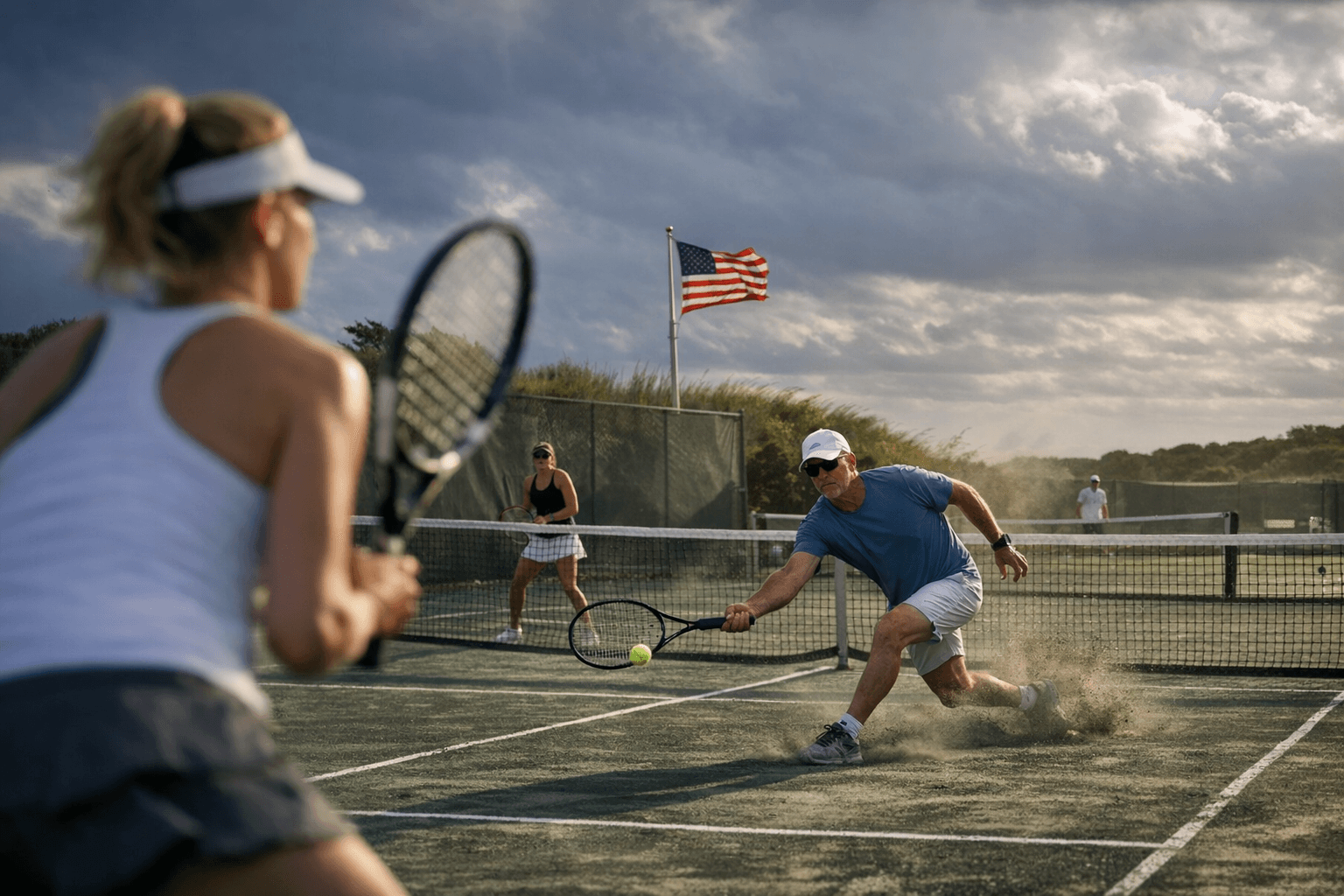
The wind at most Hamptons venues has a dominant direction and a consistent character, and learning it is as important as learning the court. Wind off the water tends to be steadier and more predictable than the swirling, gusty conditions you get further inland. Steady wind is actually manageable once you accept it as a court condition rather than an obstacle. The key tactical adjustments:
- When hitting with the wind at your back, flatten your shots and aim higher over the net. The wind will do extra work for you, and topspin balls can sail long if you're not careful.
- When hitting into the wind, add more topspin and take pace off. Let the wind bring the ball down for you. Moonballs, which many players scoff at on indoor courts, are genuinely effective weapons into a headwind.
- On crosswind courts, aim at wider margins than you normally would. The ball drifts, and what looks like a comfortable down-the-line from your end can float two feet wide by the time it crosses the net.
- On the serve, shorten your toss and keep it in front of you. A high toss in wind becomes a lottery, especially for a kick serve that requires tossing behind your head.
Modifying your drills and practice for these conditions
Standard drill patterns from an indoor facility don't translate cleanly to outdoor Har-Tru in wind. The most useful adjustment is to add movement before every groundstroke in your drilling, even if the feed is coming right to you. On Har-Tru, you almost never hit from a fully static position; learning to time the sliding setup step is something that requires specific repetition on the surface itself.
For cooperative baseline drilling, slow the pace down and extend rally length targets. On Har-Tru, a 20-ball rally is a realistic and productive goal in a way it simply isn't on hard courts. If you practice with a partner, designating wind-direction-specific targets, such as practicing aggressive crosscourt when hitting into the wind versus targeting deep down-the-line when the wind is behind you, will accelerate your tactical adaptation faster than any amount of general drilling.
Serve practice on a windy day should focus almost entirely on consistency and placement, not pace. Get a basket of balls and work your way through them with the explicit goal of keeping the toss steady and landing three-quarters of your serves. Power serves can come later, once your toss mechanics are wind-proofed.
The bigger picture
The East End rewards players who prepare specifically for it rather than assuming the game they've built elsewhere will transfer automatically. Har-Tru requires patience and tactical adjustment; the coastal wind demands technical discipline, particularly in the toss and the overhead. Players who embrace these as interesting constraints rather than frustrating obstacles tend to develop a more complete, adaptable game overall. There's a reason that some of the craftiest tactical players you'll ever face on tour or at the club level came up on clay: the surface teaches you things you can't learn anywhere else.
This article was produced by Prism’s automated news system from verified source data, official records, and press releases, then run through automated quality and moderation checks before publishing. The system is built and supervised by the people who set the standards it runs under. Read our full AI policy.
Did this article answer your question?