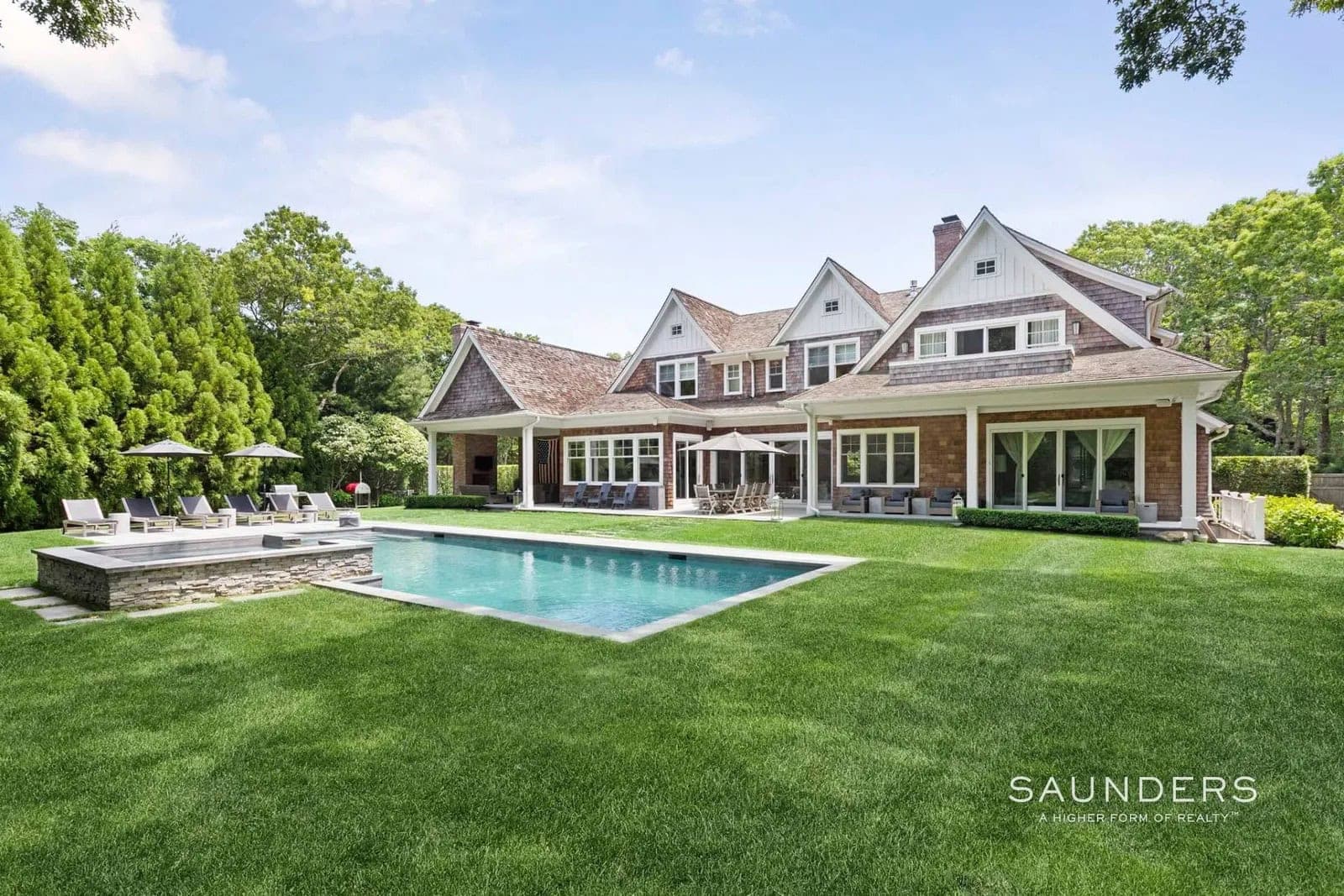
How Hamptons tennis courts rely on drainage and precise foundations
The best Hamptons courts are won or lost under the surface. Drainage, sub-base prep, and exact grading decide bounce, cracks, and how long the court survives coastal weather.

A Hamptons court can look flawless on opening day and still play badly by midsummer if the foundation is wrong. The real difference is not the paint or the fencing, it is what happens below the lines: how the sub-base is compacted, how the slope is set, how water moves off the court, and how the edges are finished so the whole system holds together through rain, salt air, and freeze-thaw swings.
Why the base matters more than the paint
Hamptons Tennis Company’s construction list runs from sub-base preparation and machine-control laser grading to asphalting, final surface finishing, masonry, custom wood fencing, pergolas, and custom wood net posts. That sequence makes one point clear. A court is an engineered structure, not a flat rectangle with lines on it. If the base is off by even a little, the top layer may still look polished, but the bounce will feel uneven and the surface will age faster than it should.
That is especially important in a place like the Hamptons, where the courts have to survive wet weather, heavy seasonal use, and the kind of temperature swings that punish weak construction. A player feels the problem immediately. The ball skids where it should rise, a corner holds water after a storm, or a section near the baseline goes soft because the base below it never had the right support in the first place.
Drainage is the whole game
Nova Sports U.S.A., drawing on ASBA-style construction guidance, identifies standing water on or beneath the court as the biggest single factor in recreational surface deterioration. That is the part owners miss when they focus only on the finish color or the surface brand. Surface drainage matters, but subsurface drainage matters too, because water that gets trapped below the playing layer keeps working on the court long after the rain has stopped.
Most courts are built in layers, and in places where the ground can freeze, drainage becomes crucial because the foundation layer, also called the sub-base, has to resist frost damage. If water is held in the sub-surface, frost can cause the court to heave. In plain English, that means a court can lift, crack, or lose its shape from below even if the top still looks serviceable.

That is why slope and compaction are not minor details. The court needs to shed water cleanly, the base has to be level enough to preserve true bounce, and the surrounding edge work has to keep the structure from breaking down at its weakest points. In the Hamptons, coastal conditions can turn small drainage mistakes into expensive repairs.
What porous asphalt courts are really built from
Porous asphalt courts are typically built with multiple aggregate layers, often limestone, with finer grades closer to the surface. The foundation supports the surface and allows water to drain away. That layered build is the reason a court can feel firm underfoot while still moving moisture out of the structure.
The playing experience is tied to the structure below. A court with the right layers and drainage should feel consistent from one end to the other, not dead in one corner and lively in another. If the aggregate layers are wrong, or if the sub-base was not prepared with enough precision, the court can start failing long before the surface wear looks dramatic.
For anyone evaluating resurfacing work, this is the part to inspect first. Ask how the base was prepared, what the drainage path is, and whether the court was graded with the kind of precision that keeps water from pooling in low spots.
How surface quality shows up in play
The International Tennis Federation’s court pace classification program, launched in 2000, now lists more than 200 classified products. It connects construction to the actual ball response players feel.
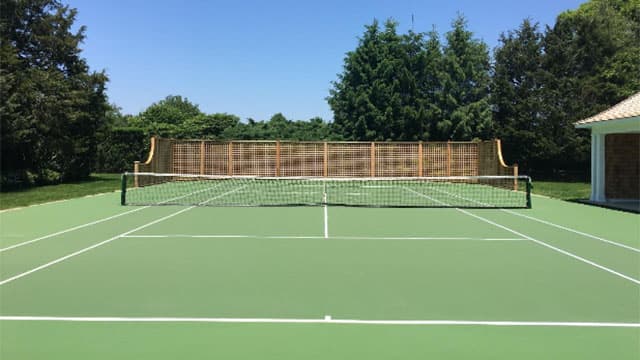
That is a practical point for Hamptons players who notice that two nearby courts can play very differently. One may have a firmer, more predictable response because the layers are compacted and drained properly. Another may feel sluggish after rain or uneven after a season because water has worked into the sub-base and the surface has started to break down.
What clubs and homeowners can learn from the USTA
The USTA treats court quality like infrastructure, not just amenity value. Its Tennis Venue Services program offers technical assistance, business consulting, advocacy support, digital tools, grant funding, construction-document review, and recommendations on grading and drainage plans. That is the kind of support that matters when a club is resurfacing, lighting a court for longer hours, or planning a full rebuild.
The USTA put U.S. tennis participation at 27.3 million players in 2025, up 1.6 million from the prior year and up 54% since 2019. It also announced an additional $10 million in grants in February 2025 to help build, refurbish, and extend playable hours on courts across the country.
The Hamptons market rewards process, not just polish
Local builders know that premium courts are sold on durability as much as appearance. Smart Sport Surfacing advertises more than 45 years in the Hamptons court-building market and post-tension concrete courts that last 25+ years. Laurel Group Fine Landscapes and Luxury Outdoor Living advertises more than 33 years serving the Hamptons and North Shore and handling every phase in-house, from sub-base prep and laser grading to asphalt paving and finishing.
This article was produced by Prism’s automated news system from verified source data, official records, and press releases, then run through automated quality and moderation checks before publishing. The system is built and supervised by the people who set the standards it runs under. Read our full AI policy.
Did this article answer your question?