Sims 4 occult collab save file transforms seven worlds with atmosphere
This save turns occult neighborhoods into a playable story engine, with 44 Simmers rebuilding worlds, households, and mood. It is the rare download that changes how you play tonight.
Why this save feels different the second you load in
If your save files have started to feel flat, this is the kind of download that wakes them back up. The occult collab save does not behave like a single showcase lot, it spreads its ideas across multiple worlds so the game feels authored instead of randomly filled in.
That is the real draw here: atmosphere with a job to do. The project is built to be played, not just admired, so every neighborhood becomes part of a larger occult story rather than a one-off building reveal. For legacy saves, lore-heavy households, and players who want their supernatural Sims to live in a world that seems to know who they are, that changes everything.
A collaboration large enough to reshape a save file
The scale is part of the appeal. Eryn With a Y says the save was created with 44 other Simmers, and that number matters because it turns the project into a shared worldbuilding effort rather than a solo makeover. This is not one creator decorating one neighborhood for screenshots. It is a coordinated rebuild with different hands shaping different corners of the occult map.
The team built the save as an occult-exclusive project with limited packs in mind, which makes it easier for more players to slot into their own game. That accessibility is a big reason it stands out in a community that often watches ambitious saves drift into pack-heavy territory. Here, the promise is simpler and stronger: a fuller occult experience without requiring your entire library.
The build lineup also tells you this was organized with intention. A tied build video lists collaborator groupings for mermaids, fairies, spellcasters, vampires, aliens, werewolves, Sixam, and Magic HQ. That kind of structure makes the save feel like a cross-world network of supernatural subplots, not just a folder of pretty builds.
The worlds are doing narrative work, not just decorative work
The save rebuilds every lot in Glimmerbrook, Sulani, Moonwood Mill, Forgotten Hollow, Magnolia Promenade, and Innisgreen, and each world gets a distinct tone. Glimmerbrook is softened into a more magical space, with a new café and a refreshed Magic Realm HQ that make it feel like a place where spellcasters actually linger. Innisgreen reads like a hidden fairytale world, while Sulani feels more lived in, as if the island has picked up new routines and histories.
Moonwood Mill gets one of the most interesting treatment shifts because its base-game identity is already so specific. The world was introduced in The Sims 4: Werewolves as a foggy abandoned logging town inspired by Northern Canada, with one neighborhood and five lots, so any rebuild has to work against that lonely, weathered mood. In this save, the result is more contrast, which is exactly what gives a werewolf world room to breathe without losing its edge.
The save also makes smart use of contrast in places that are easy to overlook. Magnolia Promenade is treated like a space that hides more than it reveals, which is a clever choice for players who like their occult stories to feel tucked behind normal storefront life. Forgotten Hollow leans fully into gothic storytelling, which gives vampire households and legacy drama the kind of visual backdrop they deserve.
Then there is Planet Sixam, which appears in the project’s collaborator lineup and adds an unexpected sci-fi note to the whole experience. That matters because it widens the save beyond a simple gothic-and-magic package. Instead, the project suggests that occult play can stretch into stranger, less predictable corners of the game.
Why the pacing makes it better to play, not just better to look at
One of the smartest things about this save is that it resists visual overload. The article’s framing makes clear that it is not trying to overwhelm you with noise or pack every lot with competing ideas. Instead, it creates a slower pace where moving from one lot to another becomes part of the experience.
That slower pace is especially useful for players who like cross-household storytelling. A spellcaster in Glimmerbrook can feel like part of the same ecosystem as a vampire in Forgotten Hollow or a werewolf in Moonwood Mill, even if they never meet on the same lot. The save gives you reasons to rotate through households, revisit old saves, and let one neighborhood’s mood bleed into another storyline.
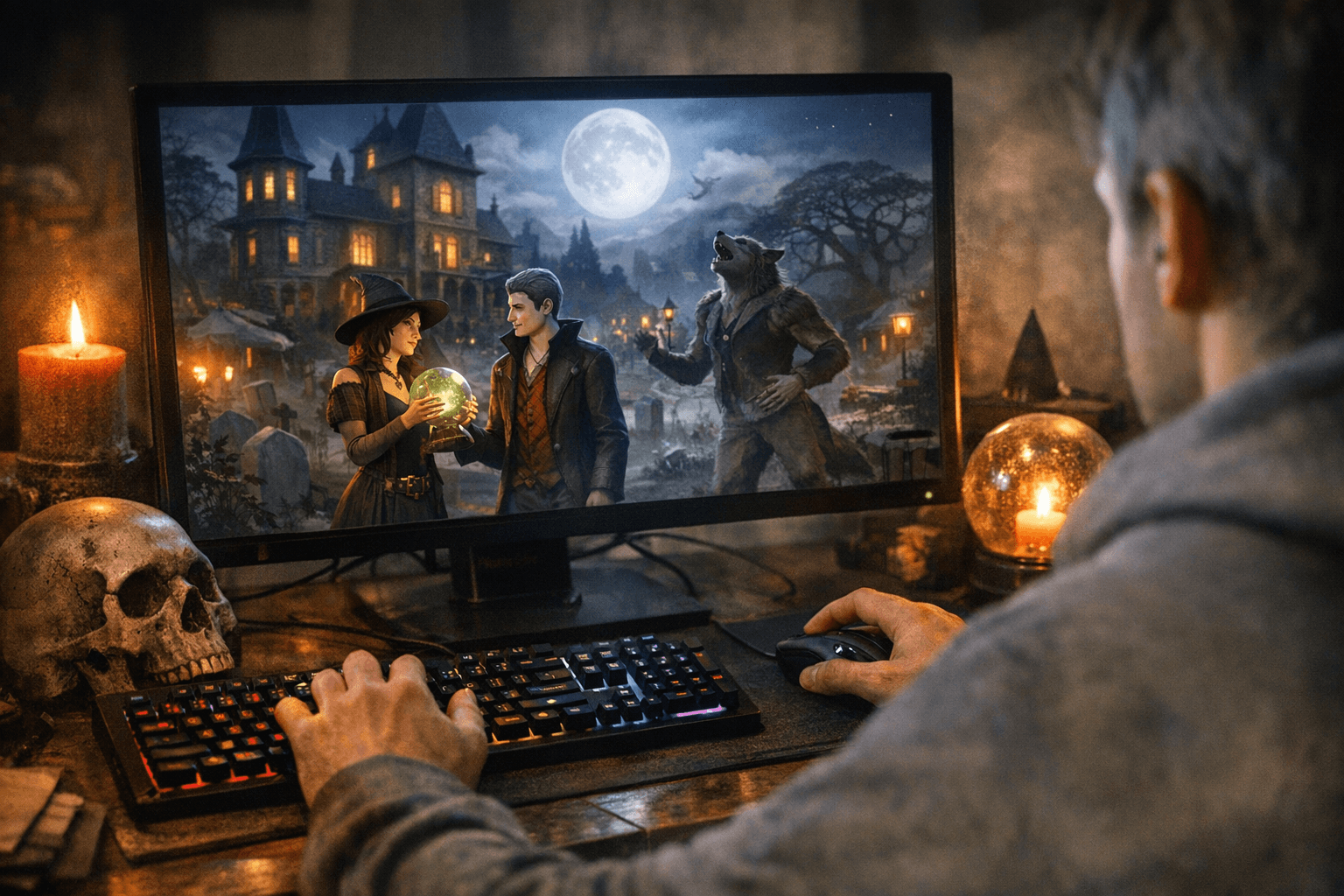
This is also where the project starts to feel like expansion content in spirit. The Sims 4 has six occult options, and each one already carries a distinct kind of fantasy play. A save built around those life states does the work of connecting them, giving you a world where mermaids, aliens, fairies, vampires, spellcasters, and werewolves can all feel anchored to a larger map.
Why this matters for legacy and lore players right now
Community save files have become one of the most interesting corners of Sims creativity because they let players replace default worlds and townies with something more personal. This occult collab fits squarely into that tradition, but it pushes the idea further by making atmosphere and gameplay inseparable. It is not just a prettier version of familiar neighborhoods. It is a framework for long-form play.
For legacy players, that means descendants have somewhere to inherit from. For lore players, it means occult households no longer feel like isolated gimmicks but like residents of a broader supernatural culture. For builders, it offers a rare kind of satisfaction: the sense that every lot you enter has a purpose in the wider story.
That is why this is worth downloading tonight. It is a collaborative save that understands the oldest Sims truth of all: the best worlds are the ones that make you want to stay in them, switch households, and see what happens next.
This article was produced by Prism’s automated news system from verified source data, official records, and press releases, then run through automated quality and moderation checks before publishing. The system is built and supervised by the people who set the standards it runs under. Read our full AI policy.
Did this article answer your question?