Simstrology V2 Overhauls Sims 4 Astrology With Dynamic, Time-Synced System
PlumAntics' Simstrology V2 replaces static zodiac labels with a live Python clock, making retrogrades and returns real gameplay events that visibly reshape how your Sims behave.
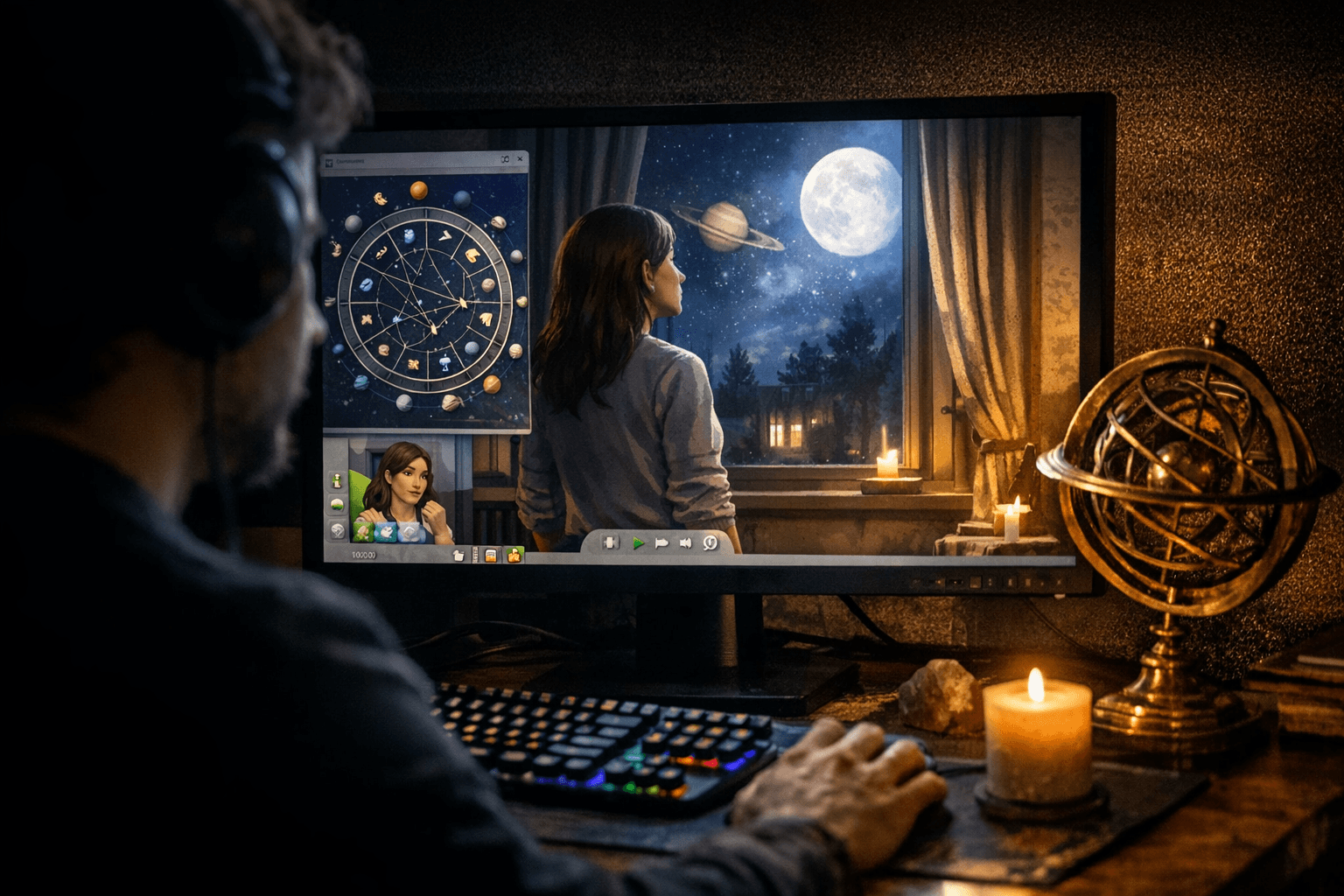
If you have been running an older build of PlumAntics' Simstrology mod, you already know the baseline: Sun, Moon, and Rising signs assigned at creation, some personality flavor baked in, astrology as atmosphere. "Version 2 completely changes that." That line, from SnootySims writer Keith's deep dive on the update, is not hyperbole. It is a precise description of what PlumAntics has actually done. V2 replaces the mod's XML-driven, segmented behavior model with a single Python-powered universal Simstrology clock, and the difference is immediately visible in how Sims move through their days, their relationships, and their careers.
The Engine Underneath: Why a Single Clock Changes Everything
The original architecture ran astrology as a collection of separate XML behaviors, which meant each feature, retrogrades, transits, sign interactions, fired in its own silo. That approach produced flavor without coherence. V2 consolidates everything under one shared runtime that tracks chart state continuously. In practical terms, this means the sky your Sim is living under is the same sky shaping every other system in the mod simultaneously. Retrogrades build gradually as small notices before escalating into full transit moods. Returns actually trigger as gameplay events rather than sitting as static readouts. Chart attributes like dominant elements, planetary rulers, and modalities are no longer decorative; they feed active mood logic in real time.
The result, as Keith frames it, is a system that "feels like a natural part of your Sims' lives instead of an add-on." That distinction matters more than it sounds, because it is the difference between a trait label you reference once in CAS and a system that surfaces unexpected story beats three in-game weeks later.
What Actually Changes in Gameplay: Four Areas Worth Watching
*Romance and Social Compatibility*
This is where the before/after gap is widest. Elements now drive romantic compatibility math in ways that produce emergent friction or chemistry depending on chart pairings. Fire signs paired together generate heightened spark interactions; Fire and Water pairings produce conflict-coded social outcomes. Previously, these pairings were informational. In V2, they carry real behavioral weight in social autonomy, affecting which interactions Sims autonomously reach for and how those interactions resolve.
Consider a Fire Sun Sim pursuing a Water Moon Sim in a legacy household. In V1, their charts were labels. In V2, you can expect the relationship to hit specific friction windows tied to transits, windows you can use as story beats or actively manage by leveling the Simstrology skill to get earlier warnings.
*Retrogrades and Mood Behavior*
Retrograde behavior is one of the clearest examples of the new clock doing something V1 simply could not. In V2, retrograde moodlets begin at Simstrology Skill Level 2 as small notices. They intensify into full transit moods as the Sim reaches Skill Level 4 and deeper chart awareness unlocks. This progression means a low-skill Sim is mildly affected by a retrograde while a practiced chart-reader experiences the same event with full emotional weight.
In a career context, this creates meaningful timing. A Sim in a high-stakes career push who hits a retrograde window without enough Simstrology skill to read it coming will have their performance moodlet stack disrupted in ways that feel organic rather than punitive. Build the skill, and you can anticipate those windows and plan around them.
*Returns as Narrative Anchors*
Moon Returns and Solar Returns now trigger as actual gameplay events on the universal clock. For storytellers and legacy runners, this is the feature with the highest ceiling. A Solar Return in V2 is a deterministic hook: you know it is coming, you can frame narrative around it, and the game will deliver mood and interaction shifts that validate the story beat. Older builds had return-type information in the chart readout, but nothing fired in the world to match it. V2 delivers the event, not just the label.
*Autonomy and Identity Over Time*
The Sun/Moon/Rising identity is no longer a snapshot from character creation. It evolves as transits progress, meaning a Sim's behavioral tendencies shift in ways anchored to their chart rather than drifting randomly. This has particular implications for autonomy-heavy playstyles: if you step back and let your Sims run, V2's clock produces more astrologically coherent behavior patterns than either pure vanilla autonomy or V1's static assignments.
The Skill System: Your Gateway to Depth
The Simstrology skill is the pacing mechanism that keeps the system accessible without flattening it. At lower levels, Sims pick up chart basics and start noticing retrograde periods. At higher levels, deeper chart-reading interactions unlock, including a new multi-screen Read Natal Chart interaction added in the v2.02 hotfix, which surfaces signs, houses, and planets in houses in detail. The skill also gates how much transit awareness a Sim carries, which means investing in it is not optional if you want the full emergent behavior picture.
Two onboarding paths let you choose how a Sim enters the system: Sun First builds the chart progressively through Sun, then Moon, then Rising over time; Rising First uses the Rising sign as the anchor and fills in the broader chart from the current sky. Both paths converge into the shared V2 framework once onboarding completes.
Should You Update?
If you are running an active save with the earlier Simstrology build, the answer is yes, and the migration path is built in. Open the pie menu and navigate to Your Simstrology Hub > Upgrade to V2 > Refresh My Simstrology to V2. This built-in route moves existing households onto the universal clock without a restart, which is a meaningful quality-of-life commitment from PlumAntics.
If you are adding Simstrology to a large Mods folder for the first time, budget a short compatibility audit before you dive in. Because V2 runs a global Python clock, any other script mod that touches mood, trait behavior, or social autonomy in broad strokes is worth checking. The mod is explicitly designed to be modular and Maxis-friendly, following the same philosophy of small, interconnected systems that characterizes the current wave of behavior overhauls, but shared-clock architecture does raise the stakes for conflicts compared to purely XML-based mods.
The v2.02 hotfix, released April 4, addressed several rough edges from the broader V2 rollout: retrograde moodlets were rebalanced to be less intense, save-state handling was corrected so transit data no longer bleeds into household description text, and child-to-teen transition bugs including lag and duplicate Rising assignments were resolved. Running the current hotfix version is strongly recommended before assessing any remaining conflicts.
If your Mods folder includes another zodiac overhaul, remove it before installing Simstrology. The mod is a three-trait personality system with its own sign assignment logic, and stacking it with other zodiac mods produces conflicts rather than additional depth. PlumAntics' in-game sign reassignment menu covers any migration from a previous zodiac mod.
The Bigger Picture
Simstrology V2 lands at a moment when the most ambitious Sims 4 mod authors are building toward Maxis-style modularity rather than monolithic gameplay rewrites. A global Python clock that synchronizes astrology across mood, relationships, skill progression, and narrative events is exactly the kind of infrastructure play that raises the floor for every future add-on PlumAntics builds on top of it. For players with over 21,800 downloads already logged on CurseForge alone, the question is not whether V2 is worth the transition. It is how quickly the rest of the ecosystem catches up.
This article was produced by Prism’s automated news system from verified source data, official records, and press releases, then run through automated quality and moderation checks before publishing. The system is built and supervised by the people who set the standards it runs under. Read our full AI policy.
Did this article answer your question?