Bloomington's Bridge Shelter Village Opens 48 Tiny Cabins for Unhoused Adults
Home Sweet Home Ministries opened 48 tiny cabins in Bloomington, IL — just 3 days before temps hit -8°F — housing 56 adults with wraparound services toward permanent homes.

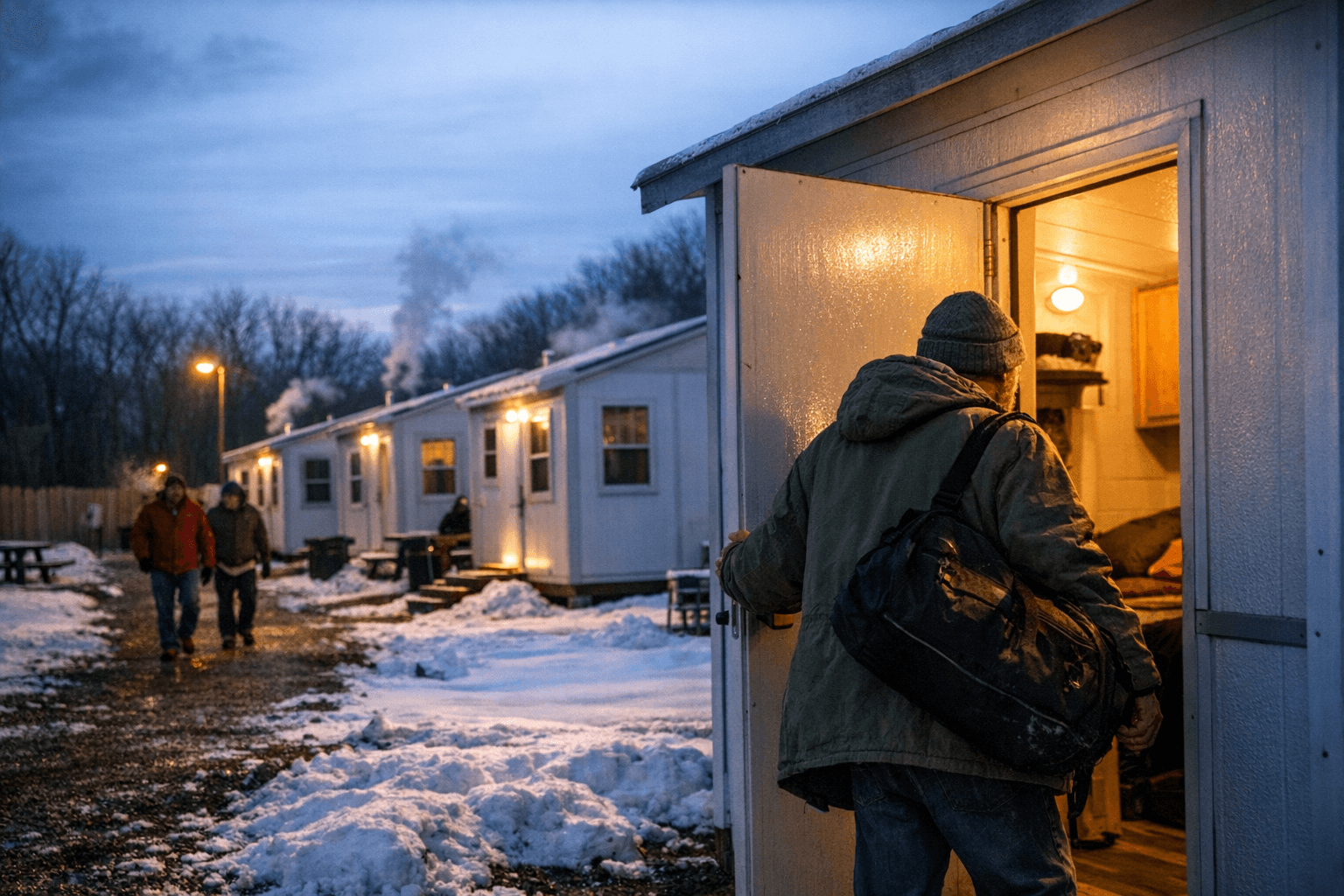
Temperatures in central Illinois averaged 20 degrees Fahrenheit in January, with a low of minus 8. Three days before they dropped below zero, Bloomington opened its first shelter village. That village, The Bridge, now gives people like Matthew Stone somewhere to be.
"It was very horrible, a very horrible experience," Stone said. "I was living in a tent with my dog. It was just, all in all, a horrible experience, very cold this winter."
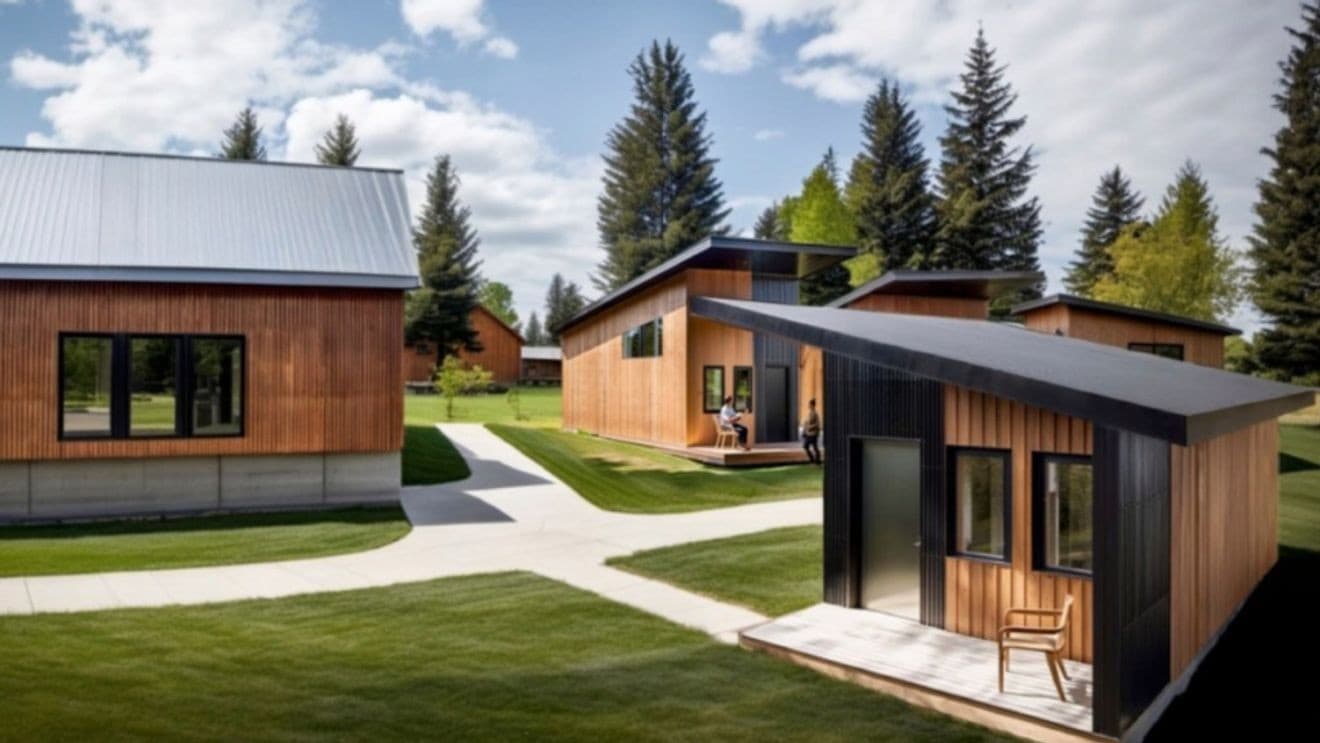
Tiny, colorful cabins make up Home Sweet Home Ministries' shelter village, The Bridge, in Bloomington, Illinois. Construction began in the summer of 2025. The Bridge is a fully enclosed campus with a bathhouse and community center. There are 48 tiny sleeping cabins, able to accommodate 56 adults. The campus sits at 104 E. Oakland Ave., just south of Downtown Bloomington, and held its public ribbon-cutting on January 6. The Bridge opened six months after the lot was purchased.
The non-congregate model is the point. Home Sweet Home Ministries designed The Bridge as an individual-style shelter village for people who have struggled to survive outside and could not find stability in traditional shelters. Each resident gets a private cabin rather than a dorm bunk, with staff on-site 24 hours a day. Of the 48 cabins, 40 are single occupancy and eight are double occupancy.
"This is long overdue. We as a community, for a very long time, have not had good options for our unsheltered neighbors," said Matt Burgess, CEO of Home Sweet Home Ministries. The crisis had roots in an economic surge: Bloomington's housing shortage became dire in 2021 because more people had moved to the city looking for jobs at a new manufacturing company, and there wasn't enough new housing in place to meet the demand. Burgess says the situation wasn't visible to many residents until 2023, when people without permanent housing started living in a tent encampment in a downtown church parking lot. Housing advocates said last year about 100 people were living outside in Bloomington.
Home Sweet Home Ministries had been serving people on the margins of Bloomington society for more than one hundred years. Burgess developed the concept for The Bridge after researching four communities that had built shelter villages: Burlington, Vermont; Denver, Colorado; Missoula, Montana; and Austin, Texas. Burgess said they held public forums to ease concerns, eventually resolved zoning issues, and came to terms with the transit company.
The shelter village cost $2.7 million. Two-thirds of the funding came from private donations, while the remaining third came from a county grant. Burgess has estimated annual operating costs, covering staffing and utilities, at roughly $750,000 per year.
The community building on campus includes a kitchen, living room area, and offices for service providers, giving residents access to wraparound support aimed at moving them into permanent housing. One person who was living in the village has already moved into permanent housing. Burgess says the ministry's street outreach team is finding fewer people living outside since the village opened.
Future resident Sarah Jackson captured what the cabins represent beyond shelter: "It motivates me and inspires me to work better as far as establishing even more financial stability, so that I can get a bigger home and be able to do bigger and better things."
Burgess described the shift he has witnessed: "We've seen people's attitudes shift from asking with dread, 'what am I going to do tomorrow?' To asking the same question with hope, 'what am I going to do tomorrow?' It's the same words, totally different type of question.
Know something we missed? Have a correction or additional information?
Submit a Tip