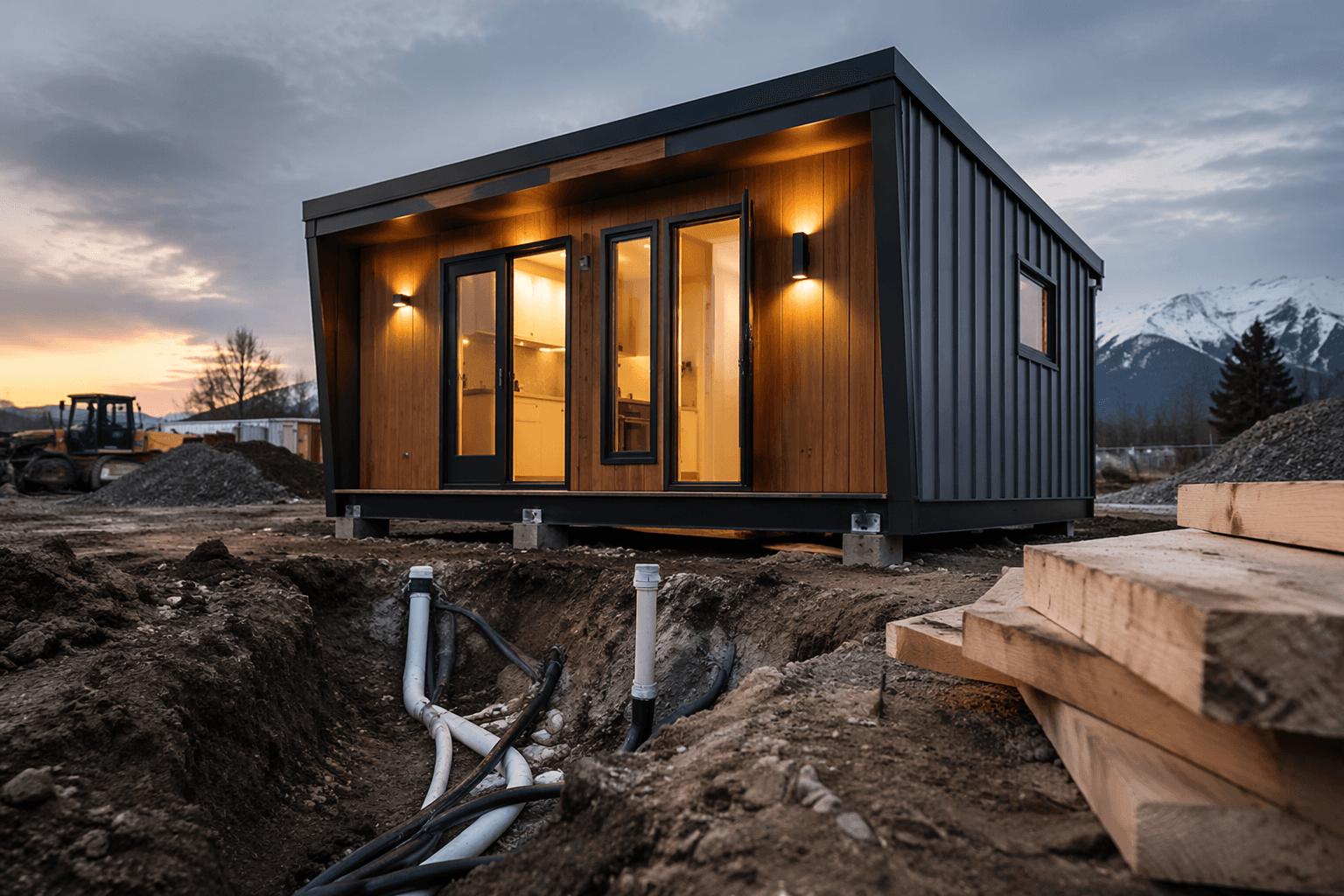
Bangor Nonprofit Secures $2 Million to Launch Tiny-Home Village for Homeless Residents
Dignity First secured $2 million in federal funding for a tiny-home pilot village in Bangor, Maine, its largest award ever, after three years of failed $4.6M requests.
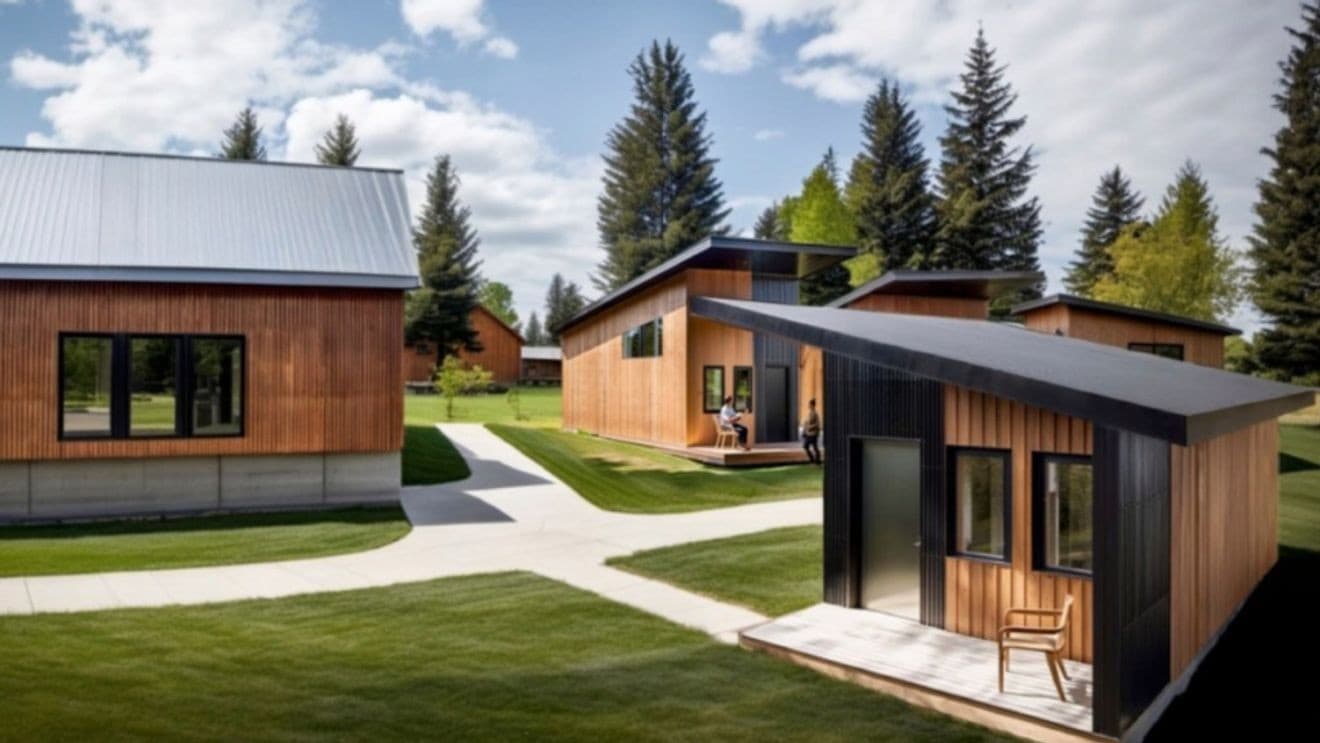
Dignity First, a Bangor homelessness nonprofit, secured $2 million in congressionally directed spending from Sen. Angus King, the largest award the organization has received to date, to launch the initial phase of a permanent supportive housing project for people experiencing homelessness.
Anna Phillips, Dignity First's board president, anticipates roughly five tiny homes could be built in the first phase, alongside a "hearth center" serving as a community space for events like recovery meetings or worship services. The nonprofit intends that smaller scale as a pilot program, with plans to expand from there.
The path to this funding was anything but quick. Dignity First had previously missed out on more than $4 million in federal funding, and along with it, the right to lease a piece of undeveloped land from the city before anyone else. The group had submitted requests for $4.6 million in 2023 and 2024, resubmitted that same ask in 2025, and finally landed $2 million from King's office this cycle.
The nonprofit's initial plan had been to build on the site of a former homeless encampment, located behind the Hope House Health and Living Center off Corporate Drive. The city had offered Dignity First first right to lease that land after the encampment closed, but the organization lost that opportunity when earlier federal funding didn't come through. Now, nonprofit leaders will need to meet with city officials to discuss where would make an appropriate home for the tiny-home village and what infrastructure needs to be installed.
Phillips said "the hope is that we could settle on a site and get things rolling within a year," adding that "the biggest initial piece that we wanted to use this grant for is to get utilities, the roads and the site ready to go."
On the design side, the organization will need to revisit what it will cost to build each tiny home, as construction costs have risen significantly. Dignity First is considering three size options, ranging from 16-by-20-foot structures to 16-by-32-foot units, to accommodate families of different sizes, with each unit featuring a full bathroom and a kitchenette so residents can live independently.
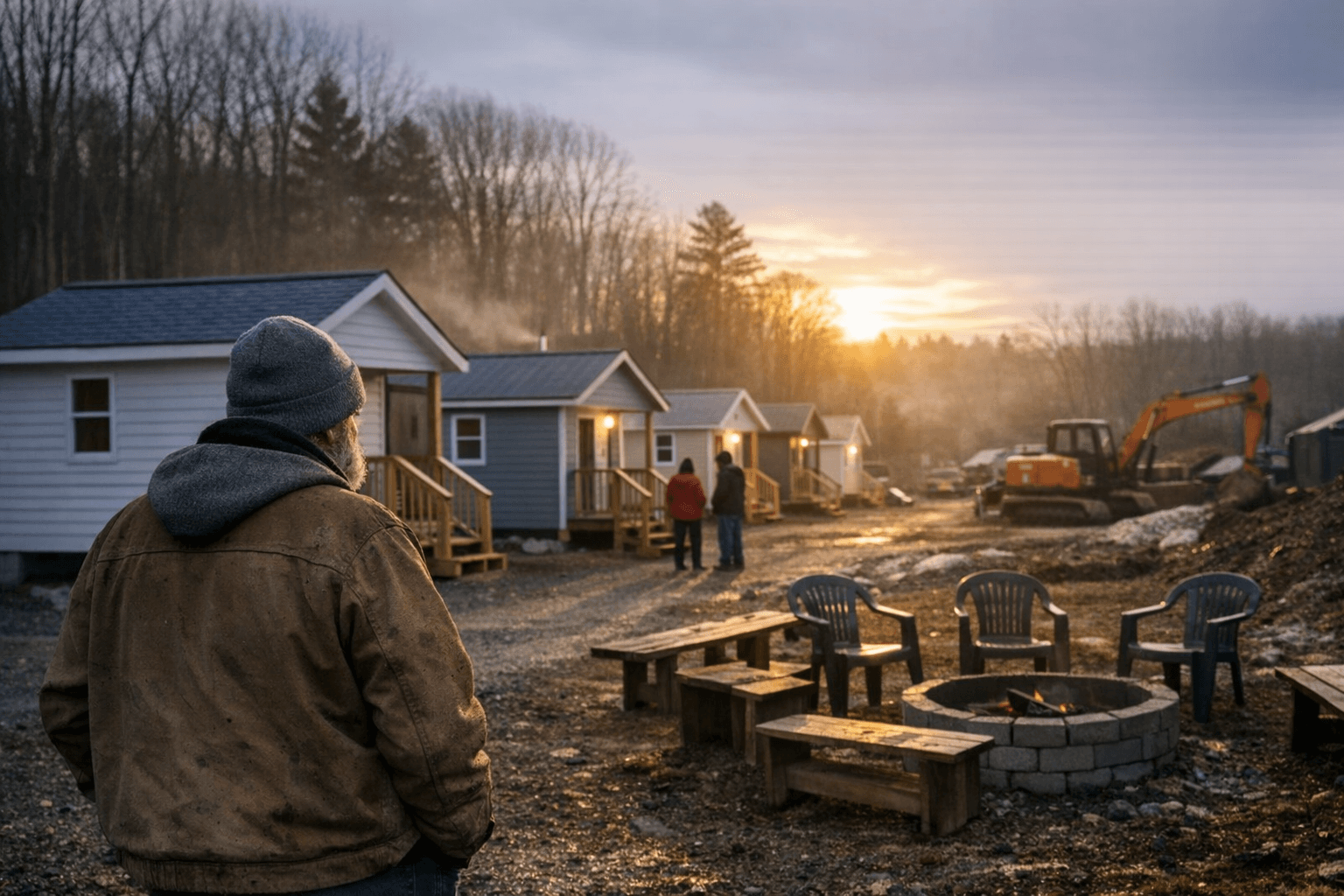
The vision behind the project reaches well beyond the pilot. Dignity First's original plan called for building in neighborhoods of 20 tiny homes, eventually reaching 60 units, with an administrative building, large community centers, and on-site services for residents dealing with mental health and substance use challenges. That plan is modeled after a 51-acre development of 500 tiny homes in Austin, Texas, called Community First! Village, which the organization Mobile Loaves and Fishes opened in 2015.
Phillips captured the weight of the moment in her own words. "We're so excited about it, but now we have to dig into all this work we've been doing and finally take some steps forward," she said. "It's exciting and it's a little bit daunting right at the same time." On the broader mission, she added: "Lasting solutions to homelessness support people who are living with homelessness, but also the community. Having a way forward to start creating something that participates in change for the better of all of our neighbors is really special."
King, an independent who caucuses with Democrats, framed his support in practical terms. "People are discovering that if you can get homeless people into housing, then you can start to solve other problems associated with homelessness," he said. "I think the concept has been proven nationwide and I felt it was important to get started in Bangor."
How much it will cost to build, what the tiny homes will look like, and when construction might launch are all still uncertain. But while the appearance and pace of the project will likely shift with time and changing circumstances, Phillips said the mission of supporting those struggling with homelessness, mental health, or substance use so they can remain successfully housed remains the same.
This article was produced by Prism’s automated news system from verified source data, official records, and press releases, then run through automated quality and moderation checks before publishing. The system is built and supervised by the people who set the standards it runs under. Read our full AI policy.
Did this article answer your question?