Boston showcases prefab ADU at City Hall Plaza this week
A full-scale prefab ADU landed on City Hall Plaza, with noon tours and a Saturday resource fair showing how roughly 500 square feet could change a Boston lot.

Boston turned City Hall Plaza into a working test site for accessory dwelling units, placing a full-scale prefabricated ADU in one of the city’s most visible civic spaces to show homeowners what the small homes can look like in real life. The weeklong showcase opened Tuesday, May 12, and ran through Sunday, May 17, giving visitors a chance to step inside the model unit and see how a backyard home, basement conversion, or attic unit might fit into Boston’s existing housing stock.
City officials framed the display as more than a novelty. The Housing Innovation Lab said the goal was to give residents a concrete look at how small, self-contained homes could work within Boston neighborhoods and on existing lots, while reducing the uncertainty that often slows down ADU projects. Paige Roosa, the lab’s director, said the showcase was meant to help residents see what is possible and to show that ADUs can create practical, lower-cost housing choices while keeping people rooted in their communities.
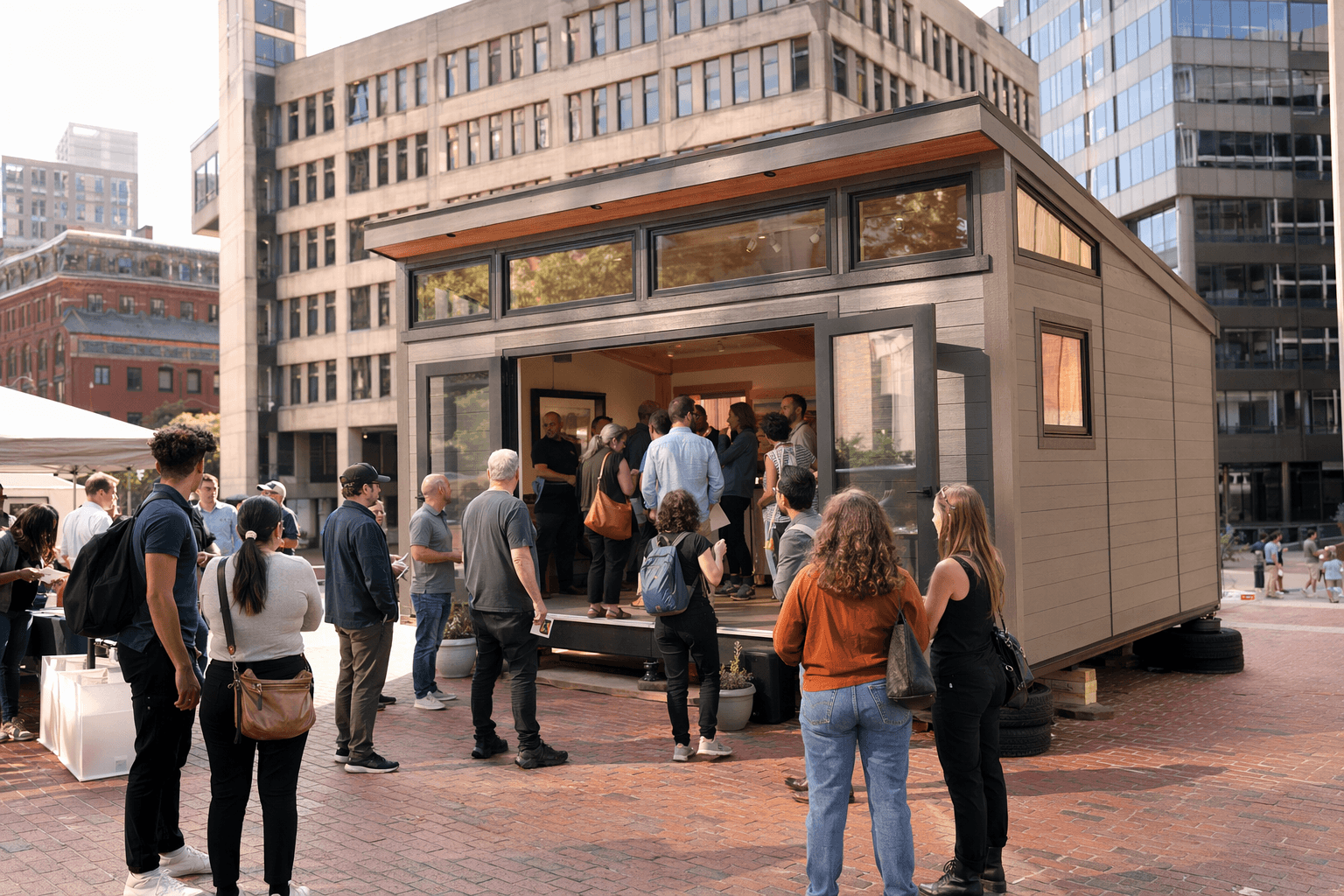
The city paired the model with daily programming. Each day of the showcase included a noon information session where residents could ask about design, financing, permitting, and how ADUs might support multigenerational living or aging in place. A resource fair was also set for Saturday, May 16, with architects, builders, lenders, and housing organizations on hand to walk homeowners through the process. Boston officials said the event ran from 9 a.m. to 5 p.m. daily, making the Plaza both a display site and a place to get answers in one stop.
The policy backdrop is just as important as the unit itself. Boston says internal ADUs are already allowed as-of-right citywide, and the city is pursuing zoning updates to make detached ADUs easier to build in select neighborhoods and, eventually, as-of-right in every neighborhood. The city’s ADU materials say the units can serve families, young adults, seniors, and others, whether as space for a loved one, rental income, or a way to downsize without leaving the property.
Boston has also lined up financing and technical help to make the idea more than a display piece. The city’s ADU Financial Assistance Program offers income-eligible homeowners of 1- to 3-unit homes a grant and loan to help cover design, permitting, and construction costs. The financing guide says the Boston Home Center can provide up to $50,000 in interest-free gap financing for eligible projects. The city’s process breaks the work into five steps: learn about ADUs, plan a design, permit the project, build the structure or renovation, and move in.
That is what made the City Hall Plaza installation matter: Boston did not just park a model on public land, it used the most visible spot in city government to ask homeowners to picture a prefab ADU on their own lot, and to decide whether roughly 500 square feet could become part of the city’s housing future.
This article was produced by Prism’s automated news system from verified source data, official records, and press releases, then run through automated quality and moderation checks before publishing. The system is built and supervised by the people who set the standards it runs under. Read our full AI policy.
Did this article answer your question?