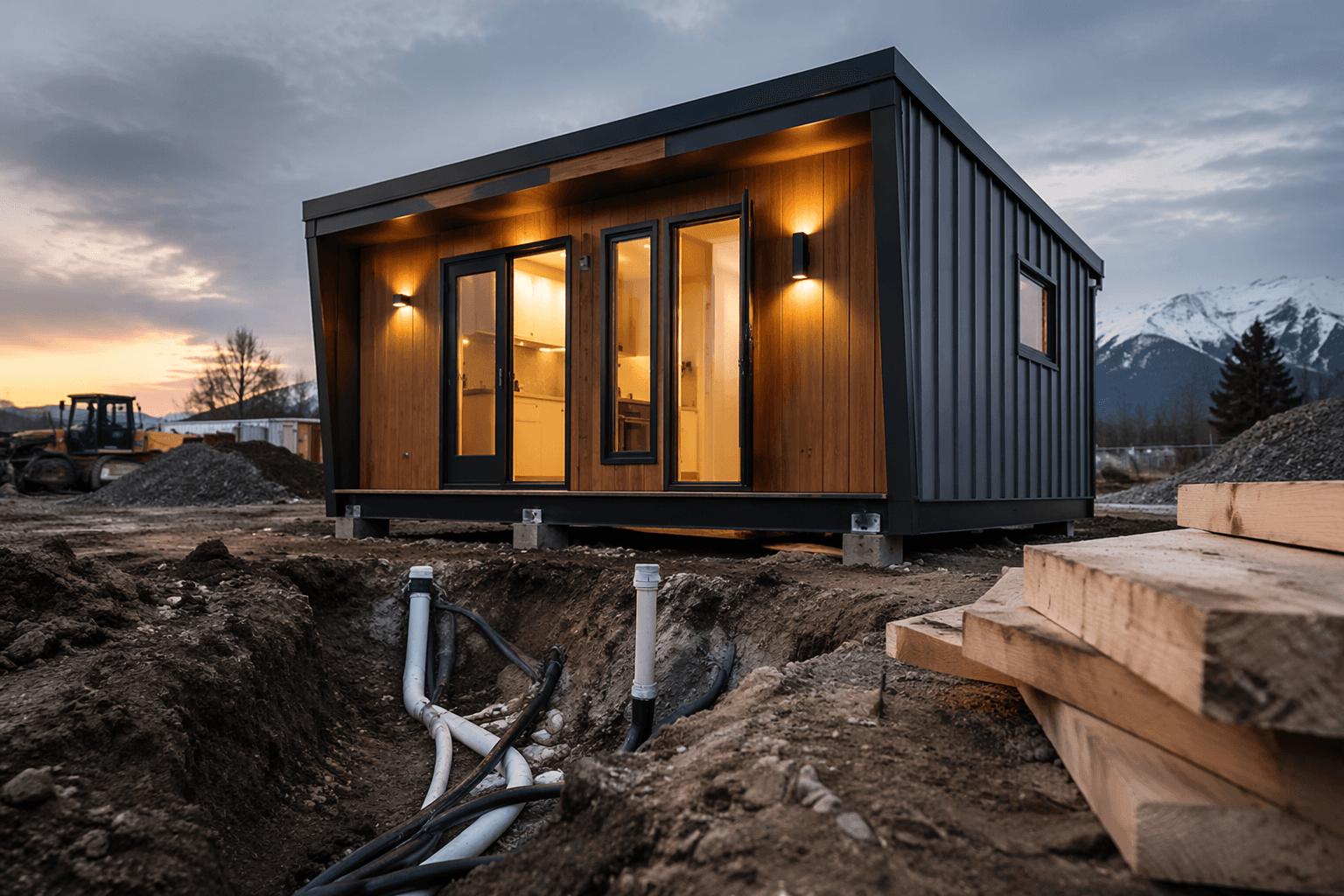
British Woman Spends Four Years Building Off-Grid Tiny Home From Reclaimed Materials
Clare built a fully off-grid tiny home for under £70,000 using reclaimed materials, including a hidden bathtub tucked beneath sofa cushions, after her divorce set a four-year build in motion.
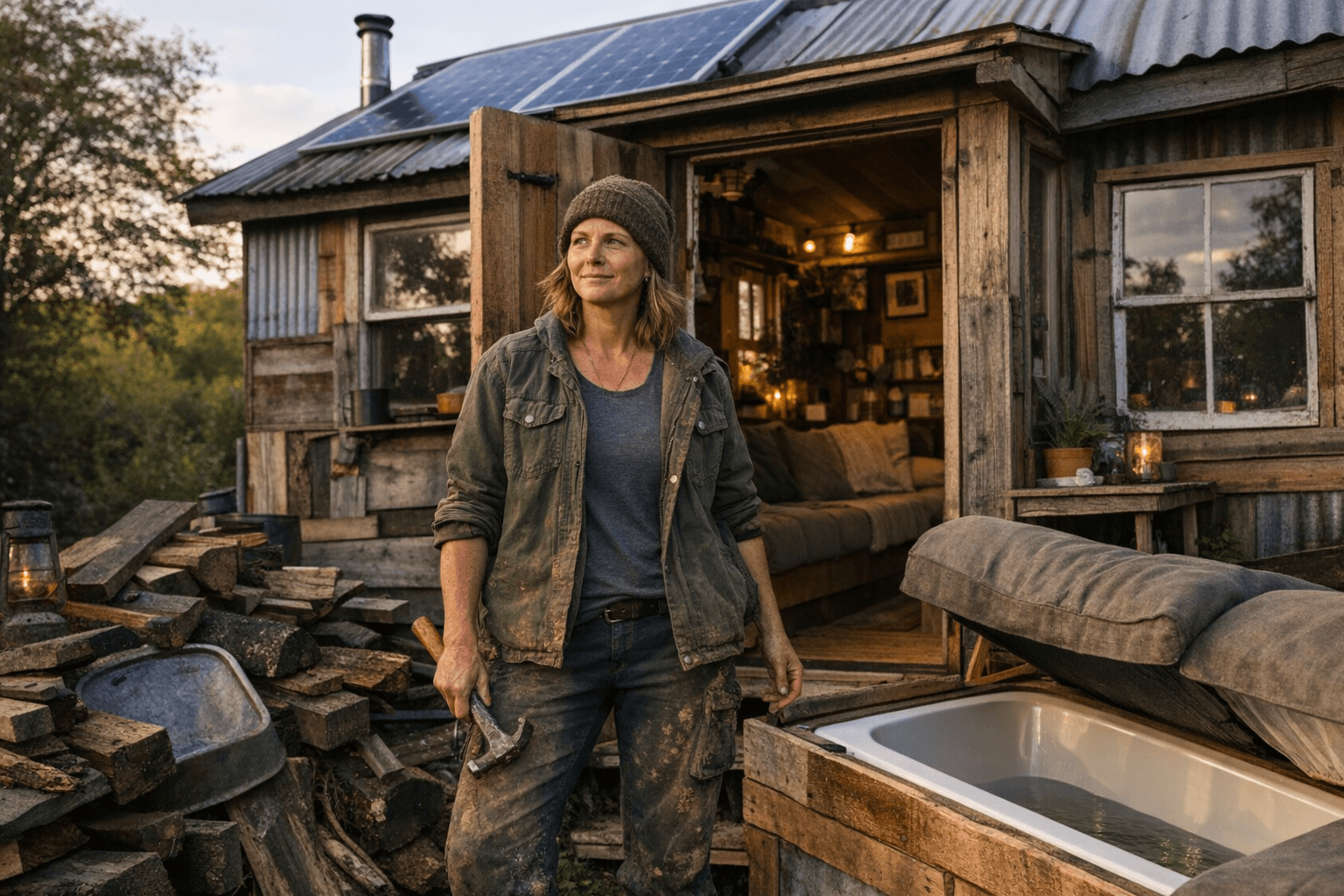
A divorce can strip a life down to its studs. For Clare, a British woman who spent nearly four years designing and constructing her own off-grid tiny home, that stripping down became the blueprint for building back up, literally.
After her divorce, Clare decided to build an off-grid tiny house herself to regain a sense of security and permanence. The result is a home that is more personal than any spec build could ever be: peppered with reclaimed materials such as cabinets and crockery from her past that reflect her various life stages and struggles. And she did it for a figure that would make most mortgage holders weep: she built her off-grid tiny house from scratch for under £70,000.
A Build Rooted in Resilience
After her divorce, Clare decided to build an off-grid tiny house herself to regain a sense of security and permanence, and it took her almost four years to complete the project and make a home for herself. That timeline reflects the reality of self-building: sourcing materials, making design decisions, and doing much of the work without a professional team behind you. What Clare produced is not a compromise, however; it is a considered, deeply intentional space designed entirely around single-occupancy living, where every square foot pulls its weight.
The Exterior and Entry
The tiny house deck allows Clare to enjoy her evenings while sipping on tea, and triple bi-fold doors let you inside the house, where a cozy lounging area with secondhand sofas makes the right corner welcoming, while the kitchen on the left ties the entire layout together. Large windows installed in the area bring in loads of natural light, allowing her to enjoy the views. The covered deck is not decorative afterthought; in the British climate, a sheltered outdoor space effectively extends the usable footprint of a tiny home across more of the year.
The Living Room's Best-Kept Secret
This is where Clare's design instincts really shine. The living area hides a fantastic secret: Clare has cleverly installed a full-sized bathtub under the sofa cushions in the bay window area, sparing precious room in the bathroom. It's the kind of solution that the tiny house community lives for: a single space doing double duty without looking like it is. A wood-fired stove keeps the space nice and toasty, giving the lounge area warmth that is both literal and atmospheric.
The Kitchen: Functional and Full-Featured
Clare refused to sacrifice function in the kitchen. Her cooking area has a vibrant tile backsplash, and the kitchen has multiple shelves and cabinets to keep essentials, modern appliances, and plenty of countertop space in wood and granite, a circular three-burner stove, an air fryer, and a sink under the foldable loft walkway. Over the kitchen, a slanted skylight opening has been created to keep the space well-lit, and there are a lot of indoor plants underneath the skylight as well, brimming the space with life. For a single occupant who actually cooks, this setup is more than adequate; it is genuinely well-appointed.
The Bathroom: Bold in Blue
Past the kitchen, the bathroom has bold blue tiles, a composting toilet, a shower, and a secondhand round sink. The composting toilet is a practical anchor of the home's off-grid credentials, eliminating the need for a sewage connection entirely. She has a cabinet outside the bathroom with a sliding door that keeps her clothes in place, a neat storage solution that keeps the bathroom itself uncluttered. Clare also thought ahead: there is a mudroom-like space created in case Clare chooses to get a dog, with another door leading to the outside.
The Loft: Sleeping, Storage, and Stargazing
A staircase leads to a loft bedroom from the kitchen area, and the primary loft has a double bed and a large window that gives an illusion of a spacious sleeping area. The reclaimed theme continues here with real emotional weight: a cabinet that she has had since childhood is installed in the bedroom, reminding Clare of her previous experiences, and her cat likes to sleep on the cabinets, so she has kept a little space above it for her cat. She also created an extra sleeping space in the secondary loft, with a workspace, above the lounging area. With a skylight installed, she enjoys starry nights on the roof without worrying about rent or mortgage.
Off-Grid by Design
Solar power handles Clare's energy needs, making the home fully self-sufficient and free from utility billing. Combined with the composting toilet and the wood-fired stove, the build is a coherent off-grid system rather than a collection of disconnected green features. Each element was chosen because it works in concert with the others, reducing dependency on external infrastructure while keeping running costs low.
What Reclaimed Really Means Here
In Clare's home, "reclaimed" is not an aesthetic choice; it is autobiographical. The tiny house is peppered with reclaimed materials such as cabinets and crockery from her past that reflect her various life stages and struggles. The childhood cabinet in the bedroom, the secondhand sofas, the round sink sourced secondhand for the bathroom: none of these are staging. They are a record of a life, redistributed into a new context and given new purpose. That is the philosophy behind the best reclaimed builds in the tiny house world, and Clare executes it as well as anyone.
For anyone who has ever stared at their bank account and their blueprint simultaneously, wondering whether either one is large enough, Clare's four-year journey from divorce to a fully off-grid home for under £70,000 is a persuasive data point. The hidden bathtub is the most photographed detail. But the deeper story is the house itself: proof that designing for one person, with radical intentionality and a willingness to go slowly, produces something no production builder can replicate.
This article was produced by Prism’s automated news system from verified source data, official records, and press releases, then run through automated quality and moderation checks before publishing. The system is built and supervised by the people who set the standards it runs under. Read our full AI policy.
Did this article answer your question?