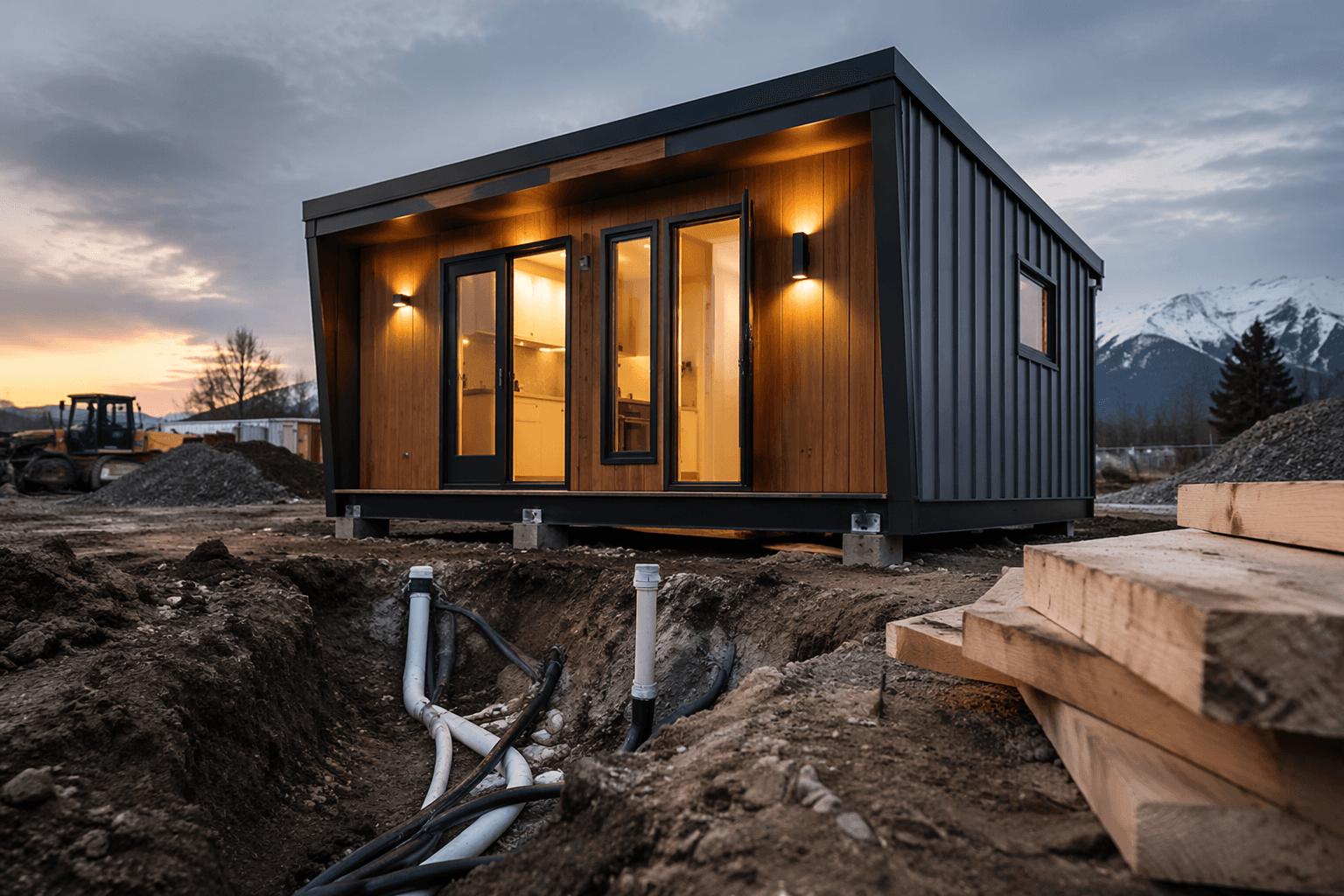
Clear dimensions, storage volume, layout: design targets that make tiny homes comfortable
Set explicit dimension and storage targets early: measurable rules for clear widths, storage volume, and layout zones turn tiny houses from cramped to comfortable.

MAHUBE-OTWA put the point in plain sight when it sought bids for an eight-unit tiny-home veterans village in New York Mills: name the unit count, the site, and the program because concrete specifications get built. That same discipline applies to design decisions inside every tiny home. Owners, builders, and designers repeatedly tell me the difference between a place that feels small and one that feels livable is not style but measurables: clear dimensions, quantified storage volume, and a layout that protects circulation and daylight.
Why measurable targets matter Listing the who, where, and how many works in outreach for a reason: one A/B test showed projects that named location and unit counts scored far higher engagement than vague postings. Translate that clarity inward. If you cannot say exactly how wide your main circulation is, how many cubic feet of storage you provide, or the finished headroom at a loft, you do not yet have a buildable tiny-home plan. Designers I talk with treat those three numbers as project controls: they set them early and test every cabinet, stair, and window against them.
Clear dimensions: what to fix first Start by locking three clear dimensions: primary circulation width, finished sleeping area dimensions, and minimum standing headroom. Those are nonnegotiables for daily comfort because they determine how people pass, sleep, and move in a home. Treat circulation as a measurement, not an idea: specify the clear width through the kitchen aisle, the doorway stiles, and the route from entry to bathroom. Lock finished headroom where adults stand, and document the loft headroom so it is not assumed. This is the same practice municipal planners use when approving an eight-unit village; apply it to a single trailer or foundation.
Storage volume: count cubic feet, not just cabinets Storage is the silent capacity problem in tiny living: two homes with the same floor area can feel dramatically different based on how much usable storage they provide. Make storage a unit of measure from the start by estimating usable cubic feet for clothing, kitchen gear, tools, and seasonal items. Designers and experienced owners treat closets, under-bench boxes, and stair treads as volume, not ornament. That means specifying how many cubic feet are delivered by a bench with 18-inch-deep boxes versus an open shelf, and balancing visible storage for daily items against concealed volumes for infrequent possessions.
Layout zones: protect functions and sight lines Divide the plan into clear zones—entry, prep and cooking, living, sleeping, and wet core—and define the main sight lines through those zones. A kitchen that opens visually into the living area feels larger than one squeezed with cabinetry; a bathroom tucked directly off circulation reduces disruptions. The best tiny-home layouts give priority to the most-used zone, usually cooking and seating, and allow those zones a clear minimum of uninterrupted surface or floor area. When developers name an eight-unit program, they plan repeatable zone sizes so each unit delivers the same liveability; apply the same repeatability to a single unit by drawing exact zone footprints.
Circulation rules that preserve comfort Circulation is more than hallway width; it is how routes intersect, where doors swing, and whether appliances block passage. Establish simple circulation rules you enforce during detailing: no doors swing into main aisles, appliances do not reduce aisle clearances below your declared minimum, and the primary route from entry to bathroom remains unobstructed even with cabinet drawers open. Those are the kinds of explicit rules used in small multiunit projects to avoid unit-to-unit variability, and they keep day-to-day movement smooth.
Stairs, lofts, and vertical choices Lofts add usable floor area but demand clear decisions about headroom, ladder versus stair access, and railing visibility. Rather than guessing, write down the minimum finished headroom you will accept in a loft, the maximum slope of any ladder, and the storage trade-offs for a compact stair. Many builders convert what would be wasted stair voids into drawers or mechanical access, turning vertical circulation into net living benefit. If you are using a loft for sleeping, specify mattress footprint and side clearance numbers so the space actually fits standard bedding.

Light, views, and perceived volume Perceived volume comes from light and sight lines as much as from square footage. Set targets for window area relative to wall area and for sight-line corridors: a window at the living zone and a secondary high opening at the bed will multiply perceived depth. Where projects aim for repeatability—such as an eight-unit village—planners standardize window sizes so each unit achieves the same daylight metric. On a single home, aim for measurable ratios rather than subjective “more glass,” so you can compare options and avoid thermal or shading surprises.
Mechanicals, service access, and real estate for systems Mechanical equipment eats space if you ignore it. Specify the exact footprint and access needs for water heaters, HVAC modules, and service panels early in the plan. Treat service clearances as required room: if an appliance needs 18 inches of front clearance to service, that 18 inches must be part of your planned circulation or storage budget. In multiunit bids the same detail prevents costly retrofits; in one-off tiny homes, it prevents a cabinet you cannot open when the heater fails.
Furniture and fixtures as dimensional tools Pick real furniture sizes and make them your baseline. A "fold-out table" is not a plan element until you list its deployed dimensions and clearance needed to use it. Convertibility is powerful, but it is also a promise that must be quantified: specify how many square feet a bed consumes when deployed, how much clearance a dining table needs for chairs, and what the operational sequence is. Designers use those numbers to build repeatable details that work in everyday life, not only on move-in day.
Lifestyle tactics that amplify the numbers Beyond plans, lifestyle choices change how those numbers feel: a two-person household that accepts daily external storage for sports gear can reduce interior volume needs, while remote workers need quantified workstation footprints. Clarify household behaviors early and write them into the brief: how many overnight guests, how many bikes or tools, and whether laundry will be on-site. These lifestyle inputs let you set storage and layout targets that match reality rather than aspiration.
- Lock three baseline numbers: circulation clear width, finished standing headroom, and a quantified storage volume target.
- Convert key items to cubic feet or square feet so you can add and subtract consistently.
- Standardize window sizes and daylight ratios for repeatability or comparison.
- Document service clearances for mechanicals as required room, not afterthoughts.
Practical checklist for the planning stage
Conclusion Treat clear dimensions, storage volume, and layout as the contract that keeps tiny homes livable. The same clarity that makes an eight-unit veterans village buildable in New York Mills will make your single unit comfortable and resilient: set specific numbers early, test every cabinet and stair against them, and design the living spaces to protect circulation, daylight, and service access. Do that, and you will turn nominal square footage into usable, comfortable home.
This article was produced by Prism’s automated news system from verified source data, official records, and press releases, then run through automated quality and moderation checks before publishing. The system is built and supervised by the people who set the standards it runs under. Read our full AI policy.
Did this article answer your question?