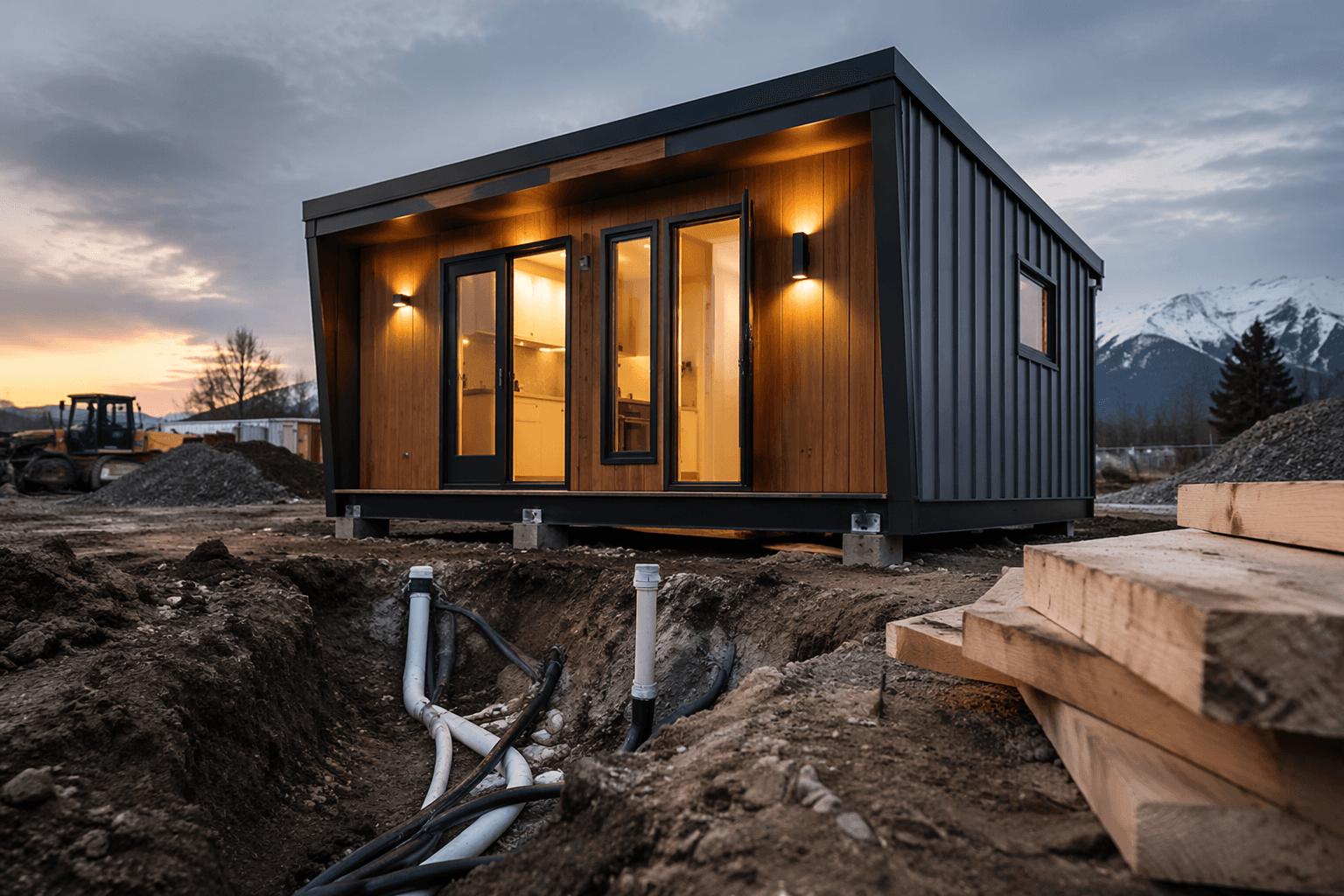
Couple Used ChatGPT to Build Their Tiny Home, With Mixed Results
Being outbid on a Rotterdam tiny home pushed this couple to build their own, with ChatGPT logging more hours on the project than YouTube ever did.

Getting outbid on a house is usually just a frustrating Tuesday. For Simone Solazzo and Anne Leijdekkers, it turned into a construction project.
The two had gone to see a tiny home for sale in Rotterdam after an earlier visit to a friend's place left Simone unconvinced. That first house felt cramped. The Rotterdam one was different. "It was big and bright, and I realized tiny homes didn't have to be that tiny. I was sold," Simone said. Then they lost the bid. Anne described what happened next: "The disappointment of not getting it instantly shifted our mentality. We decided we were going to build one ourselves."
That decision, made in late 2024, set off a build that would eventually land their finished tiny home at Minitopia, a tiny-home village in Valkenswaard, in the Netherlands. And running through nearly every phase of it was an AI chatbot.
Two first-timers with a big idea
Neither Simone, 31, a former tech worker originally from Italy, nor Anne, 32, a Dutch arts entrepreneur, had any construction background when they committed to the project. Anne put it plainly: "When we decided to build our tiny home in late 2024, we had no building experience whatsoever. Simone had never even painted a wall before."
After pitching the idea to their parents in late 2024, the couple spent the first two months of 2025 in planning and design mode. Anne's architect friend stepped in to help with the drawings and the more conceptual side of things, providing the kind of structural and design grounding that no chatbot was going to replicate. That human expertise formed the foundation the rest of the project was built on, literally and figuratively.
Where ChatGPT actually earned its keep
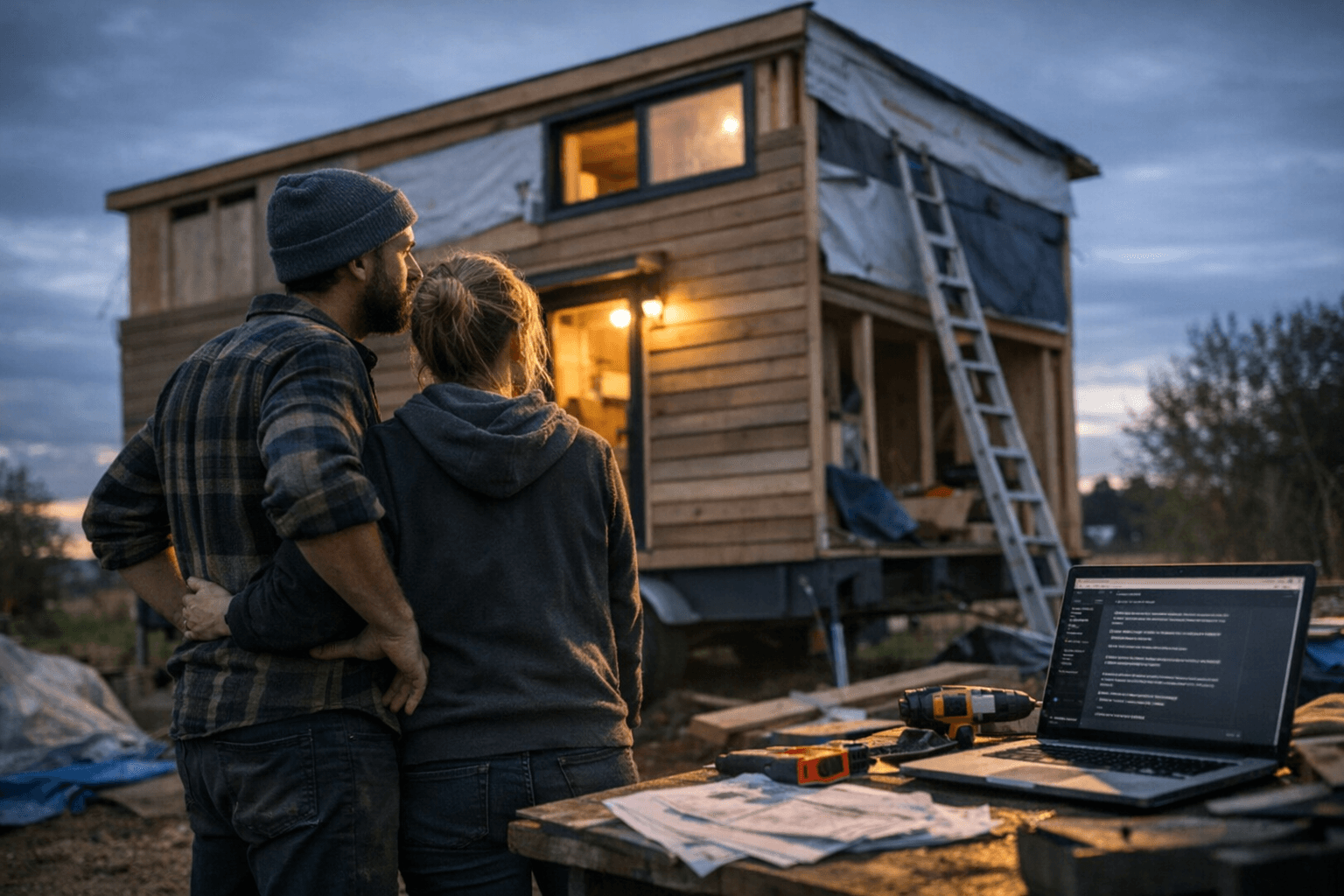
Construction began in February 2025, inside a greenhouse that served as their build site. From that point forward, ChatGPT became a near-constant presence. "Once we started building in February 2025, we asked ChatGPT questions constantly, far more than we used YouTube, which we turned to for help with specific tasks, like how to build the roof," Anne explained.
The AI earned its place most clearly in the planning and logistics layer of the project. It helped them figure out what materials to buy and when to buy them, and how to divide costs between the two of them. Anne described it as a genuine cognitive assist: "Building a house involves a lot of headwork: sums, measurements, and counting. It helped that Simone had a background in tech, but ChatGPT was a helping hand with that as well."
Simone, drawing on that tech background, used the tool in a more iterative, scenario-testing way. "We asked ChatGPT very specific questions and used it to think through what would happen if we went off plan and did things slightly differently. It mostly helped us clarify our thinking." That framing matters: they weren't outsourcing decisions to the AI, they were using it as a sounding board to stress-test their own ideas before committing to them in timber and insulation.
Anne summed up the rhythm of their evenings during the build: "We spent our evenings asking it about almost everything." The volume of use suggests they found genuine utility in it, not just novelty.
Where they had to look elsewhere
For all the hours they logged with ChatGPT, there were clear limits. YouTube, not the AI, was where they turned when they needed to see a task done. Learning how to build the roof, for example, required watching it happen, not reading a text explanation. That split, AI for planning and arithmetic, video for procedural visual guidance, reflects a real distinction in what language models are actually good at versus what requires demonstrated technique.
More importantly, the couple were candid about the AI's unreliability. Anne's observation carries weight precisely because it came from someone who was leaning on the tool heavily: "While AI was genuinely helpful during the building process, we quickly learned we couldn't rely on it alone." The research doesn't detail specific instances where ChatGPT got something wrong, but the general pattern is clear. The AI was not always accurate, and treating its outputs as authoritative would have been a mistake.
The architect friend wasn't just a convenience. That professional relationship provided the drawings and conceptual rigor that no amount of ChatGPT prompting could have produced. For anyone in the tiny home community considering a similar DIY path, that distinction is worth sitting with: AI can help you organize a build, but it cannot replace the person who knows whether your wall assembly will actually stand up.
Getting to Minitopia
The finished home was transported to Minitopia in Valkenswaard, completing a journey that had started with a failed bid on someone else's vision of what a tiny house could be. The village setting itself is part of what makes the story resonate for the broader tiny living community: Minitopia represents an intentional approach to density and community that goes beyond the individual build. Getting a home there, especially one constructed by two people who started the project not knowing how to paint a wall, is a meaningful outcome.
What this build actually demonstrates
The honest takeaway from Simone and Anne's experience is neither a full endorsement of AI-assisted construction nor a dismissal of it. ChatGPT served them well as a planning tool, a cost-splitting calculator, a measurement checker, and a scenario simulator. It was a thinking partner for two people navigating an unfamiliar domain, and for that specific role, it delivered.
But the build worked because they also had an architect friend, a willingness to learn hands-on skills from video tutorials, and the judgment to know when the AI's answers needed to be verified rather than trusted outright. The greenhouse, the completed walls, the roof they figured out from YouTube, and the house now sitting in Valkenswaard all point to the same conclusion: AI is a useful tool in the kit, not the kit itself.
For DIY builders in the tiny home space watching this space evolve, that framing is probably the most practical thing to take from their story.
This article was produced by Prism’s automated news system from verified source data, official records, and press releases, then run through automated quality and moderation checks before publishing. The system is built and supervised by the people who set the standards it runs under. Read our full AI policy.
Did this article answer your question?