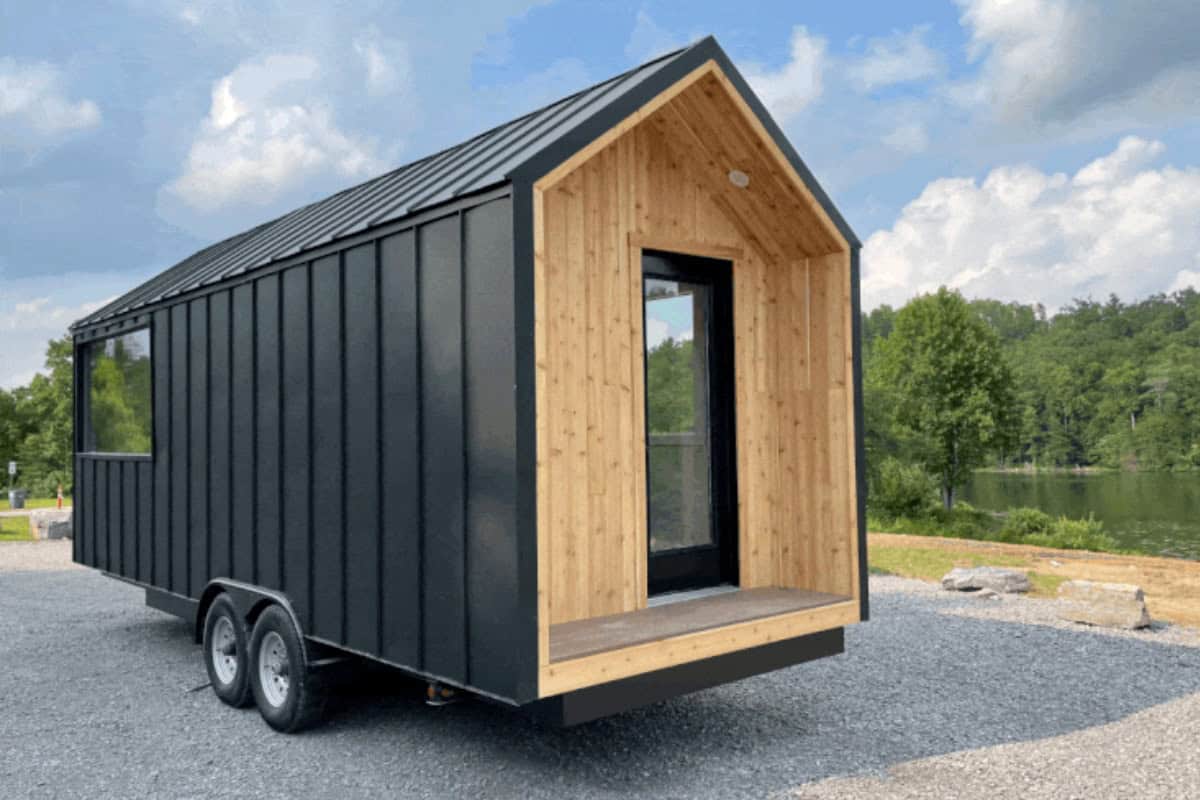
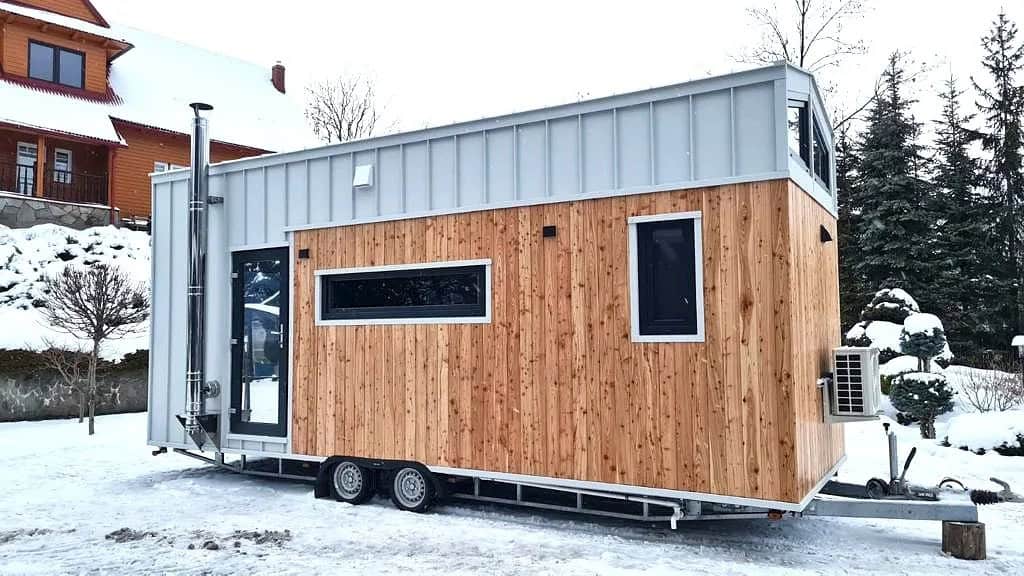
French tiny house in the woods blends fairytale charm and off-grid living
A wooded French tiny house pairs storybook looks with a real off-grid setup. Three glazed entrances and a 3,000-liter rainwater cistern keep it practical.
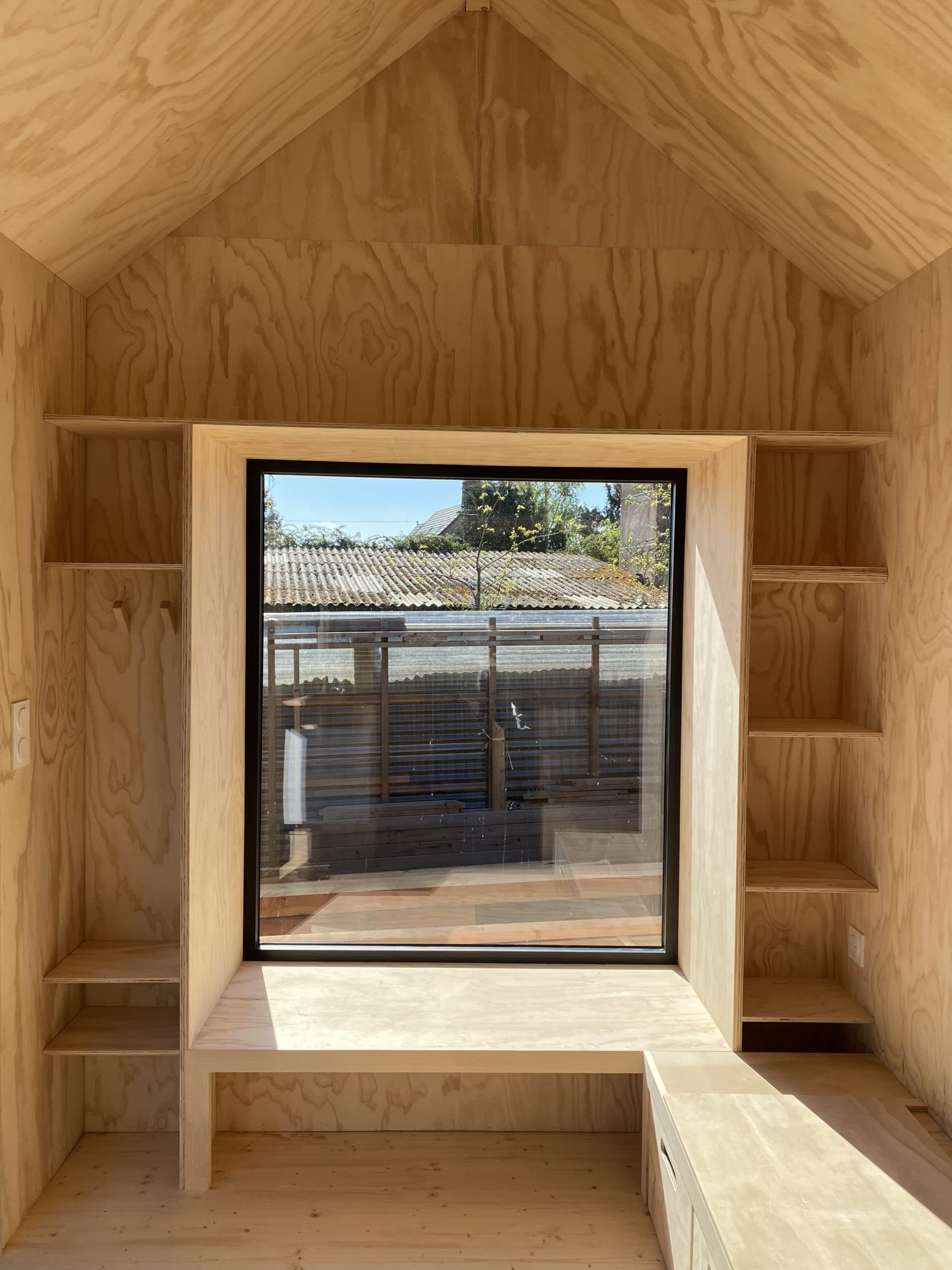
A wooden tiny house tucked into the woods near Gérardmer in the Vosges looks like a fairytale cabin at first glance, but the build is doing much more than playing dress-up. Serge’s home shows how a tiny house can lean into charm without giving up the systems, layout, and material choices that make it workable for daily life. The result is a compact home that reads as warm and whimsical outside, yet highly contemporary and functional inside.
Fairytale form, modern function
The strongest design move here is the contradiction at the heart of the build. Tibi House framed Serge’s home as an autonomous tiny house, and the structure reflects that brief in a way the tiny-house community will recognize immediately: a wood-clad shell in a natural setting, but with a layout that feels intentionally contemporary rather than rustic for its own sake. That balance matters because it keeps the home from slipping into novelty. It still feels like a lived-in house, not a themed retreat.
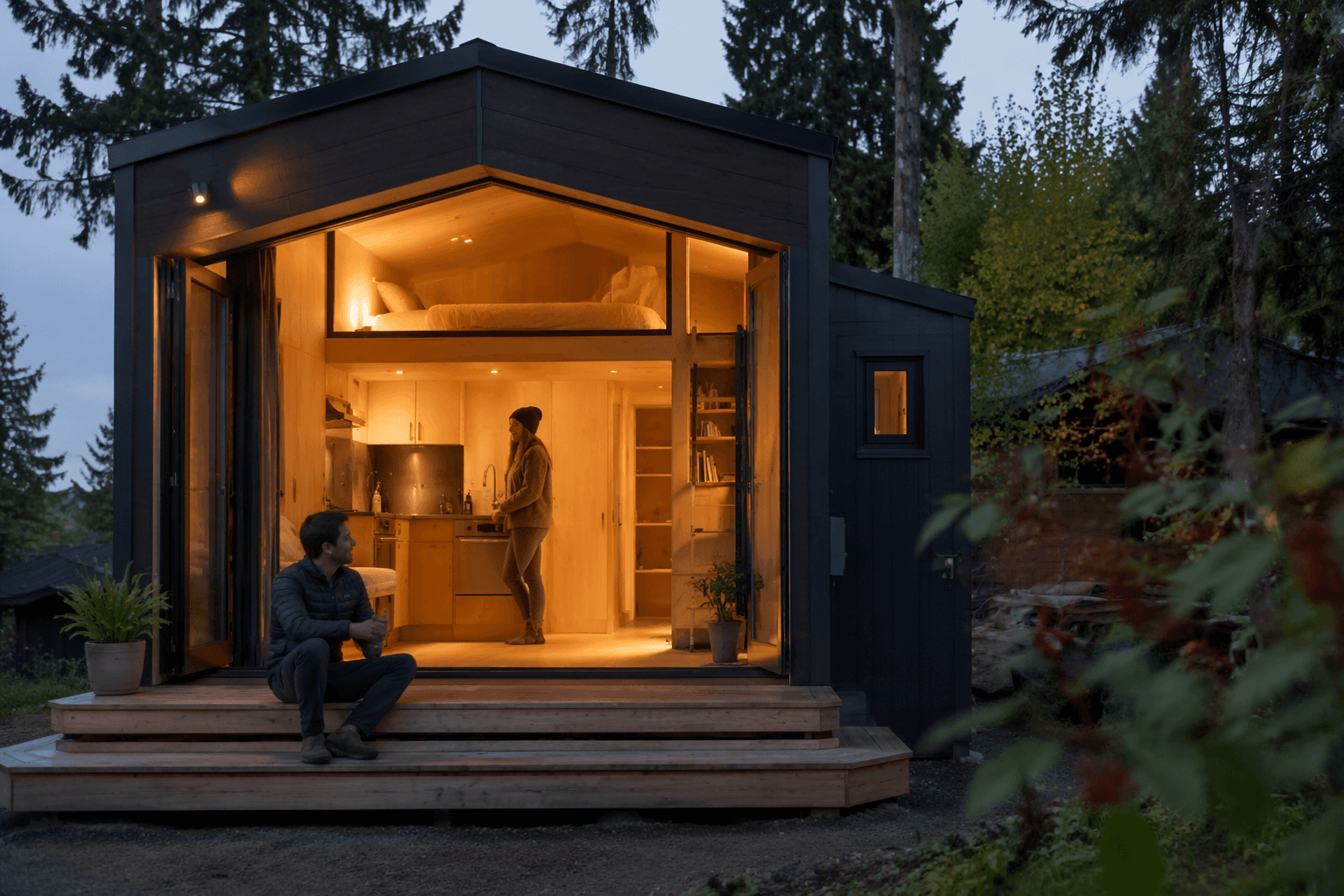
Instead of relying on a single standard entry, the layout uses three glazed entrances. The main door opens into the lounge, while sliding doors at the rear extend the living area outward and pull the woods into the daily experience of the house. That kind of glazing does two jobs at once: it brightens the interior and stretches the sense of volume without adding a single square foot. For tiny homes, that is often the difference between a space that feels decorative and one that feels genuinely usable.
Off-grid systems that support real living
The off-grid package is as important as the aesthetic. Tibi House identifies the project as a tiny autonome with a Victron solar kit, six roof-mounted panels, and a 3,000-liter flexible rainwater cistern. Those details are not accessories, they are the backbone of a home meant to function far from urban infrastructure. In practice, they let the house behave like a permanent residence rather than a weekend shelter parked in the trees.
That distinction is central to why the build stands out. Plenty of tiny houses look charming in photographs, but the category only earns its keep when the utilities keep pace with the design. Here, the solar array and large rainwater storage give the owner the kind of autonomy that makes long-term occupancy realistic. The house can sit deep in the landscape without asking the owner to compromise on the basic rhythms of everyday living.
The shape of the interior supports that same goal. A lounge-centered entry, rear openings, and a layout built around flow make the house feel open even at a small footprint. In tiny-house terms, that is a smart use of the shell: daylight, sightlines, and access to the outdoors are doing the work that extra square footage would normally handle.
Built for the way people actually live
Tibi House says it started in 2017 and builds custom-made mobile wooden houses using traditional timber-frame construction with insulation. That combination explains a lot about the project’s character. Timber framing gives the homes a handcrafted look that fits the woodland setting, while insulation keeps the structure grounded in year-round use rather than fair-weather escapism.
The company also positions tiny houses as a response to modern life, saying they can keep people close to work or study without locking them into a long mortgage commitment. That framing fits the Serge build well, because it shows the house as more than an isolated design object. It is part of a broader shift toward flexible housing that still offers privacy, independence, and comfort. In a market where people are looking for mobility without sacrificing livability, that is a meaningful combination.
French permitting rules also shape how these homes fit into the housing landscape. Tibi House says wheeled tiny houses are generally treated as caravans in France, which usually means they do not require a building permit, although some communes may require a prior declaration. For tiny-house owners, that legal detail matters as much as the floor plan. It is one reason the model has traction in France, where mobility and reduced administrative friction can make a small home much more approachable.
A separate industry listing gives a sense of the builder’s scale, putting Tibi House at 30 completed homes and saying its builds do not exceed 3.5 tonnes. That kind of profile suggests a maker working within a defined mobile-home envelope, not a one-off artisan studio. For buyers, that matters because weight, mobility, and build consistency all shape how a tiny house performs once it leaves the workshop.
Why this build lands with tiny-house owners
Serge’s house works because every major choice supports the same idea: a tiny home can be charming without becoming fragile, and off-grid without becoming spartan. The wood exterior and woodland setting create the storybook impression, but the glazing, insulation, solar kit, and rainwater storage keep the home grounded in actual use. That is the contradiction Tiny Houses readers know well, and this build resolves it cleanly.
The deeper lesson is that small homes are getting better at two things at once. They are learning how to feel airy and generous through light and connection, while also becoming more serious about self-sufficiency and daily comfort. Serge’s tiny house in the woods makes that argument plainly, and it does so without losing the charm that draws people to tiny living in the first place.
This article was produced by Prism’s automated news system from verified source data, official records, and press releases, then run through automated quality and moderation checks before publishing. The system is built and supervised by the people who set the standards it runs under. Read our full AI policy.
Know something we missed? Have a correction or additional information?
Submit a Tip