High School Students Build Tiny Houses, Gaining Real-World Construction Skills
Students at two high schools are turning shop class into real builds: a 288-sq-ft Airbnb-bound tiny house in Dade County and four LIHI-bound homes in Washington State.

Twenty students at Sedro-Woolley High School in Washington State are building four tiny homes this year beneath the school's stadium bleachers, each one destined for a person experiencing homelessness in Seattle. Across the country, Dade County High School's construction program is framing a 12x24-foot, 288-square-foot tiny house that a community sponsor plans to list on Airbnb once the students are done. Both projects are turning theory into studs, nails, and working walls.
At Sedro-Woolley, students in the Core Plus Construction class have been building the homes from the ground up in a partnership with the Low Income Housing Institute (LIHI) in Seattle, ditching traditional woodshop projects for something with a direct community impact. Instructor Daniel Caldwell confirmed the scope in a school district press release: "We have four tiny homes this year." The builds are continuing from the previous two years.
The supply chain behind the project is a tight logistical loop. LIHI works with Lowe's to drop off all the supplies needed to build the tiny houses, ordering four at a time; once students finish, LIHI picks up the completed homes and drops off materials for the next batch. Students work on all components of the houses, from flooring to painting. The homes are painted in royal blue and white, Sedro-Woolley's school colors, bringing a bit of school pride into Seattle. The tiny houses from Sedro-Woolley are expected to be delivered this spring.
Caldwell summed up the educational value plainly: "Overall, I would say the best skills they're learning are problem-solving and safety." He added that even students who don't pursue careers in construction benefit, since most people will want to make home improvements, handle tools safely, and feel more confident around a jobsite. In total, 20 students work on the homes every day, building under the school's stadium bleachers. Senior Kylin Chance, one of two girls on the project and two-year welding veteran, described the experience matter-of-factly: "There's always something to do, and it keeps me busy. I've learned about different tools, like a hand plane and a handheld saw. They're making me do a lot of the finishing work because I have a steadier hand."
Once complete, the student-assembled homes are placed in communities operated by LIHI, many in the heart of Seattle, where individuals are assigned to the temporary structures and share central facilities including kitchens, bathrooms, and laundry services. LIHI describes the impact directly on its website: "Tiny houses offer tremendous benefits over tents – they are safe, weatherproof and lockable," and allow "program participants to reclaim their dignity and get on a path to permanent housing, employment and connection to supportive services." The nonprofit has been building tiny house shelters since 2015 as a response to the homelessness crisis in Seattle and neighboring cities.
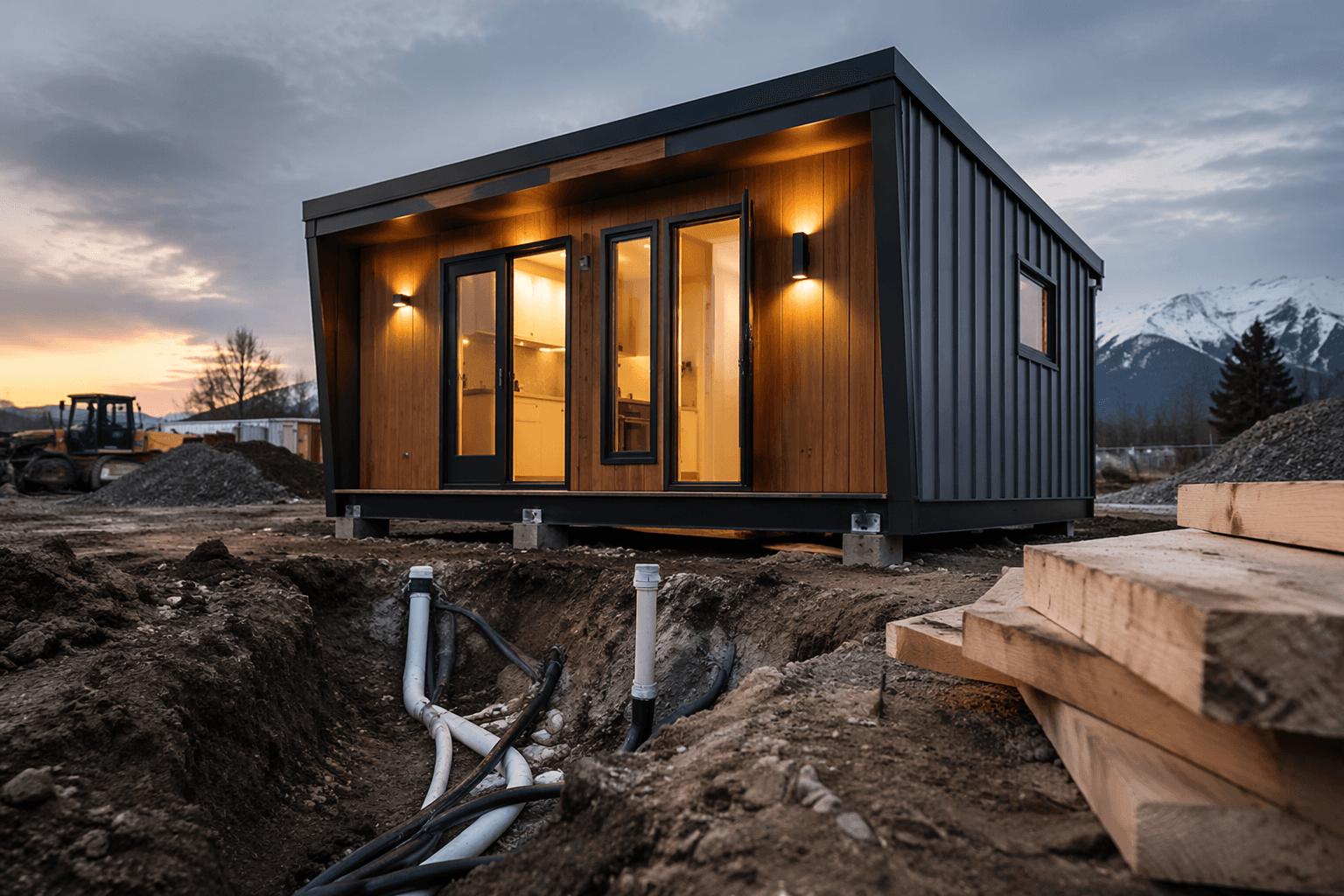
The Dade County project takes a different route to finished walls. The project is already underway, with the initial structure formed including exterior walls, subflooring, and some framing. The curriculum started in the design phase: instructor David Howard explained that students learned to read scale drawings, physically drew the tiny house plan themselves, and worked through practical layout decisions together, including where sinks and cabinets could and couldn't go. Construction student Collin Gray noted that drawing in scale is "kind of hard to visualize" but essential for getting exact measurements before anything gets built, and that the class then created a full material list and a budget based on lumber prices.
Construction student Noah Merritt identified the next challenge clearly: "The hardest part is probably going to be the rafters up top," explaining that the measurements have to be precise or the whole rafter assembly needs to be redone. Community sponsor Monda Wooten is funding the Dade County build and plans to use the house as an Airbnb once the students complete it. The construction program relies on sponsors because the school budget does not cover project materials or tools, and rising lumber costs tied to tariffs have added pressure to the program's finances this year.
Whether the end goal is a lockable shelter for someone sleeping rough in Seattle or a guest booking on Airbnb, both programs deliver the same foundational outcome: students who can read a blueprint, budget a material list, frame a wall, and solve a problem on the fly before the next course bell rings.
This article was produced by Prism’s automated news system from verified source data, official records, and press releases, then run through automated quality and moderation checks before publishing. The system is built and supervised by the people who set the standards it runs under. Read our full AI policy.
Did this article answer your question?