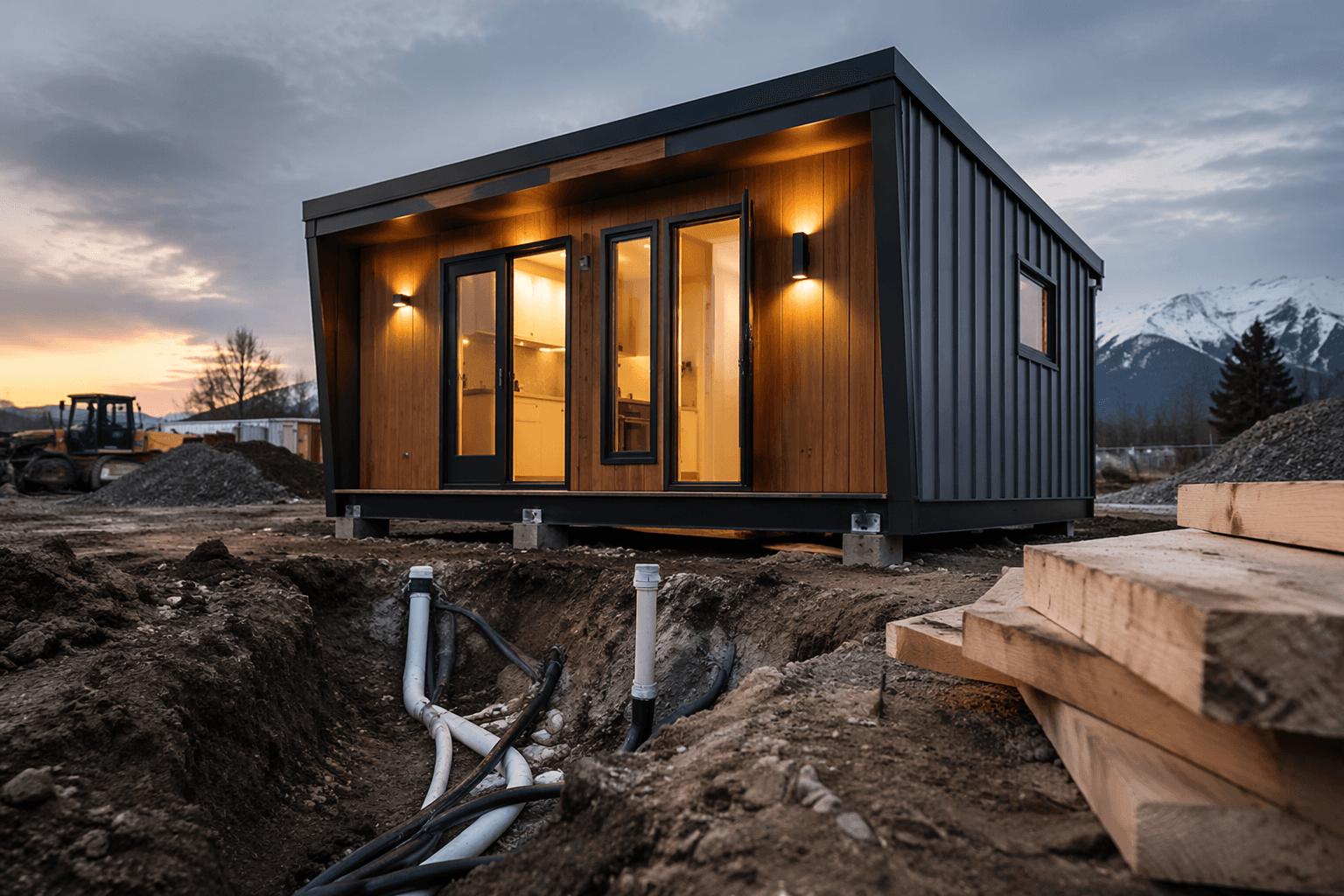
How One Builder Constructed a Luxury Tiny Home for Just $25,000
Proof that $25K can buy a luxurious tiny home: one builder's meticulous sourcing, selective DIY work, and permitting-first mindset made it happen.
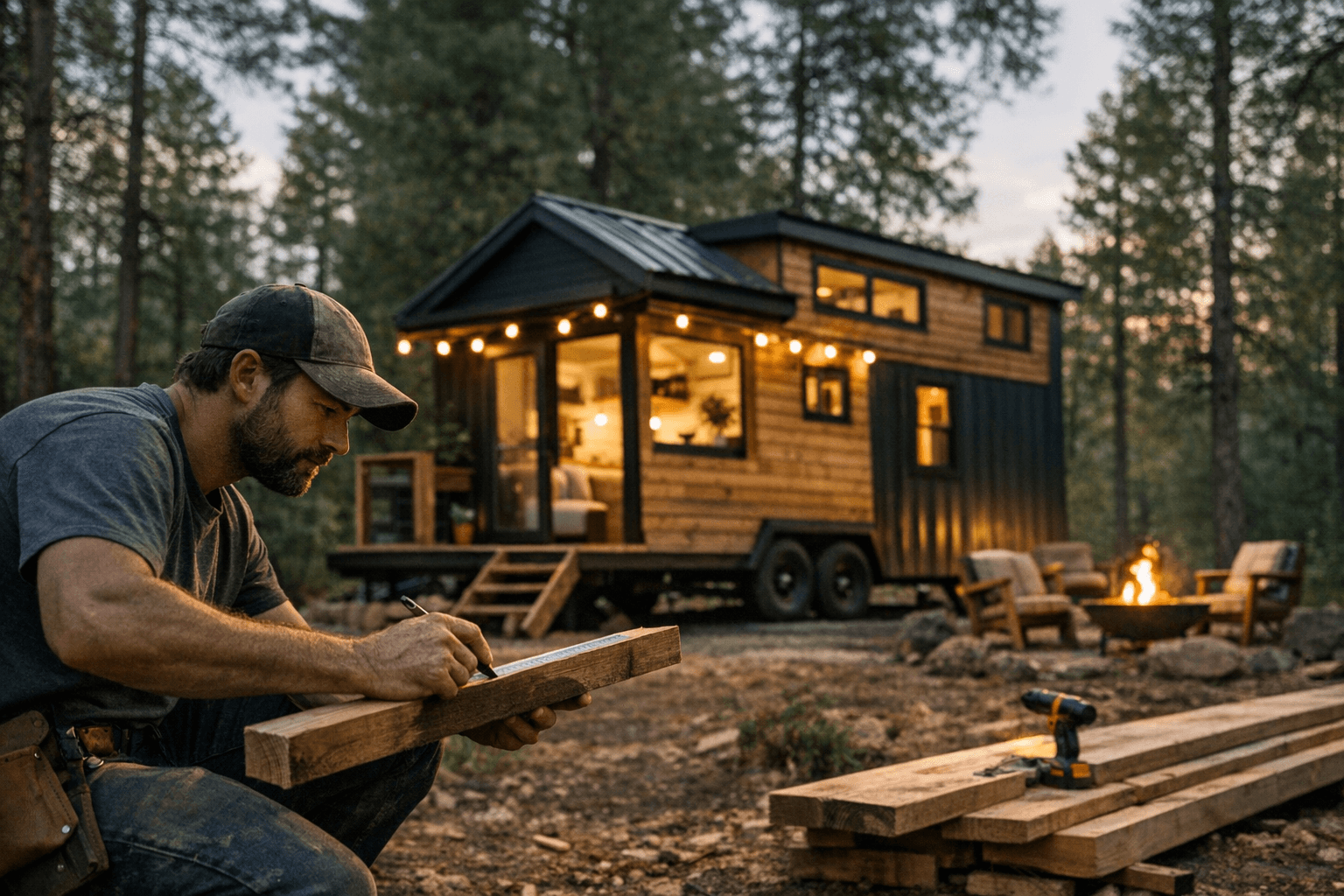
Twenty-five thousand dollars. That's the number that stops most tiny house skeptics cold, because at that price point, the conventional wisdom says you're looking at a bare-bones shell with exposed studs and a camping stove. One builder set out to prove that assumption wrong, completing a full tiny home with high-quality fixtures, a well-specified kitchen, and finishes that genuinely read as luxurious. The result is one of the more instructive case studies the tiny-house world has seen in recent memory.
The Budget Breakdown Mindset
The $25,000 figure wasn't an accident or a lucky streak at a salvage yard. It was the product of meticulous planning before a single piece of lumber was cut. The builder's core philosophy centered on identifying where spending money actually registers in a finished space and where it disappears into the walls. That meant ruthless prioritization: not every surface or system deserved premium treatment, but a carefully chosen few did. The kitchen and bathroom, the two rooms where quality fixtures create an outsized impression, received the lion's share of investment. Everything else was subject to creative sourcing.
Cost creep is the silent killer of small-budget builds, and the builder addressed it head-on by treating the budget as a planning document rather than a rough target. Every decision flowed from that discipline. When a more expensive material couldn't be justified against its visible impact, it was swapped out. When a cheaper alternative could deliver the same aesthetic result, it went in.
DIY Where It Counts, Contracts Where It Matters
One of the most practically valuable lessons in this build is the clear-eyed division between DIY and contracted work. The builder handled a significant portion of labor personally, which is where a meaningful chunk of the $25,000 savings originated. Interior finishes, painting, trim work, and furniture installation are all areas where a competent owner-builder can put in sweat equity without compromising the final product.
Electrical and plumbing were a different story entirely. Both systems were contracted to licensed tradespeople. This isn't just a safety consideration, though that matters enormously in a structure this compact where a wiring fault or a slow leak has nowhere to hide. It's also a permitting reality: most jurisdictions require licensed work on these systems for a certificate of occupancy, and cutting corners there can make a finished tiny home effectively unsellable or uninsurable. The builder's willingness to spend on professional trades for critical systems while DIYing everything else is a model worth studying.
Design Choices That Do the Heavy Lifting
The luxury feel achieved at $25,000 didn't come from expensive materials alone. It came from a set of specific design decisions that make a compact space feel larger, more functional, and more intentional than its square footage suggests.
Open-plan layouts were the foundation. By eliminating interior partition walls wherever possible, the build creates sightlines that stretch the perceived size of the home. Natural light, a priority that the builder treated as a structural decision rather than an afterthought, amplifies this effect. Well-placed windows don't just bring in daylight; they borrow the outdoors as a visual extension of the interior.
Multi-functional furniture and integrated storage were equally central:
- Stairs to the sleeping loft were built with deep storage drawers in each riser, reclaiming space that a conventional staircase would waste entirely.
- The loft itself was designed to maximize usable headroom, a detail that separates livable sleeping spaces from the cramped crawl spaces that give tiny homes a bad reputation.
- Furniture choices leaned toward pieces that serve more than one purpose, reducing the number of items needed and keeping the floor plan clear.
For visible surfaces, the builder turned to reclaimed and discounted materials. Salvaged wood, architectural finds, and deeply discounted stock created character and warmth that new materials at the same price point simply couldn't match. The key was vetting these materials carefully; reclaimed doesn't mean compromised, but it does require an eye for structural soundness before aesthetics.
Insulation and Windows: The Investment You Don't See but Always Feel
Perhaps the least glamorous line item in this build is also one of the most consequential. The builder invested deliberately in efficient insulation and high-quality windows, two components that don't photograph well but determine whether a tiny home is genuinely livable across seasons or just pleasant in mild weather.
In a structure measured in hundreds of square feet, thermal performance is magnified. A poorly insulated tiny home loses heat rapidly in winter and becomes a heat trap in summer, and no amount of beautiful finish work compensates for a space that's uncomfortable to occupy. The windows serve a dual role: thermal performance and natural light, both of which the builder treated as non-negotiable quality-of-life investments rather than areas for cost-cutting.
This is a distinction worth holding onto for anyone planning a build. Spending more on insulation and glazing while sourcing reclaimed wood for shelving is a rational tradeoff. Reversing that logic produces a photogenic space that's miserable to live in.
Permitting, Inspections, and the Paperwork Nobody Enjoys
The builder is direct about the regulatory dimension of tiny-home construction, and it's one of the most useful parts of the project's documentation. Permitting and inspections aren't optional obstacles to route around; they're the framework that makes a tiny home legally habitable and protects its value. The feature specifically flags transport, delivery, and site-prep costs as expenses that catch first-time builders off guard, particularly for factory-built units where the structure arrives complete but the land underneath it may require significant preparation.
Local regulations vary enormously. Zoning rules, building codes, and utility connection requirements differ by county and municipality, and what's straightforward in one jurisdiction can require engineering plans and multiple permit rounds in another. The time to research those requirements is before design begins, not after a structure is sitting on a trailer waiting for approval.
Timelines and Contingency: The Honest Numbers
Small projects, the builder notes plainly, still face delays. A $25,000 build is not immune to a backordered window shipment, a subcontractor scheduling gap, or a permit review that takes longer than expected. Planning a timeline without buffer is planning to be frustrated.
The recommendation here is a conservative contingency cushion built into both the budget and the schedule. On the budget side, even a modest reserve of ten to fifteen percent of the total project cost provides meaningful protection against the unexpected expenses that appear in virtually every build. On the timeline side, padding the completion date by several weeks is cheap insurance against the stress of a hard deadline that external factors can easily blow past.
Long-Term Livability as the Real Benchmark
The most lasting insight from this $25,000 build is the reframe of what success actually means. Finishes are visible in photographs. Livability is what determines whether someone is still happy in the space three years after moving in.
Thoughtful circulation, the path a person takes through the home in daily routines, is a design problem that tiny homes must solve more carefully than any conventional floor plan. A layout that feels clever as a diagram can feel exhausting in practice if the path from bed to bathroom to kitchen requires constant navigation around furniture. Natural light, storage that's genuinely accessible rather than theoretically present, and thermal comfort in actual local climate conditions are the unsexy metrics that determine whether a tiny build succeeds as a permanent home.
At $25,000, this builder didn't just prove that a number was achievable. The project demonstrates a process: prioritize ruthlessly, source creatively, contract the systems that matter, and keep long-term livability at the center of every decision. That process scales. The budget might not, but the thinking behind it applies at any price point.
This article was produced by Prism’s automated news system from verified source data, official records, and press releases, then run through automated quality and moderation checks before publishing. The system is built and supervised by the people who set the standards it runs under. Read our full AI policy.
Did this article answer your question?