Imagine Tiny Homes' Renegade packs two lofts into 445 square feet
Two lofts, 445 square feet, and a layout built for real daily life make the Renegade feel less like a novelty and more like a workable small house.
Imagine Tiny Homes' Renegade is built for the long haul
The Renegade makes its case the way the best tiny homes do, by making compact space feel deliberate instead of tight. At 28 feet long, 8 feet wide, and 13 feet high, it packs 445 square feet into a layout with two lofts, a living room, a kitchen, and a bathroom, and the result is a home that asks a practical question: can open-plan design still work after the honeymoon period wears off?
For Imagine Tiny Homes, that question sits at the center of the brand. The Idaho-based builder says it was established in 2021 with the idea of creating “the perfect tiny living space,” and it serves the Treasure Valley area and beyond. Its homes are positioned not just as weekend retreats, but as forever homes, vacation homes, Airbnbs, rental homes, and offices, which tells you a lot about how the company wants buyers to think about tiny living: as a real housing category, not a novelty.
A footprint that stays within familiar trailer limits
The Renegade fits neatly inside the size logic that drives much of the trailer-based tiny-house world. Imagine Tiny Homes says trailer-based builds can generally be up to 13.5 feet tall, 8.5 feet wide, and as long as 40 feet, so the Renegade’s 28-foot length and 8-foot width keep it comfortably inside that envelope. That matters because tiny homes often succeed or fail on proportion, not just square footage. A home that respects the trailer format can preserve circulation, storage, and headroom in ways that make day-to-day living easier.
The company’s broader lineup shows the same design language. Its Seeker model is listed at about 280 square feet plus two lofts, while the Atlas 2.0 comes in at about 323 square feet plus loft space. In other words, the Renegade is not an isolated experiment. It sits in the middle of a product family that consistently leans on loft sleeping, open common areas, and compact utility zones to stretch usable space.
Why the open floor plan matters
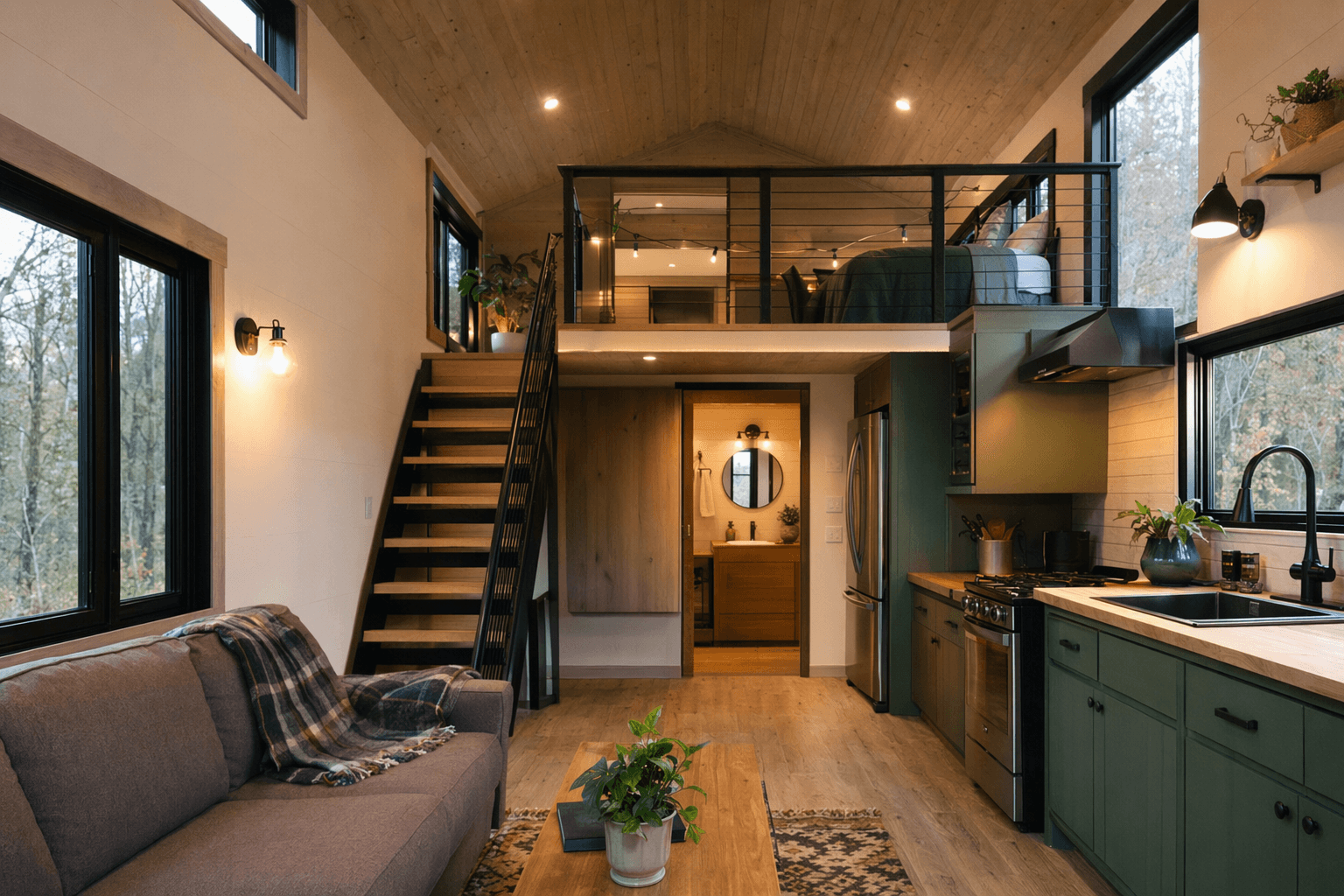
The most important livability choice in the Renegade is the open floor plan. In tiny homes, “open” can sometimes mean exposed to every sound, smell, and mess; here, it appears to mean the opposite of cluttered. The living room opens the interior up visually, while windows bring in daylight that keeps the space from feeling boxed in.
That matters over months and years, especially for anyone using the home as a primary residence. In a layout this size, every wall and partition has a cost. By letting the living area breathe, the Renegade creates a central zone that can work for lounging, hosting a guest for an afternoon, or setting up a laptop without feeling like you are always in the way.
Kitchen function over kitchen theater
The kitchen is one of the clearest tests of whether a tiny home can support ordinary life, and the Renegade seems to understand that. Instead of chasing a showpiece galley, it focuses on the basics that matter every week: storage, countertop space, high-end appliances, and a washer-dryer location. That combination is the difference between a kitchen you admire and one you actually use.
In tiny living, counter space is social currency. Enough room to prep dinner, set down groceries, and leave a coffee maker or cutting board in place changes how a home feels after the first month. Add dedicated laundry accommodation, and the house starts behaving like a full-time residence instead of a staycation cabin.
Lofts, privacy, and the daily rhythm of sleeping up high
The Renegade’s two lofts do more than add sleeping space. They also create separation inside a home that only has 445 square feet to work with. One loft can become the primary bedroom while the other serves a second sleeper, storage perch, or occasional guest space, depending on how the home is set up.
The bright loft bedroom is especially important because tiny-house lofts can feel cramped fast if they are dark or hard to access. Here, the emphasis on light and openness helps the upper level feel less like a crawl space and more like a private retreat. For couples or small families, that privacy is what keeps an open-plan tiny house from becoming one shared room with a roof.
Storage and circulation decide whether open really means livable
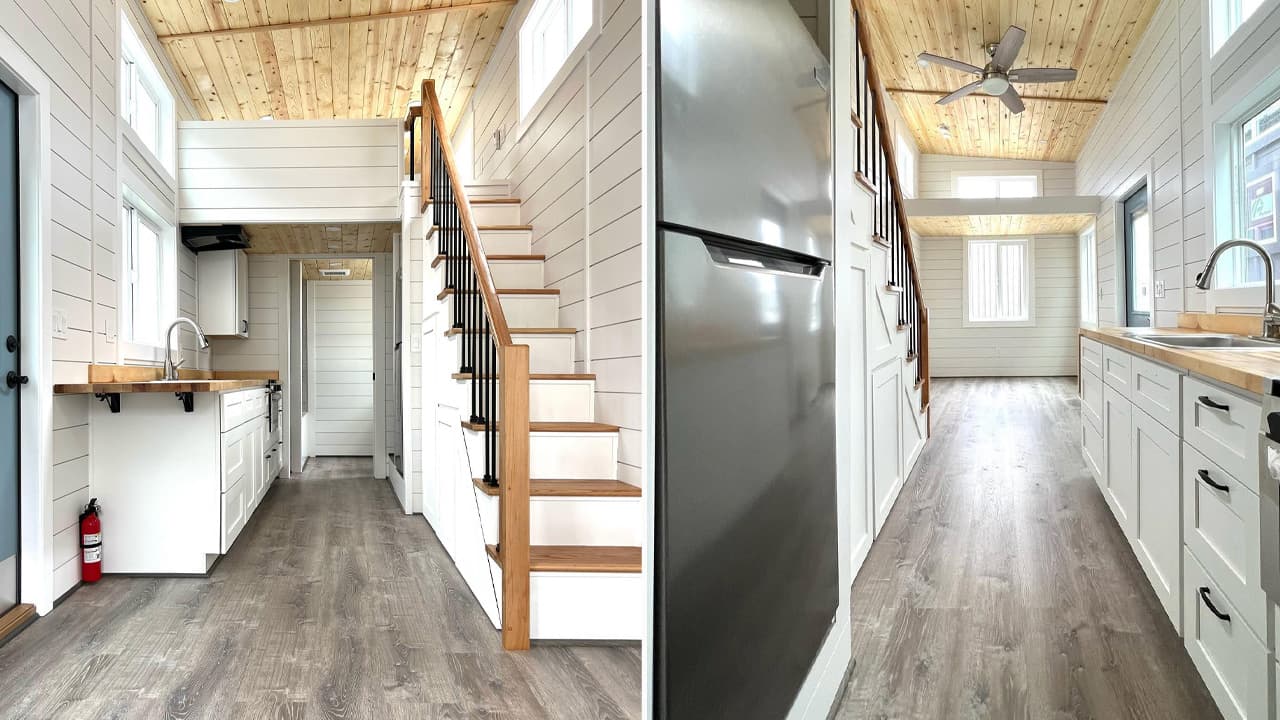
Under-stair storage is one of the quiet wins in the Renegade. It gives the house somewhere to hide the small-but-necessary objects that accumulate in real life, from pantry overflow to bedding and household supplies. In a tiny home, storage is not an accessory. It is the infrastructure that keeps counters clear and pathways open.
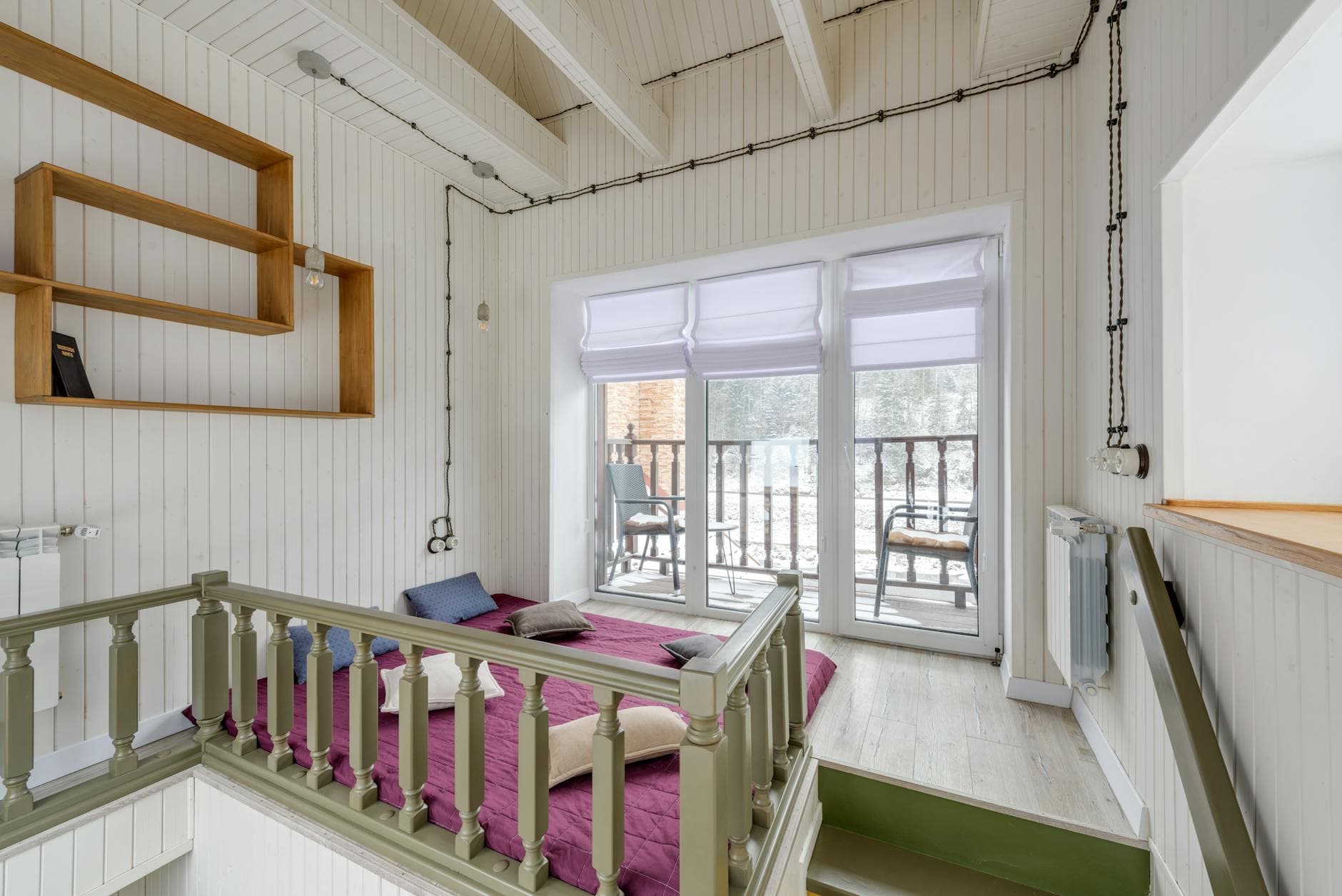
Circulation matters just as much. When a home is only 8 feet wide, every step has to earn its place. The Renegade’s open living room, usable kitchen, lofts, and bathroom all have to work together without creating pinch points, and the layout’s value comes from that choreography. If the plan holds up, the house can feel manageable on a rainy Tuesday night, not just photogenic in a listing.
The bathroom keeps the house grounded in ordinary life
The bathroom is another spot where the Renegade stays practical. It uses a pocket door, which saves precious space, and includes a toilet, a bathtub-shower combo, and a vanity sink. That setup gives the home the kind of everyday utility many tiny buyers want but do not always get, especially if they plan to live in the house full-time.
A real tub-shower combo also signals that the Renegade is not built only for short stays. The ability to bathe, wash up, and handle daily routines without improvising is what makes a tiny home feel like housing instead of a clever container. Along with the washer-dryer space, it pushes the Renegade toward full residential use.
Why this model fits the company’s bigger promise
Imagine Tiny Homes also markets tiny living as a way to cut bills by more than 75%, which helps explain why its builds are framed around efficiency as much as aesthetics. The company says custom builds come with about a two-month wait, while ready-to-buy models offer a faster path for buyers who already know what they want. That mix of customization and availability is part of the appeal for people comparing tiny-house options in a crowded market.
The Renegade lands in the middle of that promise with unusual clarity. It is compact without being bare, open without being empty, and designed with enough storage, light, and utility to support real daily routines. In a field full of homes that photograph well for a weekend, the Renegade stands out because it asks a harder, more useful question: what does a tiny house need to do when the trip is over and living there is the point?
This article was produced by Prism’s automated news system from verified source data, official records, and press releases, then run through automated quality and moderation checks before publishing. The system is built and supervised by the people who set the standards it runs under. Read our full AI policy.
Did this article answer your question?