Why tiny homes in walkable neighborhoods remain out of reach
Millions want smaller homes in walkable neighborhoods, but zoning still keeps them scarce. The real bottleneck is supply, not taste, and ADUs are the clearest path forward.
The demand is already there
Millions of Americans say they want smaller homes in walkable neighborhoods, but fewer than 10% actually live in one. That gap is the whole story: the appetite is real, yet the supply never catches up because the rulebook still favors detached houses and the land patterns built around them.
A 2023 National Association of REALTORS® poll of 2,000 adults in the 50 largest metro areas found that demand for living in a walkable community remains robust. NAR has also reported that 78% of respondents would pay more for a home in a walkable community, which is a powerful signal for anyone watching the tiny-home market. This is not a niche preference anymore. It is a mainstream housing wish that keeps running into a regulatory wall.
Smart Growth America’s 2023 Foot Traffic Ahead report makes the mismatch even sharper: demand for walkable urban real estate far exceeds supply, and those places command higher price premiums than car-dependent alternatives. The U.S. Environmental Protection Agency adds the everyday reason people keep choosing them, pointing to access to transit, jobs, schools, restaurants, and other amenities. Tiny homes fit naturally into that picture, but only if the neighborhood rules allow them to exist.
The rulebook is the bottleneck
The hardest part of building tiny homes in walkable places is not the floor plan. It is the zoning. Cornell’s legal analysis says many U.S. cities still reserve about 75% of land for detached single-family homes, which leaves very little room for the smaller, denser housing types that work best near shops, transit, and jobs.
Enterprise Community Partners traces that system back to the 1910s and its ties to exclusionary land-use practices. That history still matters because it explains why walkable neighborhoods often have strong demand but limited entry points for small-footprint homes. The result is a market where people want compact living, yet the legal map keeps pointing builders toward large-lot, detached formats instead.
For tiny-house advocates, this is where the conversation often gets misunderstood. The shortage is not proof that people have stopped liking smaller homes. It is proof that local rules keep the supply too narrow, especially in the places where compact housing would make the most sense.
ADUs are the practical path
Accessory dwelling units are one of the clearest ways through the bottleneck. HUD funded a 24-month Lehigh University study in 2025 to examine zoning reforms and financing tools for ADUs in small- to medium-sized U.S. cities, which shows how seriously federal housing researchers are taking the model. ADUs can be folded into existing neighborhoods without asking a city to reinvent the block from scratch.
The National Association of Home Builders notes that ADU ordinances can allow single-family dwellings to include additional units through conversions or new detached structures. That matters because it means a neighborhood does not have to stop being a neighborhood in order to add homes. When those units are built near employment centers and transit, NAHB says they can reduce auto dependence and make better use of existing infrastructure.
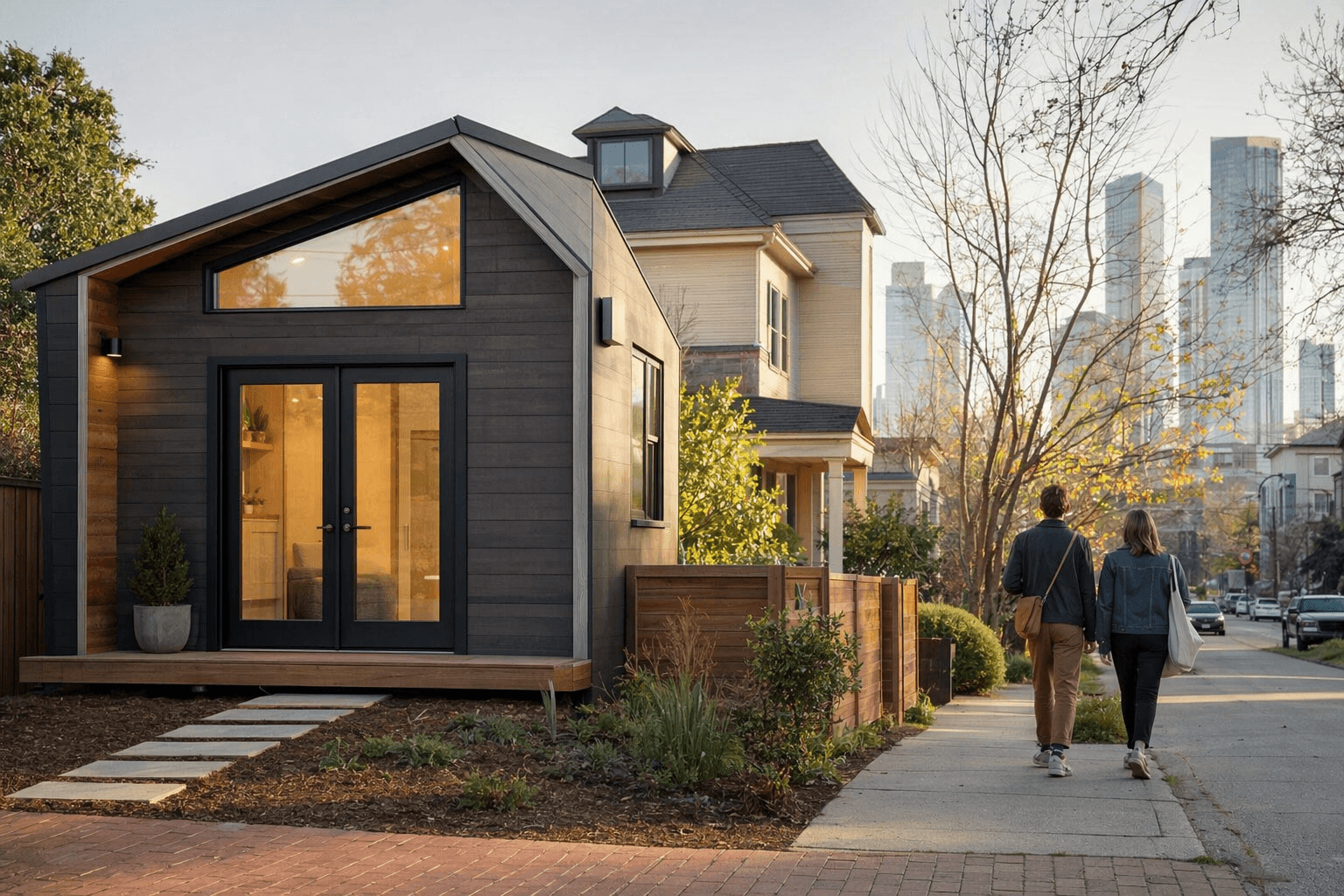
For the tiny-home world, that is the sweet spot. ADUs can deliver smaller homes in the exact places people already value, the walkable districts where errands, transit, and daily life are all close together. They are not the only answer, but they are the most realistic one already on the table.
The market is already moving smaller, just not fast enough
There is another clue that the housing market is shifting, even if zoning has not kept pace. NAHB said the median new single-family home size fell to 2,150 square feet in 2024, the lowest in 15 years. That tells you builders are already responding to affordability pressure and changing buyer expectations.
Lot sizes have also tightened. NAHB said median lot sizes have fallen by about 1,000 square feet over the last 15 years, landing at 8,400 square feet. Smaller sites can open the door to more compact housing forms, but they do not automatically produce the kind of walkable, truly small-footprint neighborhoods tiny-home buyers are looking for.
That is the deeper tension in this story. The market is inching smaller, yet the places with the strongest demand remain the hardest to build in. If a city keeps most of its land locked into detached single-family use, the supply of tiny homes in walkable districts will stay far below the number of people asking for them.
Why the gap keeps hanging on
The 40% versus under-10% gap is not an accident of taste. It is what happens when demand for walkability runs into a zoning system built for another era, with too much land reserved for detached houses and too few practical paths for accessory units, conversions, and other small-footprint homes. Until that changes, tiny homes in walkable neighborhoods will remain one of housing’s clearest examples of demand waiting on the rules to catch up.
This article was produced by Prism’s automated news system from verified source data, official records, and press releases, then run through automated quality and moderation checks before publishing. The system is built and supervised by the people who set the standards it runs under. Read our full AI policy.
Did this article answer your question?