Man's Illegal Tiny House
Osvaldo, 38, built nearly 10 tiny homes in LA's Fashion District and sells them for $100 while the city burns through $1B on homelessness programs.
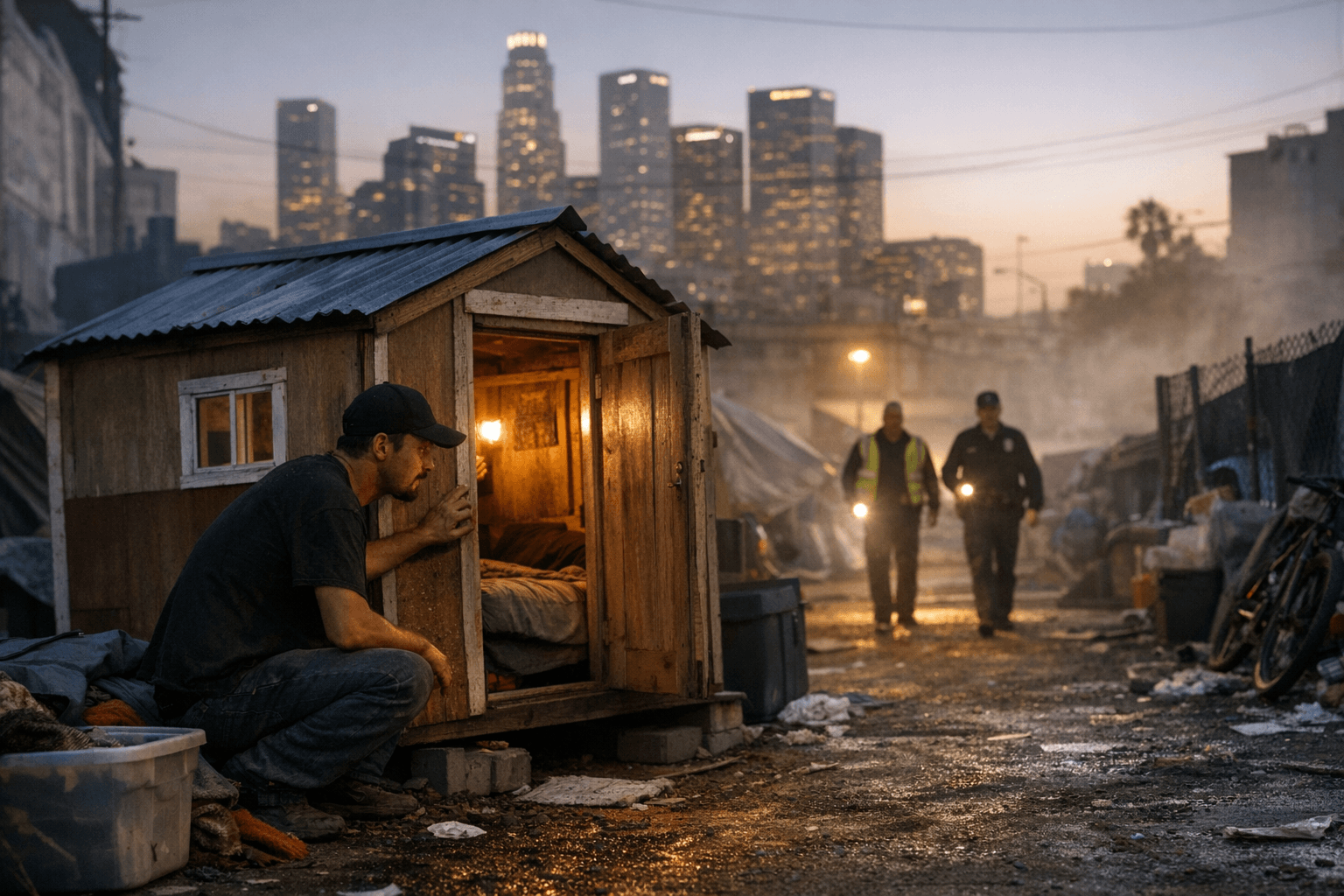
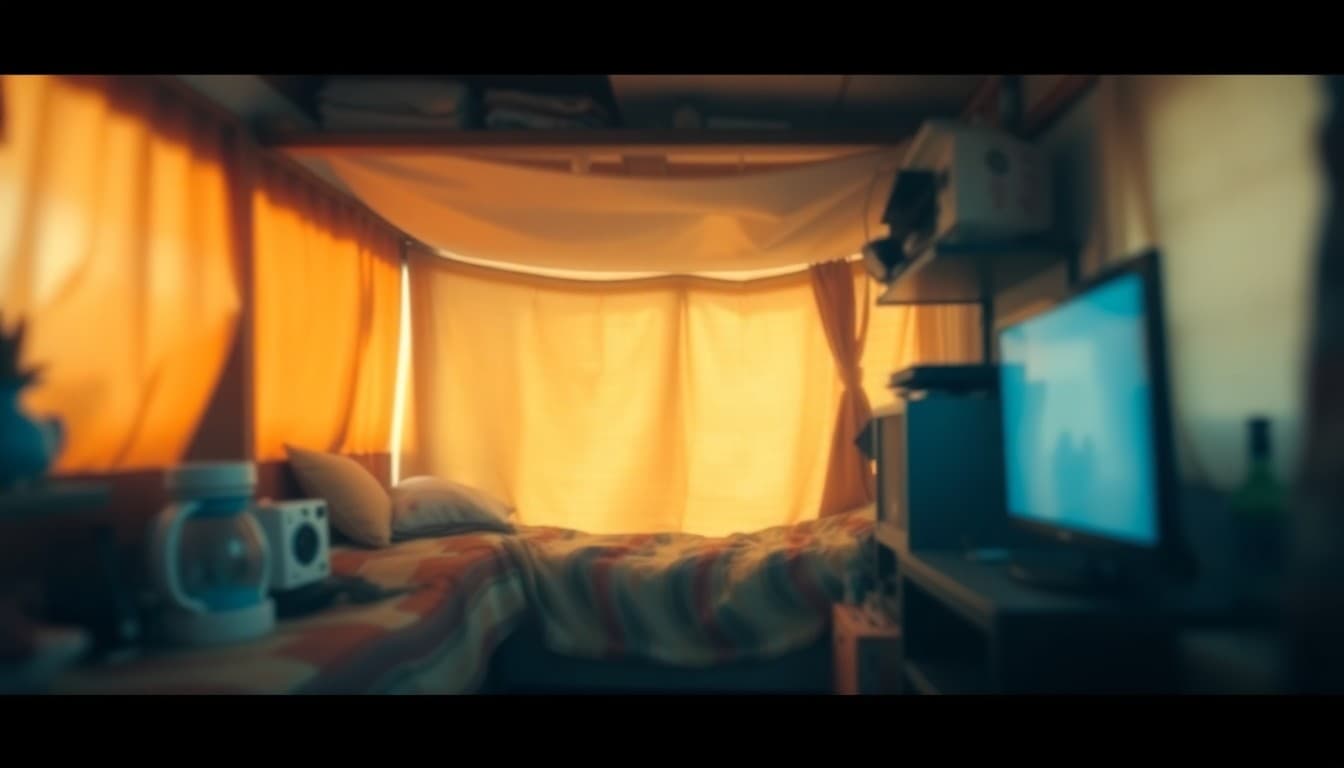
The brightest building in this stretch of LA's Fashion District isn't an art installation or a pop-up shop. It's the home Osvaldo built himself: a wood-framed structure he painted orange, green, and yellow, furnished with a bed, a television, and a working air conditioner. Outside, he's growing green beans. "I planted like… six, seven… little beans," he said.
Osvaldo is 38, homeless, and has quietly constructed a mini-town of tiny houses in one of downtown Los Angeles' most unhoused corners. He builds them from wood and reclaimed materials, charges somewhere between $100 and $150 per structure, and has already handed off close to ten. "I made like… almost 10 houses so far," he said. None of it is legal. All of it is occupied.
Before moving into his painted home, Osvaldo lived a block away under a tent and tarp. "Too much fighting… drugs… everything," he said of the old spot. Before that, he spent six years unhoused in Orange County, eventually drifting to Los Angeles for work and scraping by on odd jobs. "I work so I can buy my food," he said.
The structures he builds for others are less finished than his own: exposed wood, open frames still coming together, but enclosed and upright in a way that tents never are. For about $100, he puts together wood-framed, enclosed structures that offer a clear step up from tents and tarps.
One of those works-in-progress belongs to Kathryn, 40, who says she has been homeless for decades. She walked through what she has now: a small structure she calls a bedroom and a bathroom. Pointing to an open space, she described what she said would soon be the living room.
All of it unfolds as Los Angeles pours staggering amounts of money into a system still struggling to keep people housed. The city spent more than $1 billion on homelessness programs in recent years. The results have been uneven at best. More than half of residents end up homeless when leaving LA's official tiny home villages, according to an investigation that also uncovered issues with flooding and broken heaters inside city-sanctioned units.
What Osvaldo built doesn't have permits, city approval, or nonprofit backing. What it has is air conditioning, a door that closes, and a neighbor growing green beans out front while the billion-dollar system figures out what comes next.
Know something we missed? Have a correction or additional information?
Submit a Tip