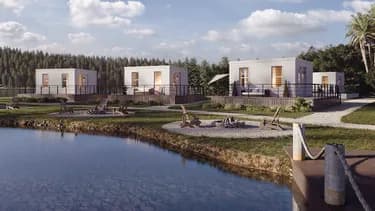
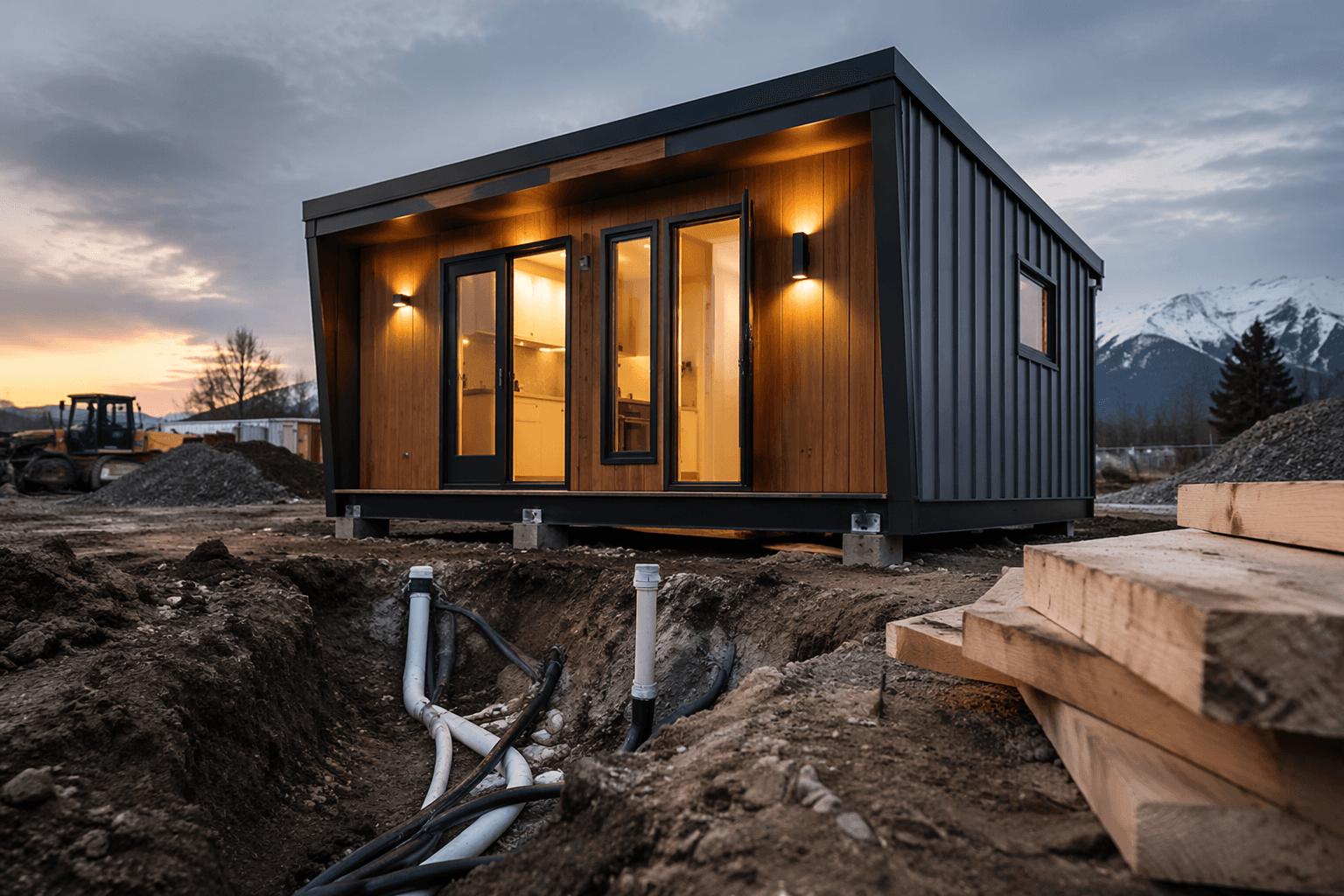
Tiny Homes Address Affordability, Homelessness, and Housing Shortages Across Canada
Canada's tiny-home push is personal: Charles Jackson moved from his car into a 72-sq-ft Pallet shelter in Cape Breton, and a $20M Indigenous-women-led factory in Kirkland Lake is scaling that promise nationwide.

Building homes, or parts of homes, in a factory and then assembling them on site has the potential to speed up project timelines and cut costs. Across Canada, that idea is no longer theoretical. From a 35-unit shelter village on the outskirts of Sydney, Nova Scotia, to a $20-million Indigenous-led manufacturing facility in northern Ontario, tiny and modular homes are being deployed as concrete, scalable answers to three of the country's most stubborn housing challenges: affordability, homelessness, and the slow pace of new construction.
A 72-Square-Foot Home That Changed Everything
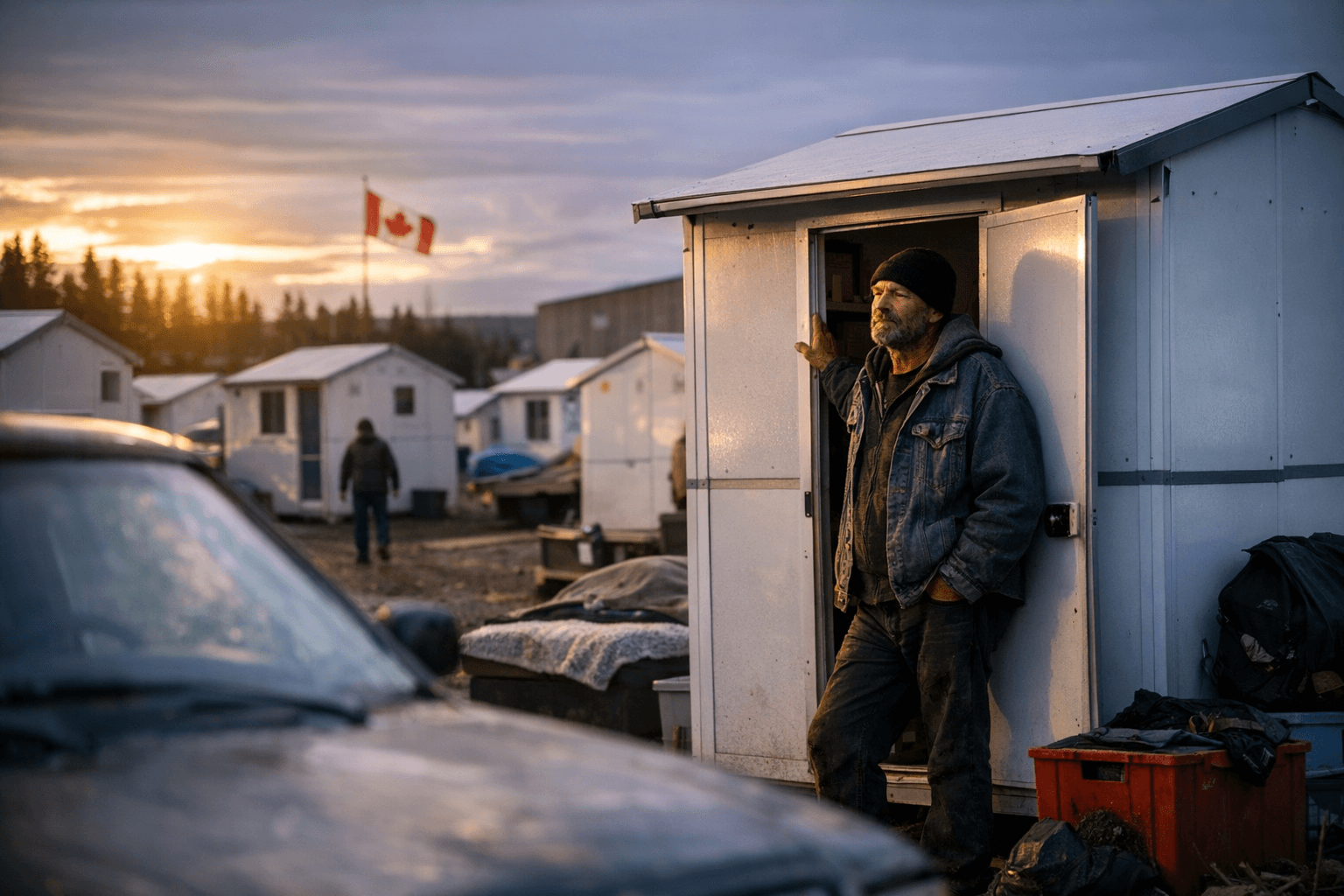
Seventy-two square feet may seem awfully tiny for a home, but it's enough for a built-in bed, desk, and shelves. And most importantly, a door. That detail matters more than it might sound. Charles Jackson was among the first residents to move into the Village at Pine Tree Park, a cluster of 35 Pallet shelters on the edge of Sydney, Cape Breton Island, after spending months living in his car. The dignity of a locking front door and basic utilities, small things by most measures, substantially altered his quality of life. His story anchors a larger argument: that in the middle of a housing crisis, what people most need isn't a blueprint for a dream home but a safe, private, lockable space to stabilize their lives.
The Village at Pine Tree Park is operated by New Dawn Enterprises and the Ally Centre of Cape Breton, with funding from the provincial government. About 110 people have lived in one of the 35 Pallet shelters in the first 18 months of operation. The scale of need driving that demand is stark: homelessness in the Cape Breton Regional Municipality more than doubled within a few years, from 200 to 500 out of a population of 80,000.
How the Pallet Model Works
In 2023, the Nova Scotia government bought 200 of the prefabricated shelters from U.S. company Pallet for $7.5 million. The shelters can be put up or taken down in less than an hour, and Pine Tree Park is one of six such villages now operating across the province. Pallet's model is built around what the company calls Dignity Standards: residents have access to services like meals, hygiene facilities, transportation, and on-site supports, all aimed at helping individuals transition to permanent housing as quickly as possible.
New Dawn isn't stopping at emergency shelter. The organization opened a 25-unit supportive housing facility in Sydney last May and is building eight tiny homes, larger units with their own kitchens and bathrooms, at Pine Tree Park. The two-step model, moving residents from Pallet shelters into purpose-built supportive housing, has attracted attention well beyond Cape Breton. New Dawn has been contacted by people in other municipalities in Nova Scotia, Alberta, and even Scotland, with Erika Shea, president and CEO, suggesting the model could serve as a framework for others globally.
Kirkland Lake: Where Manufacturing Meets Housing Justice
The Cape Breton story is compelling, but the Kirkland Lake factory may be the more transformative long-term development. Construction has commenced on a $20-million modular housing factory in Kirkland Lake, managed by Keepers of the Circle, a group associated with the Temiskaming Native Women's Support Group. The 24,000-square-foot facility is designed to produce sustainable housing solutions for First Nations communities in northern Ontario.
Once operational, the factory will be able to produce up to 100 sustainable modular homes per year and employ up to 30 people per shift. The panels use cellulose insulation derived from recycled paper and cardboard, ensuring that all seams, crevices, and cracks in the home are sealed properly to withstand harsh northern winters where performance failures aren't just uncomfortable, they're dangerous. The facility also doubles as a year-round training centre, with a focus on recruiting Indigenous women and 2SLGBTQQIA+ individuals into the trades. In 2022, six Indigenous women completed a pilot program to construct panels for a 600-square-foot home. That proof-of-concept directly led to the decision to build the full factory.
This is the equity argument that New Dawn's analysis flags as politically important: local factories producing modular panels don't just solve a housing supply problem, they create skilled jobs in smaller communities and keep investment geographically dispersed rather than concentrated in southern urban centres.
Why Prefab Is a National Priority Now
Modular construction is a key element in the federal government's strategy to roughly double the housing industry's output to 500,000 starts a year. Many Canadian communities are charging ahead with their own ideas of how best to apply these building methods.
The case for factory-built construction in Canada is especially strong given the climate. Off-site fabrication eliminates weather-related delays that routinely stretch conventional build timelines in northern and Atlantic communities. Quality control is easier to enforce in a factory setting than on a muddy winter job site, and standardized panel systems can be optimized for insulation performance in ways that ad-hoc local builds often aren't. For emergency and transitional housing specifically, the ability to assemble a full shelter village in hours rather than months is a capability that conventional construction simply cannot match.
The Challenges That Still Need Solving
Optimism about tiny and modular homes is warranted but not unconditional. Community opposition to siting remains a real obstacle; the history of transitional housing proposals in Canadian municipalities is littered with projects delayed or derailed by neighbourhood resistance. There's also the risk of using micro-units as a cost-cutting measure without providing the wraparound services that actually move people toward permanent housing. A tiny home without access to mental health support, addiction services, and employment pathways is a cheaper version of shelter, not a solution.
Researchers and advocates are watching pilot outcomes closely: time-to-permanent-housing, resident health and safety metrics, and cost-per-occupied-unit over time. If modular tiny-home programs consistently outperform traditional shelter and motel programs on those measures, the case for redirecting municipal and provincial housing capital toward this model becomes difficult to ignore.
Where This Is Heading
The Village at Pine Tree Park and the Kirkland Lake factory represent two ends of a spectrum that the modular tiny-home movement is beginning to span: emergency dignity at one end, durable community infrastructure at the other. What connects them is the recognition that housing supply isn't just a construction problem. It's a design problem, a financing problem, a services problem, and a political will problem all at once. Tiny and modular homes won't resolve every one of those dimensions, but they are proving, with real people in real places, that the gap between a housing crisis and a housing solution can be smaller than anyone assumed.
This article was produced by Prism’s automated news system from verified source data, official records, and press releases, then run through automated quality and moderation checks before publishing. The system is built and supervised by the people who set the standards it runs under. Read our full AI policy.
Did this article answer your question?