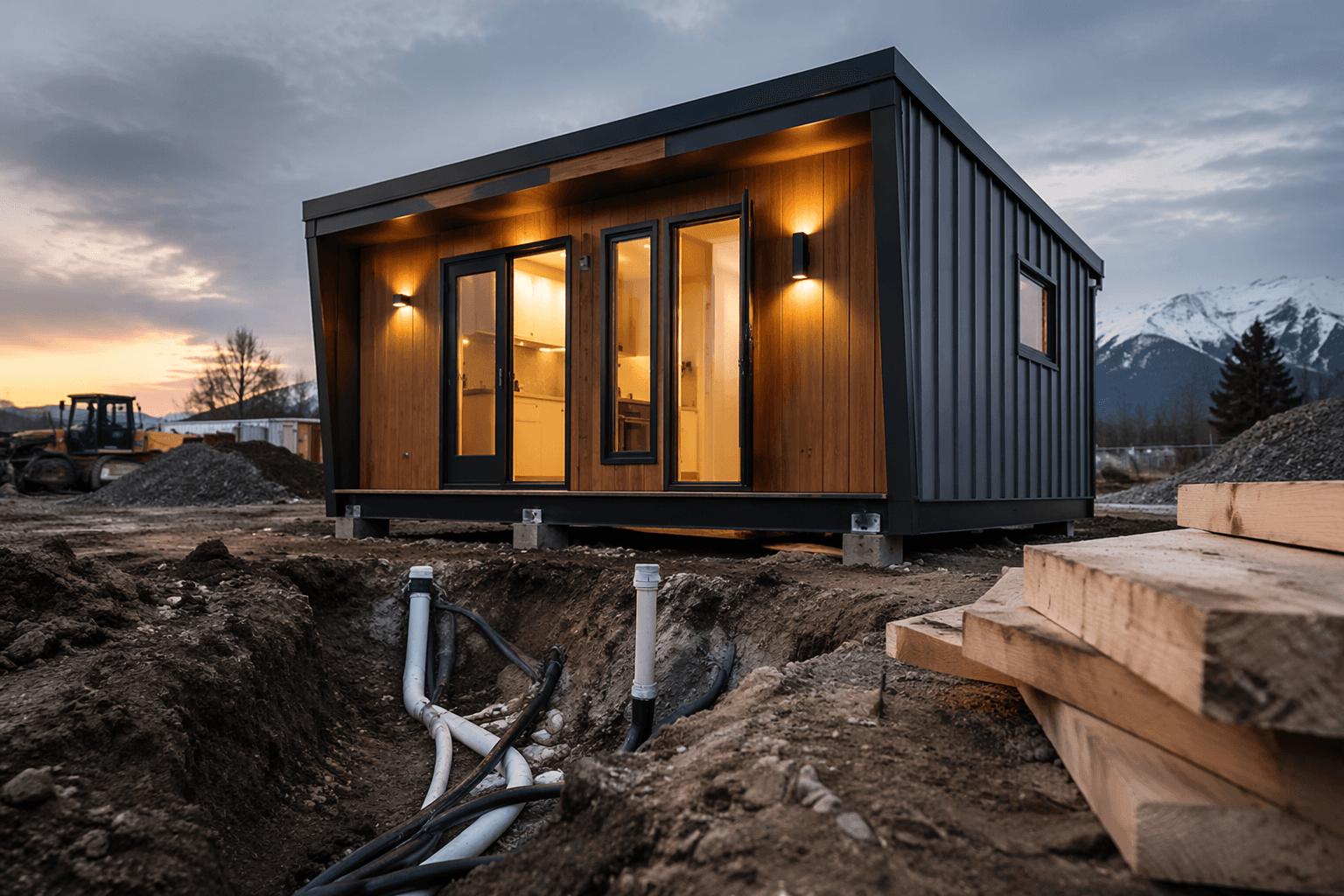
Municipal Tiny‑House Regulations, Checklist and Decision Tree for Planners
Use a simple checklist and decision tree to decide whether tiny homes fit as ADUs, clustered communities, RV-style sites, or temporary/conditional housing — illustrated by an eight-unit veterans village bid.

MAHUBE-OTWA sought bids for an eight-unit tiny-home veterans village in New York Mills, and that single project shows the regulatory forks every planner must navigate: zoning, building code path, utilities, procurement and public messaging. This guide synthesizes the regulatory patterns municipal governments use to permit tiny homes, with a concise checklist and a decision tree you can run on a proposed project.
Overview and purpose This guide exists to help city staff, planners, tiny-home advocates and builders evaluate regulatory options without starting from scratch. It summarizes four common municipal approaches to tiny homes and turns them into a practical checklist and decision tree so you can quickly map a proposal — from a single accessory dwelling to a clustered veteran-focused community like the eight-unit New York Mills project — to the most straightforward permitting route.
Four common municipal approaches Municipal governments tend to resolve tiny-home requests through one of four regulatory patterns: treating units as accessory dwelling units (ADUs), permitting clustered tiny-house communities, adapting RV or manufactured-home rules, or allowing temporary or conditional uses for transitional housing. Each path has distinct code triggers: ADU rules hinge on residential zoning and owner-occupancy, clustered communities require site-plan and density decisions as shown by the MAHUBE-OTWA eight-unit bid, RV-paths depend on vehicle classification and park standards similar to federal procurement notices, and temporary permits are often used for veteran or emergency housing projects.
- Project type and scale, including unit count — note whether proposals are single ADUs or multi-unit sites like the eight-unit veterans village.
- Zoning fit, including permitted use, density limits, lot coverage and setbacks.
- Building-code classification: determine whether units will follow the state or local residential code, be certified as recreational vehicles, or take an alternative compliance path.
- Foundation and utilities: list stormwater, wastewater, power, and potable water needs and whether each unit is on a permanent foundation.
- Fire and life-safety: required egress, sprinkler triggers and fire department access.
- Parking and access: on-site parking requirements and street access standards.
- Procurement and contracting: if a public or nonprofit entity is seeking bids, follow public procurement rules like the MAHUBE-OTWA solicitation for eight units.
- Conditional-use or overlay options: identify if a conditional use permit, planned-unit development or overlay district is the fastest regulatory tool.
- Community engagement plan: scope and timeline for public meetings and notification.
Checklist for planners
This checklist converts those approaches into concrete review items you can tick off during project intake:
Each item here maps directly to choices municipalities make when they see a tiny-home proposal.
Decision tree: a sequential intake process Use this step-by-step decision tree when a proposal arrives: 1) Define the proposal: count units, name sponsoring organization, and classify use. If it is an eight-unit veterans village, treat it as a small multi-family project from the start. 2) Ask zoning compatibility: is the site in a zone where ADUs, multifamily, or manufactured home parks are permitted? 3) Determine building-code route: will the units be built to the residential code, built on wheels as RVs, or require an alternative compliance plan? 4) Check infrastructure needs: can the site support water, sewer, and emergency access without off-site improvements? 5) Identify permitting vehicle: choose between administrative zoning relief, conditional-use permits, planned-unit development, or a new overlay district. 6) Consider procurement and funding rules: if a public body or nonprofit seeks bids, confirm procurement thresholds and solicitation language early, as in the New York Mills bid process. 7) Plan public outreach and timing: schedule hearings and neighborhood meetings according to the permit path chosen. Follow these steps in sequence to shorten the back-and-forth between applicants and staff and to reveal when an overlay or code amendment may be a better long-term solution.
- Minimum square footage and ceiling height thresholds that can unintentionally exclude many tiny-house designs.
- Foundation requirements which determine whether a unit is a structure subject to residential code or a vehicle subject to RV/park rules.
- Utility connection standards, especially for septic and wastewater, which are often the real cost-driver on small multi-unit sites.
- Parking and density standards that make clustered communities infeasible on small lots until the planner can apply a density bonus or reduce parking through a waiver.
Practical regulatory details to watch
When you dig into the code, certain technical issues repeatedly slow approvals. Watch these items first because they almost always require discrete policy decisions:
These technical choices are why MAHUBE-OTWA and similar bidders prefer clarity up front: knowing whether eight units will trigger a full site plan or a streamlined administrative review changes the project economics.
Messaging, public hearings and share hooks How you frame the project matters. Reader-engagement analysis shows stories and public notices that open by naming the location, organization and unit counts perform better, so mirror that in your public notice language: say who is proposing the project, where it will be and how many units are involved. Include a share hook in public materials as well: a surprising stat, a named local partner, or an explicit daily-life impact helps residents and reporters convey why a proposal matters. Consider the contrast between a clear local bid, like the New York Mills eight-unit proposal, and a generic procurement posting that fails to name project outcomes.
Comparative example notes Two communication patterns stand out from recent examples. A bid notice that said MAHUBE-OTWA sought proposals for an eight-unit veterans village in New York Mills provided immediate clarity for bidders and the public. By contrast, a generic procurement notice without a location and unit count failed to attract the same level of engaged responses. That comparison underscores the earlier point: give precise facts early and your permitting process becomes a design and funding conversation, not a code-interpretation standoff.
- At intake, capture sponsor name, parcel, and unit count.
- Run the decision tree to pick the permit vehicle.
- Use the checklist to identify missing technical information that could delay approval.
- If the proposal is public or nonprofit-led, confirm procurement rules ahead of solicitation to avoid rebids, as illustrated by recent bid-driven projects.
Implementation checklist and next steps
If you take nothing else from this guide, adopt these immediate steps:
These actions collapse uncertainty and make it easier to move from concept to build.
Conclusion Municipal tiny-house regulation no longer needs to be an exercise in improvisation. Treat each proposal like the MAHUBE-OTWA eight-unit example: name the sponsor, state the unit count, pick a clear regulatory path from the four common patterns and use the checklist and decision tree to move quickly. That approach turns tiny-house permitting from a series of surprises into a repeatable municipal practice that planners, advocates and builders can plan around.
This article was produced by Prism’s automated news system from verified source data, official records, and press releases, then run through automated quality and moderation checks before publishing. The system is built and supervised by the people who set the standards it runs under. Read our full AI policy.
Did this article answer your question?