North Hollywood tiny-home village offers shelter, pets, and a path to housing
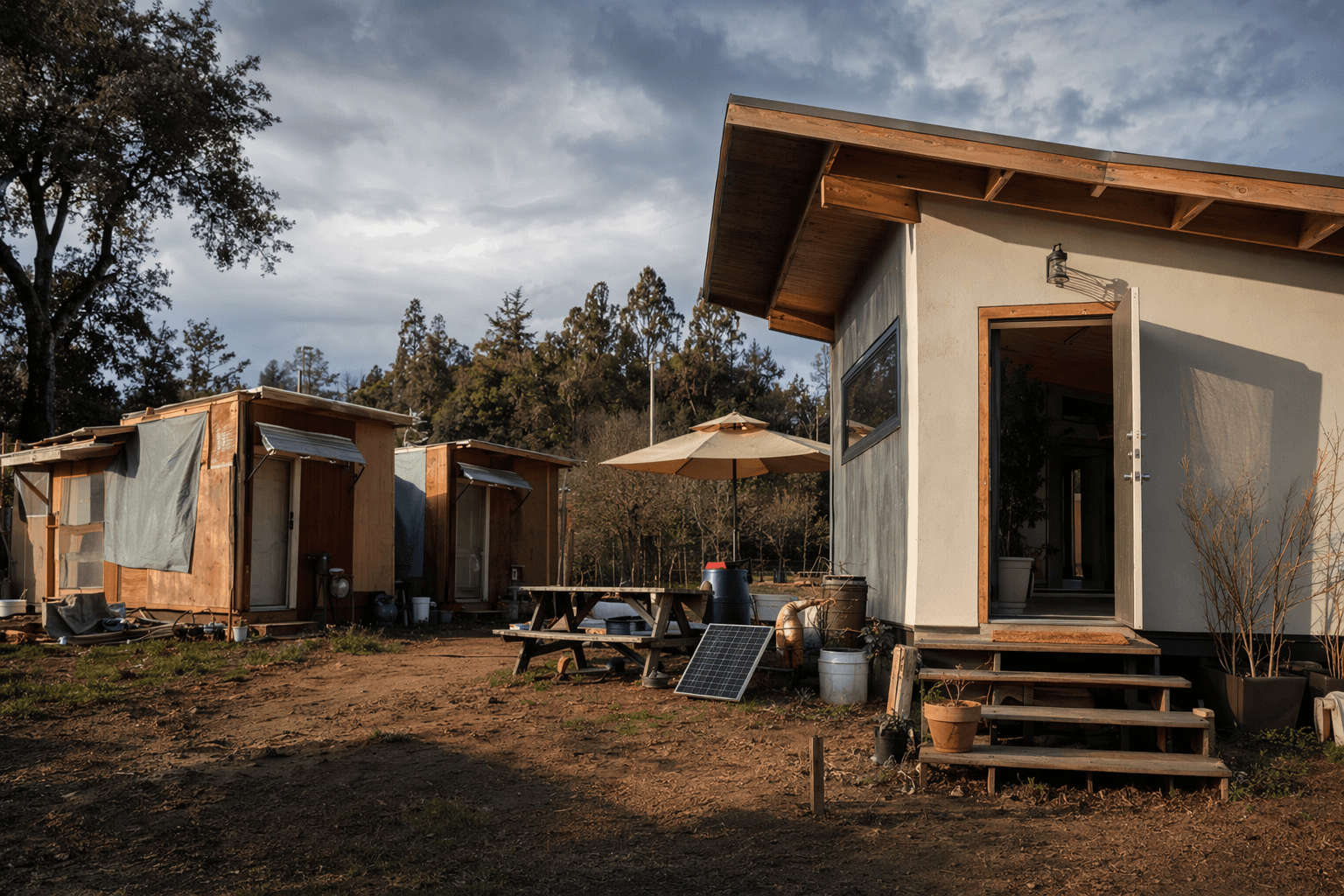
North Hollywood’s tiny-home village packs 78 beds into 39 units, but the real test is whether pet-friendly shelter turns into permanent housing.
A compact village with a measurable job
A locking door, a warm bed, and a place to keep belongings can change the first night inside a tiny-home village. In North Hollywood, that promise now comes in 78 beds spread across 39 compact units, with Hope the Mission using the site as a bridge to permanent housing rather than a destination in itself.
That is why this village matters beyond its footprint. It is small enough to be tightly managed, yet large enough to expose the same problem that shadows Los Angeles’ broader shelter system: getting people inside is only the first part of the job.
What a bed buys here
The units are tiny, about 64 square feet each, but they are built to do more than provide a mattress. Each one includes two beds, heating, and air conditioning, which makes the difference between a stopgap and a place where someone can actually stabilize.
The village also offers laundry, showers, meals, housing navigation, and mental-health referrals. That package matters because the people arriving here are usually doing several hard things at once: replacing life on the street, sorting out benefits, trying to connect to treatment, and looking for work. A tiny home works best when it is treated as a base camp for all of that, not just a place to sleep.
Pets are part of that equation too. Residents are allowed to bring them, and outreach workers say that can be the difference between someone accepting shelter or staying outside. Hope the Mission says every tiny-home village includes a dog run or pet relief area, along with laundry, restrooms and showers, case management, and three meals a day.
Why the rules are tight
The North Hollywood village is designed to stay orderly because the whole model depends on predictability. Residents are expected to check in at least every three days, and drug use is not allowed on site. That kind of supervision is not cosmetic; it is what keeps a small, dense community from sliding into the kind of disorder that makes transitional housing harder to run and harder to trust.
That structure also reflects the limits of the model. Tiny-home villages are often described as humane and flexible, but they only work when residents, staff, and outreach teams all know the rules. The result is a setting that feels far more stable than a sidewalk encampment, yet still more structured than permanent housing.
North Hollywood has become the city’s tiny-home test case
This neighborhood has been a proving ground for Los Angeles since the first city tiny-home village opened on Chandler Boulevard in February 2021. That site had 39 shelters and 75 beds, and city leaders said it was the first tiny-home village in Los Angeles. It also opened at or near capacity, with a waiting list already forming, which showed how quickly the demand could outstrip supply.
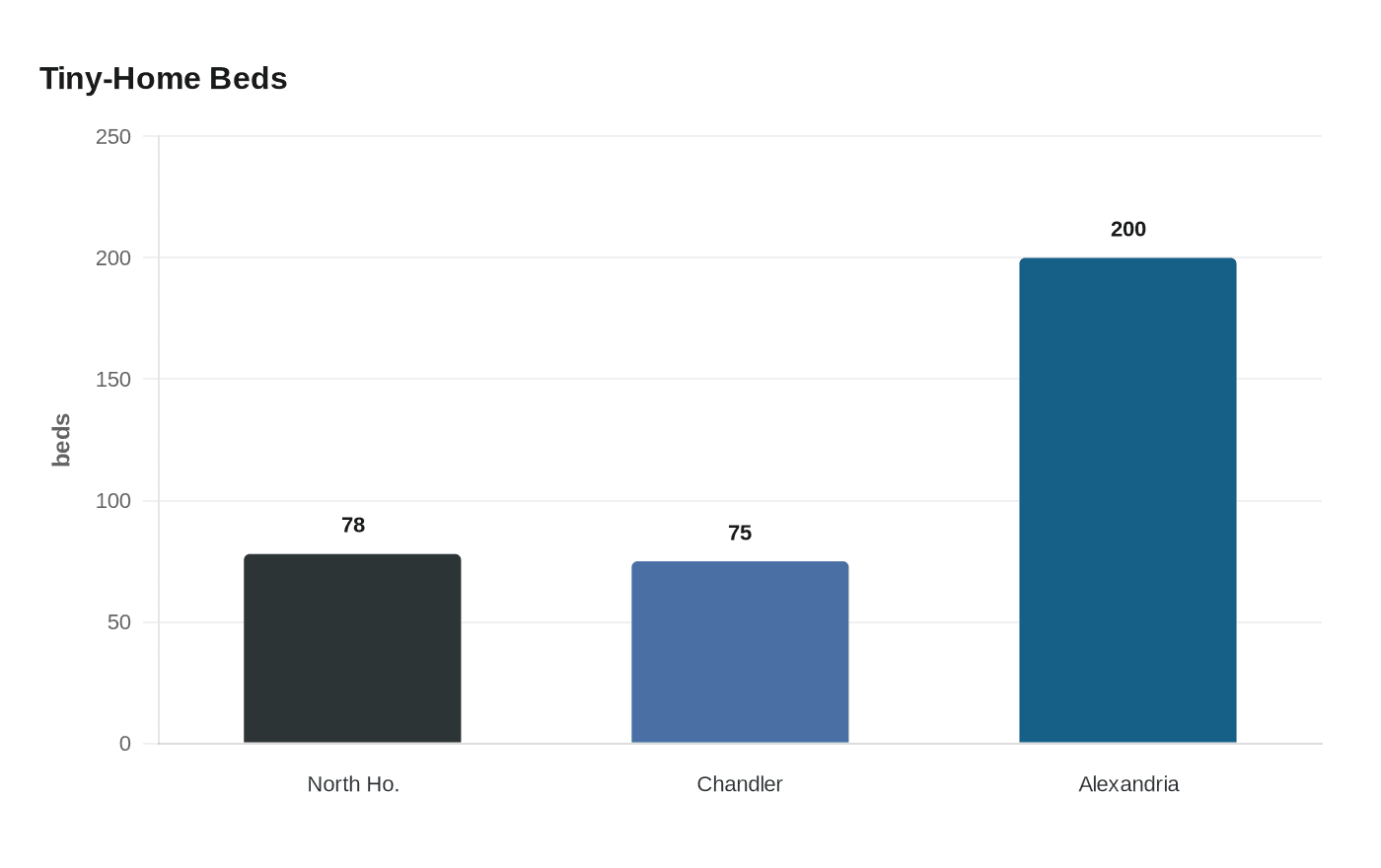
A few months later, the city opened Alexandria Park in North Hollywood with 103 shelters and 200 beds. At the time, it was described as the largest village of its kind in California, and the price tag underscored how much the city was willing to invest in a single transitional site: about $8.6 million, or roughly $43,000 per bed.
Alexandria Park was built out with three hygiene trailers, 15 bathrooms, shower and laundry facilities, six ADA-accessible units, seven housing specialists, and a job center. A 2024 City Administrative Officer report said the site at 6099 Laurel Canyon Boulevard sits on a 75,000-square-foot portion of Valley Plaza Park, separated from the rest of the park by the SR-170 Hollywood Freeway. The city later sought authority to keep operating the site under a no-cost license agreement with Hope the Mission through April 10, 2025.
Hope the Mission’s broader footprint helps explain why North Hollywood became such an important demonstration site. Founded in 2009, the nonprofit now says it operates seven tiny-home villages across Los Angeles County, along with 13 shelters, 2 access centers, and a job center. It also says its shelters provide 1,506 beds per night. That scale matters because the North Hollywood model is not a one-off experiment; it is part of a much larger regional strategy.
The results are real, but the friction is real too
Hope the Mission says about 30% of clients exit into permanent housing, and Ivet Samvelyan says the average stay is around 200 days. Those are meaningful outcomes in a system where many people arrive with no stable address, few possessions, and multiple barriers to housing.
But the citywide numbers show why optimism has to be tempered. The Los Angeles City Controller found that across City-funded interim housing during fiscal years 2019 through 2023, 1 in 4 beds went unused. The same audit found that more than half of people exiting interim housing returned to homelessness or to an unknown destination, and fewer than 1 in 5 secured permanent housing.
The audit also found that nearly 1 in 3 people seeking a shelter bed could not get one during fiscal years 2022 and 2023. That is the hard edge of the problem North Hollywood keeps running into: even when tiny-home villages are full of promise, the system around them can still fail to move people through fast enough.
What to learn from this model
North Hollywood shows that tiny homes can do a few things very well. They can offer dignity quickly, they can accept people with pets, and they can create a supervised environment where residents have a real chance to stabilize. They also give city officials a visible, measurable response to street homelessness that is far more humane than doing nothing.
It also shows where the bottlenecks live. The village is only as effective as the pipeline out of it, and the Los Angeles system still struggles with bed availability, turnover into permanent housing, and clear performance tracking. LAHSA launched new public dashboards in October 2024 to make district-level and provider-level data easier to see, a sign that transparency itself has become part of the fight.
That is why the North Hollywood village matters as a practical test. It delivers real shelter, not theory, and it reveals the gap between temporary relief and lasting housing with unusual clarity.
Know something we missed? Have a correction or additional information?
Submit a Tip