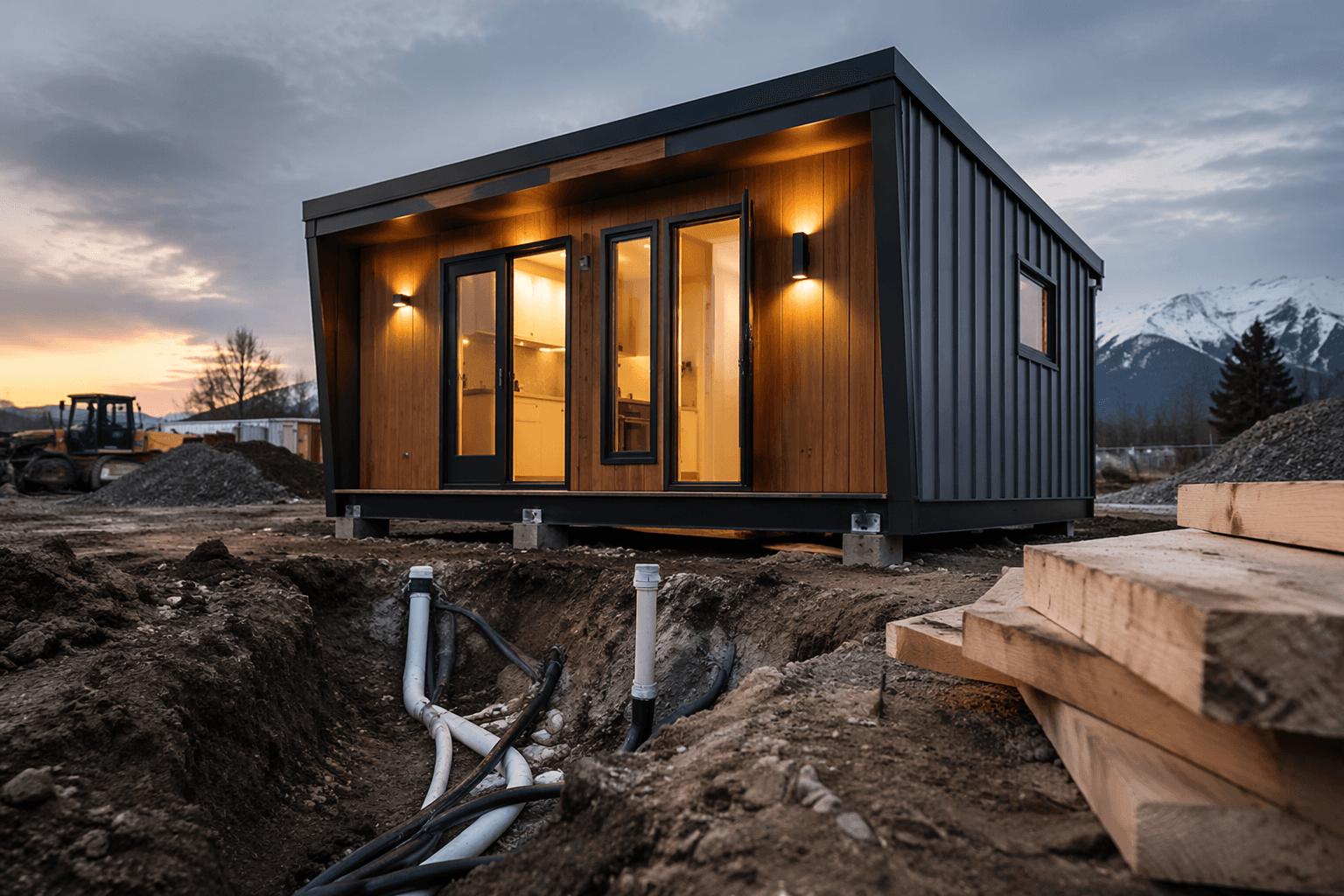
NY Appendix Q Enables Cheap Legal Tiny Homes Under 400 Sq Ft
NY's 2020 residential code sets 400 sq ft as the legal gateway to relaxed building rules, letting owner-builders go legal with lofts, simple foundations, and off-grid systems statewide.
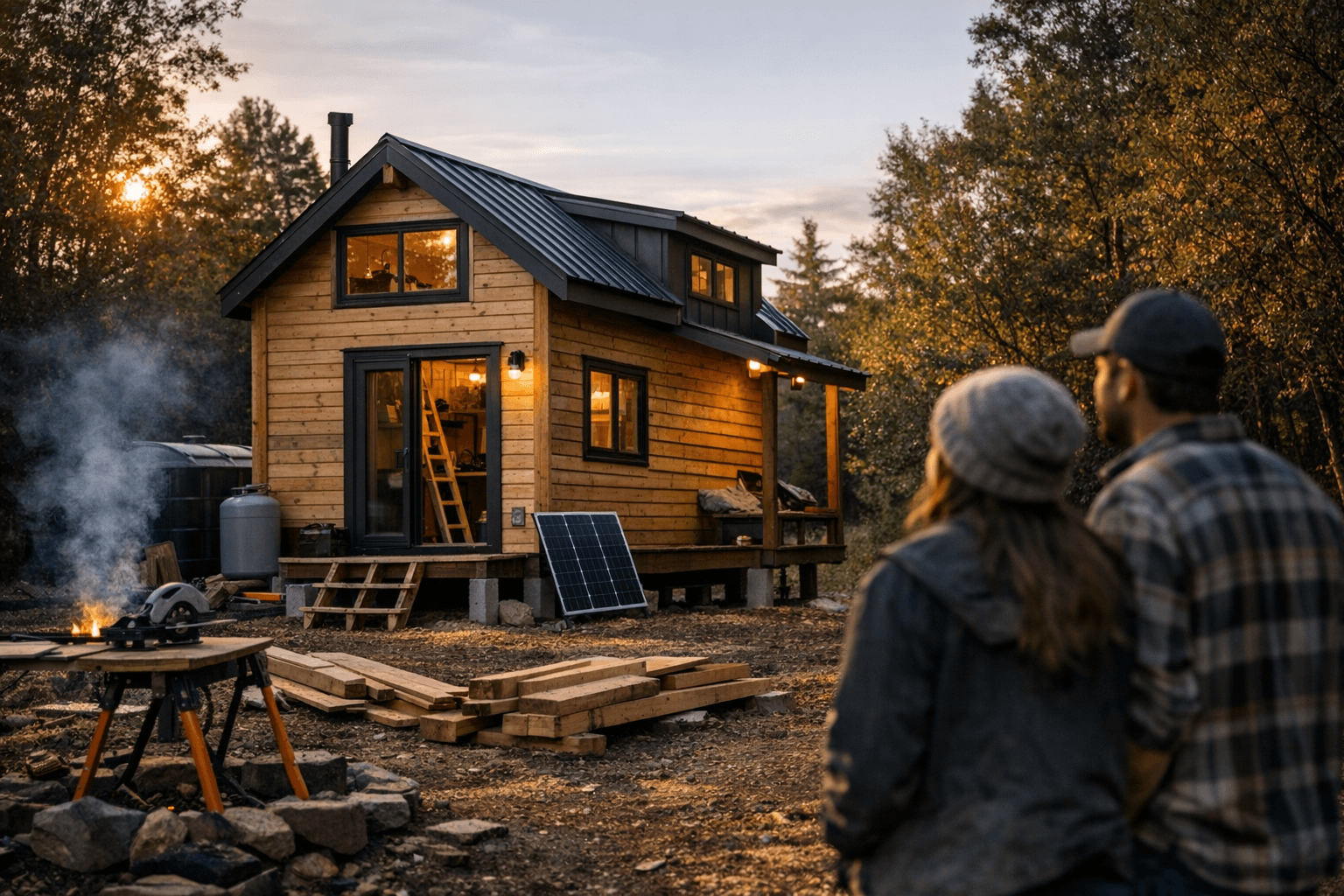
The number that changes everything for New York's tiny home movement is 400. That's the square footage threshold written into Appendix Q of the 2020 Residential Code of New York State (2020 RCNYS), below which an entirely different, far more forgiving set of building rules kicks in. For owner-builders who've spent years navigating a code landscape that made sub-400-square-foot principal dwellings nearly impossible to build legally, this appendix is the clearest path yet to a permitted, livable, affordable home on your own land.
What Appendix Q Actually Says
Appendix Q defines a tiny house as "a dwelling that is 400 square feet (37 m²) or less in floor area excluding lofts," and it applies specifically to tiny houses used as single dwelling units. Those tiny houses still comply with the full residential code except where Appendix Q explicitly carves out an exception.
That "excluding lofts" clause is the first major win. The square footage of lofts is not included in the 400-square-foot-or-less floor area requirement, meaning a sleeping loft above the main floor adds genuine living space without pushing you over the legal ceiling. Porches and decks, being non-habitable exterior spaces, similarly don't count toward the floor area calculation, giving builders additional room to breathe around the footprint.
Appendix Q applies only to tiny houses on permanent foundations. It does not relate to tiny houses on wheels. If your plan involves a trailer chassis, you're in a different regulatory category entirely.
How Appendix Q Changes the Permitting Reality
Under standard residential code, building a code-compliant home under 400 square feet with a functional loft was, in practice, close to impossible. While some argued that a tiny house could be built in compliance with the residential code, to do so under 400 square feet and with a code-compliant loft had proven challenging, if not impossible. Appendix Q resolves that by relaxing specific dimensional requirements without cutting corners on safety.
Key relaxations include:
- Ceiling heights: Tiny houses are allowed to have an unobstructed ceiling height of not less than 6 feet 8 inches in habitable spaces, not less than 6 feet 4 inches in non-habitable spaces such as bathrooms and kitchens, and a stair headroom of not less than 6 feet 2 inches.
- Loft minimums: Lofts used for sleeping or living space are allowed a floor area of not less than 35 square feet, with a minimum dimension of 5 feet.
- Loft access: Access to lofts can be via stairways, ladders, alternating tread devices, or ship's ladders, each with its own dimensional requirements specific to tiny houses. Ladders must have a rung width of not less than 12 inches, with 10- to 14-inch spacing between rungs, and must be capable of supporting a 200-pound load on any rung. Ladders are also required to be installed at 70 to 80 degrees.
- Egress: Lofts used as sleeping spaces require an egress roof access window, defined as a skylight or roof window designed and installed to satisfy the emergency escape and rescue opening requirements of the code.
The Inspection Process
Getting a permit under Appendix Q does not mean bypassing inspections. It means your inspections are evaluated against Appendix Q's adjusted benchmarks rather than full-size residential standards. You'll typically face a foundation inspection, a framing inspection before walls are closed in, rough-in inspections for electrical, plumbing, and mechanical systems, and a final inspection before a certificate of occupancy is issued. Owner-builders should bring printed copies of the relevant Appendix Q sections to every inspection; not every local building inspector has memorized the relaxed loft-ladder specs.
The County-by-County Reality
Here's what the state-level code doesn't tell you: Appendix Q is a building code tool, not a zoning override. Zoning regulations vary across different cities, towns, and villages in the state. Reviewing local zoning and land use regulations is essential to determine the legality of building and living in a tiny house in your location.
In practical terms, this means Appendix Q gives you the technical framework to build legally, but local zoning still controls whether you're allowed to build at all. Zoning laws vary on a county-by-county basis, and in general, land zoned as Agricultural or Rural is the most lenient.
The friendliest territory is rural upstate. The Catskills offer prime tiny house spots for vacation or seasonal use, with rural zoning in Ulster and Delaware Counties providing flexibility. Greene County similarly allows tiny homes as Accessory Dwelling Units with relatively open zoning. Broome and Rockland Counties have also embraced ADU frameworks that accommodate compliant tiny homes.
Where it gets harder: some areas of New York State still have zoning laws that set minimum dwelling sizes, which would make living in a tiny house on your property illegal regardless of state code. Towns closer to larger metro areas tend to impose stricter minimums, and some municipalities still require stamped architectural drawings and fully engineered septic systems as baseline conditions before a permit conversation even begins.
Sample Budget and Timeline
Entry-level tiny homes start around $50,000 for basic DIY kits, while professional builds range from $80,000 to $200,000, depending on features like lofts and appliances. For an owner-builder targeting a 380-square-foot foundation home with a sleeping loft, the realistic breakdown looks something like this:
- Land and site prep: variable, but rural upstate parcels remain among the most affordable in the Northeast
- Simple foundation (concrete piers or slab): $5,000-$15,000
- Shell framing and roofing: $15,000-$30,000
- Systems (electrical, plumbing, HVAC): $10,000-$20,000
- Interior finish and fixtures: $8,000-$20,000
- Permits and inspections: $1,000-$3,000
Foundation-based ADUs qualify for state grants, potentially offsetting 10-20% of costs through programs like Plus One. Off-grid electrical systems, including solar setups, are entirely legal in New York, and a well-designed 400-square-foot home with minimal load can run efficiently on a modest panel array, further reducing ongoing costs.
On timeline, a well-prepared owner-builder should plan for 4-8 weeks for permit approval in accommodating jurisdictions, 3-5 months for construction, and a final inspection before occupancy. Rushing any phase is the fastest way to create a problem that delays the whole project.
The Top 5 Permit Killers
Knowing where builds fail is as important as knowing the rules. These are the most common reasons an Appendix Q build gets rejected or stalled:
1. Local zoning minimums that exceed 400 sq ft. If the town code mandates a 600-square-foot minimum dwelling, Appendix Q doesn't override it.
Confirm zoning before you pour a foundation.
2. Missing loft egress. A sleeping loft without a code-compliant egress roof access window fails inspection every time.
This is non-negotiable under the code.
3. Ceiling height violations from obstructions. Beams, ducts, and light fixtures that drop below 6 feet 8 inches in habitable spaces violate the code even if the structural ceiling clears it.
Design your systems with clearance built in.
4. Non-compliant loft ladder or stairway dimensions. A ladder that's too steep, too narrow, or lacks proper rung spacing will fail.
The 70-80-degree angle requirement and 12-inch minimum rung width are strictly enforced.
5. Skipping local pre-application meetings. Many counties expect a pre-application conversation with the building department.
Showing up with plans to a county that has never processed an Appendix Q permit, without that groundwork, often results in lengthy delays while officials determine how to handle the application.
The Historical Argument for Small
There's also a quieter point worth making: the notion that 400 square feet is too small for a family home is a historically recent invention. For most of American history, families of four and five routinely shared spaces far smaller than today's median new-build square footage, which now hovers above 2,200 square feet. Appendix Q isn't a workaround or a compromise. It's a formal recognition that small, well-designed homes built to clear safety standards represent a legitimate and time-honored way to live, and that New York's building code should accommodate them rather than accidentally prohibit them.
For upstate builders, the math is particularly compelling. A permitted 380-square-foot home assessed at a low valuation means a property tax bill that reflects what you actually built, not what a sprawling suburban development expects you to build. That gap, between the cost of compliance and the long-term savings in taxes, utilities, and maintenance, is precisely where Appendix Q becomes more than just a building code footnote. It becomes a financial strategy.
This article was produced by Prism’s automated news system from verified source data, official records, and press releases, then run through automated quality and moderation checks before publishing. The system is built and supervised by the people who set the standards it runs under. Read our full AI policy.
Did this article answer your question?