Retiree Diana Credits 28-Foot Tiny House With Transforming Her Retirement Life
A $450/month lot rent in 230 sq ft at North Texas's Bird's Nest community is challenging everything retirees assume about what decent housing has to cost.

For Diana, retirement didn't arrive with a downsized condo and a HOA fee. It arrived in 230 square feet of thoughtfully engineered tiny house on wheels, parked on a concrete pad in Cumby, North Texas, for $450 a month all-in. That single number covers water, sewer, and garbage collection at the Bird's Nest Tiny Home Community, a gated, 5-acre property about 60 minutes northeast of Dallas where women ages 60 to 80 have quietly assembled one of the more compelling retirement arrangements in the country. Diana's experience, documented through Tiny House Expedition and recently amplified by MSN, has drawn intense interest from retirees who recognize themselves in her calculation: a fixed income, a desire to stop over-maintaining a large home, and a stubborn wish to stay independent without going broke doing it.
The 28-Foot Math
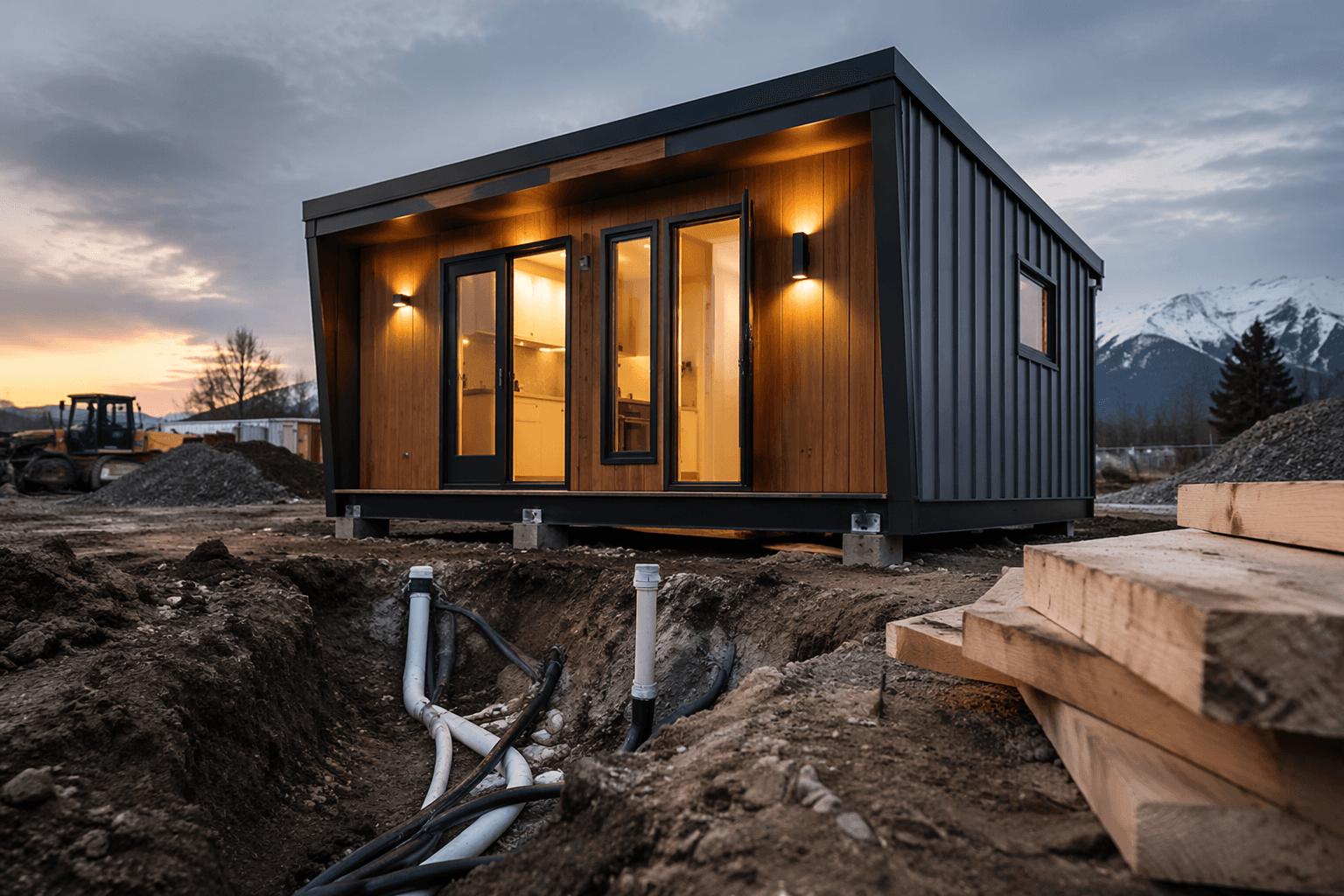
Diana's tiny house on wheels measures 28 feet long by 8.5 feet wide, totaling 230 square feet of living space built by Decathlon Tiny Homes. The floor plan is purpose-designed for year-round occupancy: a full kitchen with generous cabinetry and quartz countertops, a living area, a bathroom with a proper shower, and critically for aging-in-place practicality, a dedicated ground-floor bedroom. There is no loft sleeping, no ladder required. Storage is built under the bed platform and through vertical cabinetry throughout. The house is connected to the Bird's Nest's 30/50-amp electric service, with the tenant paying electricity separately: a variable cost that shrinks dramatically relative to a conventional home because the heated and cooled footprint is a fraction of what most retirees came from.
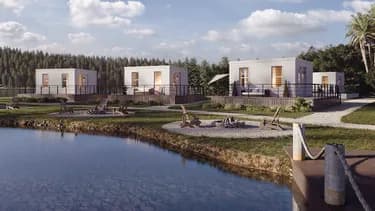
The lot rent at $450 a month is not a teaser rate. Founder Robyn Yerian, 70, set that figure intentionally, at roughly half the going rental rate in Cumby, and has committed to keeping it permanently affordable. Yerian spent $35,000 to acquire 5 acres of Texas prairie and invested an additional $150,000 developing it into a fully serviced RV park, with 14 concrete pads measuring 10 by 30 feet each, a connecting road, electric hookups, and a shared septic and water system. "Getting zoned was the hardest part," Yerian has said, a candid admission that the permit process, not the construction, represents the steepest barrier for anyone hoping to replicate this model elsewhere.
Where Diana Parked, and Why It Matters
Parking a tiny house on wheels is the pivot point of the entire tiny-house retirement equation. Diana's choice of the Bird's Nest removes most of the uncertainty that derails prospective THOW retirees. The community is zoned as an RV park, which means Diana's home sits on a legal, utility-connected pad with clear title to her tenancy; no gray-area driveway arrangement, no neighbor variance required. The property is gated with remote access. The owner lives on-site. And the community has a vetting process, which Yerian views as a feature rather than a restriction: it's part of what keeps the social environment stable and safe for the roughly 11 women currently in residence, with hundreds more on the waitlist for one of the 14 pads.
For insurance, THOWs like Diana's are typically insured as recreational vehicles rather than real property, which keeps premiums considerably lower than a conventional homeowner's policy but requires buyers to confirm their lender (if financing) accepts RV-classification coverage. Decathlon Tiny Homes offers nationwide financing and handles delivery, leveling, and blocking within a 100-mile radius of the Dallas-Fort Worth metro at no additional charge, a meaningful cost consideration for buyers relocating from further away.
Interior Design Built Around Real Aging
What makes Diana's setup particularly relevant to the broader retirement audience isn't the minimalism; it's the specificity of the design decisions. The downstairs bedroom is the cornerstone. In a market flooded with loft-sleeping THOWs optimized for young minimalists, a ground-floor sleeping area isn't a luxury: it's an accessibility baseline that anticipates how mobility changes over a decade. Diana's bed platform includes storage drawers underneath, addressing the complaint that tiny houses sacrifice too much to function as true permanent residences.
The home is 230 square feet in total and has a beautiful kitchen, living area, and a downstairs bedroom with lots of storage underneath the bed. Diana has also added a deck out front to enjoy time outside when it's not too hot. The galley-style kitchen uses vertical storage to maximize function in a small footprint, with shelving and cabinetry extending upward rather than outward. The psychological dimension of the space is real: the feeling of being "less weighed down by possessions," as Diana has described it, maps directly onto a smaller maintenance burden, fewer hours managing a property, and a lower emotional overhead that retirees in large homes often underestimate until it's gone.
The Retiree Checklist: What Diana's Setup Gets Right
Diana's situation serves as a practical template for evaluating any tiny-house retirement scenario. Before signing a lot lease or ordering a build, run through these criteria:
- Single-level sleeping: A ground-floor bedroom is non-negotiable for long-term aging in place. Loft arrangements work at 40; they become a liability at 70.
- Bathroom sizing: A full shower (not a wet bath) and adequate turning radius matter as mobility changes. Diana's 3x3 shower is the practical floor.
- Legal parking with utilities: Concrete pad, metered electric, connected water and sewer. RV-park zoning is the clearest path to a legal, bank-financeable parking situation in most states.
- Lot rent structure and stability: Is the rent locked or indexed? Who inherits the property? These questions carry the same weight as a mortgage term for a fixed-income buyer.
- Healthcare proximity: Bird's Nest sits an hour from Dallas, with access to a full urban healthcare system. Retirees evaluating rural tiny-home communities should map driving time to the nearest hospital and specialist network before committing.
- Winterization: Texas winters are mild by northern standards, but THOWs require insulation specifications, pipe heat tape, and skirting for any climate that drops below freezing. Diana's unit is a year-round home, not a seasonal one; that designation carries real construction requirements.
- Community vetting and social infrastructure: Isolation is one of retirement's primary health risks. The Bird's Nest model, with a community center, shared outdoor space, and a resident-owner living on site, addresses that risk structurally, not incidentally.
- Insurance classification: Confirm THOW insurance terms before financing. RV-class policies cover the home itself; contents riders and liability coverage add to the total but remain a fraction of conventional homeowner's insurance.
Why Retirees Are Changing the Tiny-House Market
Diana's story matters beyond the personal for a concrete reason: she is not an outlier. The Bird's Nest waitlist, hundreds of applicants for 14 pads, is one data point in a broader demand signal that the tiny-home building industry is only beginning to process. The traditional assumption that tiny-house buyers are young minimalists optimizing for adventure has collided with demographic reality. The country's largest generation is retiring, many without the savings to sustain conventional housing costs, and a growing share of them are calculating their way to the same conclusion Diana reached: that 230 square feet, fully serviced, in a stable community, at $450 a month, is not a compromise. It is the plan.
Builders who ignore that constituency will keep producing loft-heavy, ladder-accessed designs optimized for Instagram. Those who pay attention, offering single-level floorplans, accessibility-ready bathrooms, and direct partnerships with legally zoned communities, are positioned to serve the housing demand that no one in the policy conversation has adequately quantified yet.
For policymakers, Diana's situation also carries a quiet argument about ADU and RV-park zoning reform. The Bird's Nest works because Cumby, Texas granted the zoning. In hundreds of municipalities where that zoning would be denied, retirees running the same retirement math would have nowhere to park. The gap between what aging Americans need and what local governments currently permit is, in many places, exactly 28 feet long.
This article was produced by Prism’s automated news system from verified source data, official records, and press releases, then run through automated quality and moderation checks before publishing. The system is built and supervised by the people who set the standards it runs under. Read our full AI policy.
Did this article answer your question?