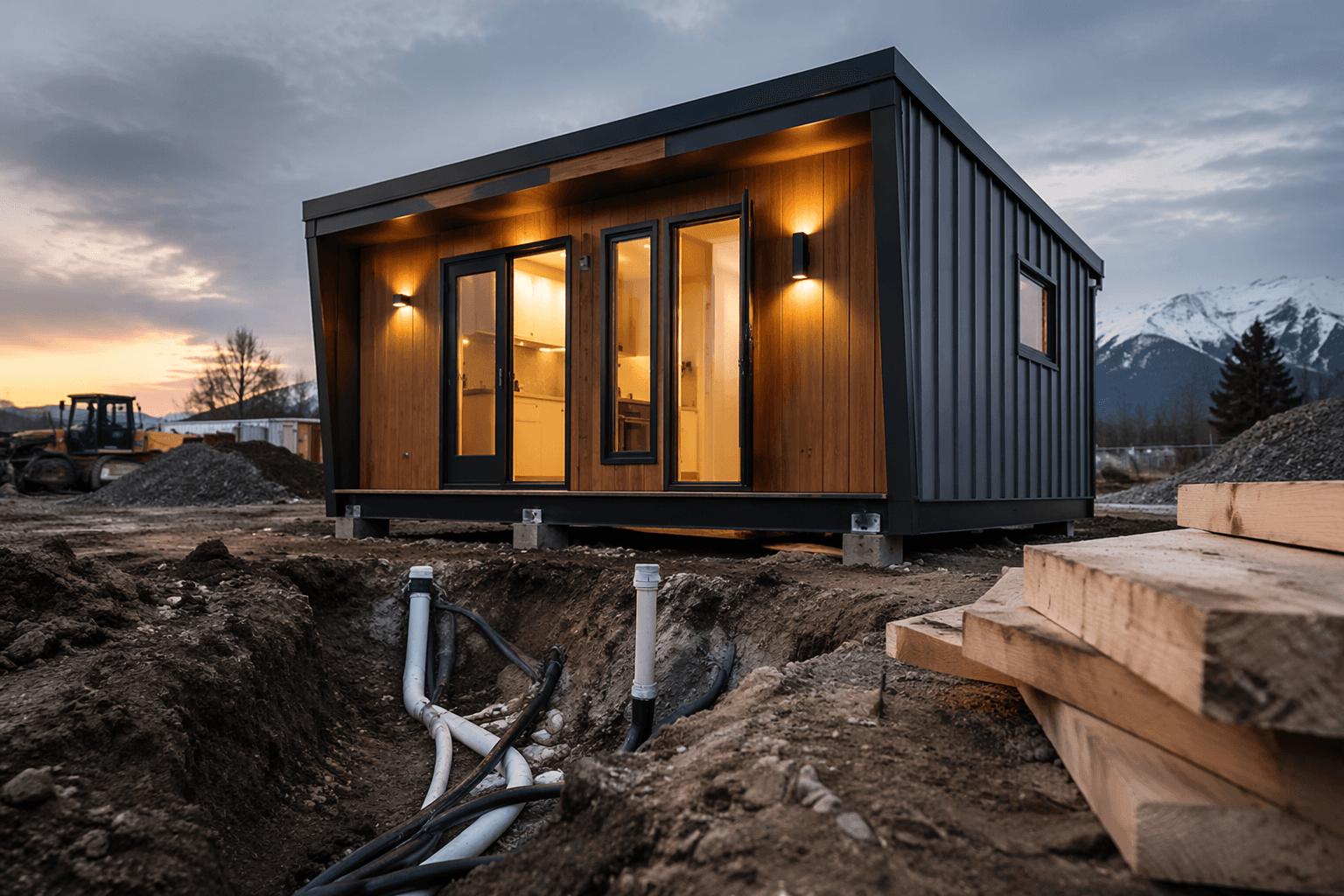
Escape's Shoreline Glass House Brings Full-Scale Comfort to Single-Story Tiny Living
Escape's $196,240 Shoreline Glass House at Wisconsin's Canoe Bay Village stretches 47 feet, runs 30 feet of glass down one wall, and eliminates the loft entirely.
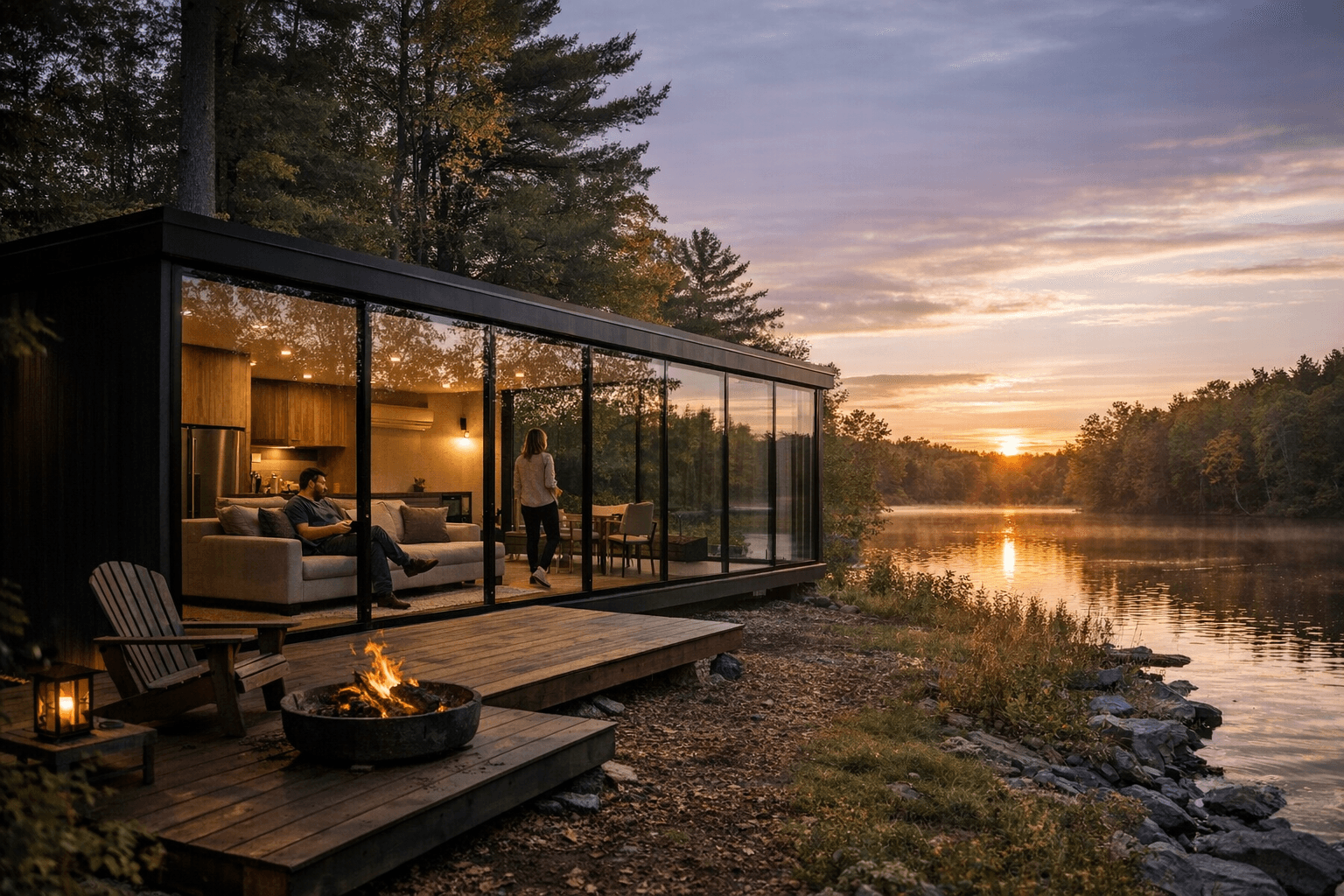
Escape's Shoreline Glass House is already built and sited at Canoe Bay Village in northwest Wisconsin, listed at $196,240 with a $680-per-month lot rental covering the plot and services. It measures 47 feet long by 12 feet wide, fits everything on a single level without a loft, and runs 30 feet of continuous glazing along one wall. For a park-model tiny home, that combination is rare enough to pay attention to.
The glass wall is the most provocative design decision and the one that most immediately separates the Shoreline from the lofted, ladder-dependent park models it is implicitly competing against. Thirty feet of glazing running along one long face pulls daylight into every corner of the interior throughout the day, and on the lakeside and coastal lots Escape designed the home for, it turns the entire long face of the structure into an uninterrupted view. But that same wall carries real tradeoffs that any serious buyer needs to walk through before signing. Heat loss through 30 feet of glass in a Wisconsin winter is substantial, even with thermally broken frames, and solar heat gain in summer can make the interior uncomfortable without deliberate shading. Condensation is a recurring concern in climates with wide temperature swings, forming on interior glass surfaces when warm humid indoor air meets a cold pane. Furniture placement is constrained almost entirely to the opposite wall. And on a tightly spaced lot, privacy along the glazed face is essentially zero without intentional landscaping or careful siting.
What the Shoreline gives back in exchange is harder to find elsewhere at this price point and footprint. A king-sized bed anchors the sleeping end of the home alongside a walk-in closet, a pairing that simply does not exist in the typical 8.5-foot-wide THOW. The bathroom runs to a five-foot-wide glass-enclosed shower, a stone-countertop vanity, a washer-dryer stack, and enclosed storage. A large enclosed porch buffers the main entry, serving as a climate transition zone between outside and the open kitchen and living area, where an oversized sofa makes Escape's intent explicit: this is designed for staying, not just visiting.
The 12-foot width carries more weight than it might seem. Most park models produce internal corridors that feel narrow regardless of overall length. At 12 feet, the Shoreline achieves the proportional spaciousness of a small apartment, and combined with the single level it makes the home genuinely accessible for people who cannot manage a loft ladder or a steep spiral stair. That distinction is increasingly relevant as aging-in-place buyers and downsizing households look at compact living as a practical long-term solution rather than a nomadic experiment. A loft bedroom, however photogenic in a rental listing, is a disqualifying feature for anyone with mobility considerations.
As a non-towable park model, the Shoreline sits in the classification category that continues to test planners, permitting offices, and mortgage underwriters in equal measure. It cannot be hitched and moved; it is placed and it stays. That permanence is the underlying logic of the whole design, but it also complicates how local governments categorize it: too fixed for an RV designation, too small and glass-heavy for standard residential energy codes, and not quite an ADU. Escape has been building park models for 25 years, and the Shoreline represents its clearest argument yet that tiny living does not have to mean a minimized life. At Canoe Bay, the home makes that case in concrete terms: 47 feet, $196,240, one floor, 30 feet of glass.
This article was produced by Prism’s automated news system from verified source data, official records, and press releases, then run through automated quality and moderation checks before publishing. The system is built and supervised by the people who set the standards it runs under. Read our full AI policy.
Did this article answer your question?