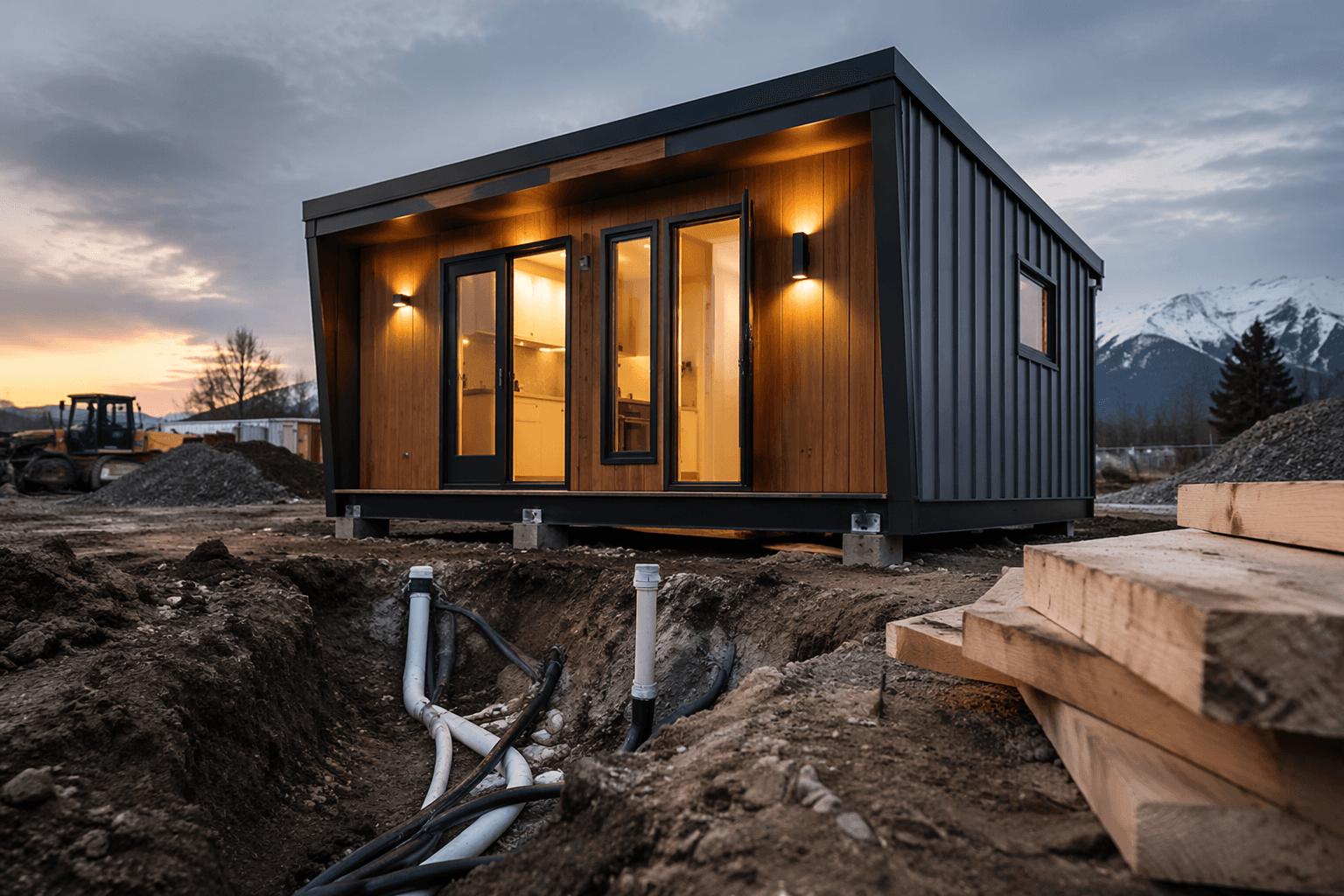
Tiny Home Sales Rise as $70K-$150K Prices, $4,000 Down Payments Drive Demand
Tiny home sales are climbing as entry prices around $70K-$150K and down payments as low as $4,000 open a path to ownership for renters and downsizers.

Demand for tiny homes is rising as buyers respond to lower entry prices and new financing options that make ownership achievable without the savings needed for a conventional mortgage. Realtor.com figures cited in recent local reporting place median tiny-home prices roughly between $70,000 and $150,000, and housing experts point to minimal down payments as a key driver.
Housing expert Lance Thrailkill frames the appeal in blunt terms: “It gives people a path to ownership where they can have a minimal down payment- as low as $4000.00. They can stop paying somebody else for your house instead of putting money in your own bank with equity. Housing Expert, Lance Thrailkill said.” Thrailkill also links the trend to generational tastes. “Particularly Gen Z, there is a big trend toward minimalism. I think that’s something that is playing into it as well. This moves away from having a bunch of things to a simpler life.”
The market context helps explain the momentum. The median price of a new conventional home reached $417,700 in 2023, and average single-family home size has edged down from 2,112 square feet to 2,035 square feet over five years, a 3.6 percent reduction. Buyers attracted to tiny homes are motivated by affordability, sustainability and the desire to pare down living space into highly efficient floor plans.

Not all data lines up. Some market analysts report average tiny-home costs closer to $30,000 to $80,000, and industry forecasts expect steady growth: Technavio projects global tiny-home market expansion of roughly USD 3.71 billion from 2025 to 2029 at an estimated compound annual growth rate of 4.2 percent. The 130-500 square foot segment accounted for 72.4 percent of global market share in 2024, and a survey by the American Tiny House Association found 67 percent of owners prefer homes between 200 and 400 square feet.
Critics warn about price-per-square-foot sticker shock and practical tradeoffs. In some coverage, detractors called “the hefty cost for the average square foot highway robbery priced in some cases around $300 a square foot that’s almost double the average $173 a square foot according to the report.” Common buyer complaints include tiny closets, ladder access instead of stairways, and models that lack a back door. As Thrailkill cautions, “the tiny homes aren’t for everyone. It allows renters to get off the ‘hamster wheel of renting’ and to finally realize their dream of home ownership. The problem he says is the high cost of rent that prevents people from saving to make the move. At least, this new market allows more Americans to have an opportunity they didn't have before.”

Product variation matters for buyers. Mobile tiny homes on chassis are growing alongside fixed tiny houses, with tourism and camping markets boosting demand for towable or transportable designs and park operators converting vacation properties for retirees. Internationally, Canada and Australia show regulatory movement toward more flexible zoning and building codes, while Asia-Pacific is the fastest growing region for tiny-home adoption.
If you are considering a tiny home, compare reported price ranges, check the per-square-foot math against the floor plan, and confirm local zoning and financing options. With industry forecasts pointing to continued growth, the tiny-house market is likely to expand further, but buyers will benefit from careful vetting of costs, layout tradeoffs, and long-term resale prospects.
This article was produced by Prism’s automated news system from verified source data, official records, and press releases, then run through automated quality and moderation checks before publishing. The system is built and supervised by the people who set the standards it runs under. Read our full AI policy.
Did this article answer your question?