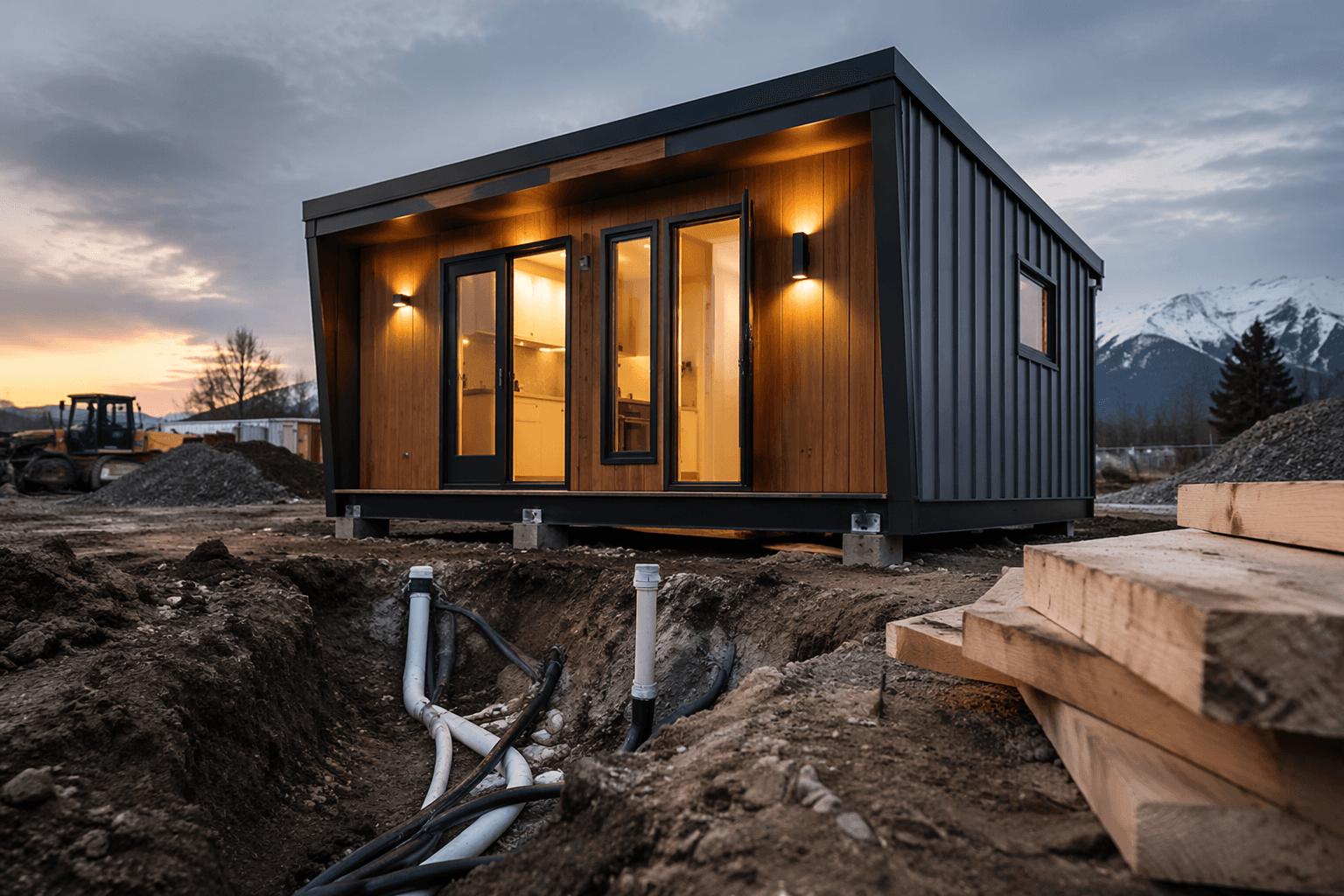
Tiny Home Villages Offer New Start for Older Divorced Women
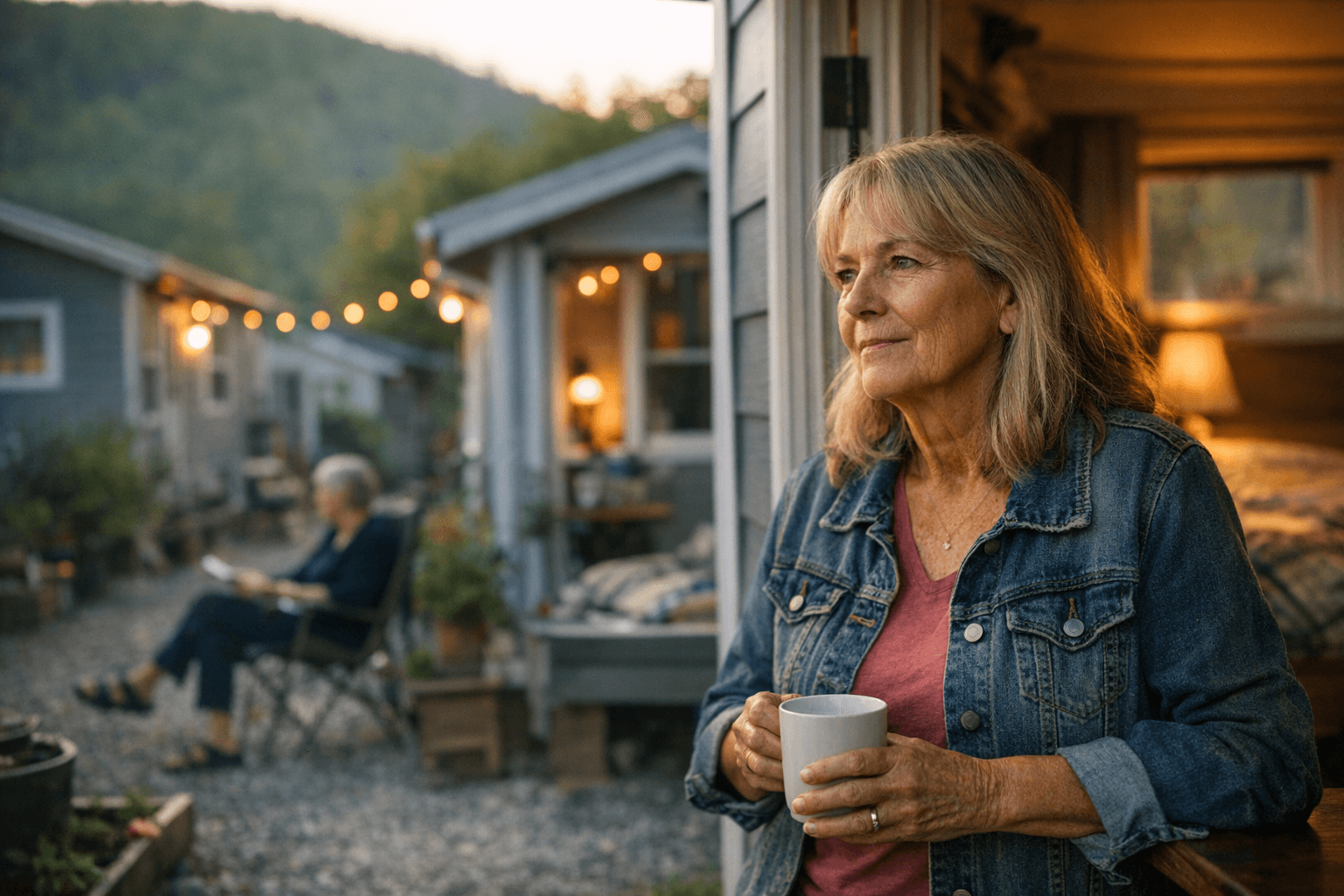
Roughly a third of one tiny-home village is made up of older divorced women, and for many, a 143,000-euro cash buy is the only path back to housing security.
A housing solution for women who cannot wait
Roughly a third of one tiny-home village’s residents are older divorced women, and that statistic says as much about housing pressure as it does about lifestyle change. For women leaving a marriage later in life, tiny-home villages are becoming a financial escape hatch, a way to secure a roof without taking on a mortgage they can no longer carry.
The clearest example is Margot Hollander, who divorced at 62 and found that a city home was out of reach on her retirement income. She had about 145,000 euros from the sale of her marital home and used roughly 143,000 euros of it to buy a prebuilt tiny house in Eindhoven. That gave her something many newly single older adults no longer have: a cash purchase, a faster move, and a fresh start without waiting on a bank.
Why this group is showing up at the front of the line
The demand is not random. Rolf van Boxmeer, who co-founded Minitopia with Tessa Peters, has said many people on the waiting list are divorced, and a significant share are older single women who do not have priority on social housing waitlists. In other words, the people most squeezed by the current market are often the least likely to be handed an easier route back in.
That matters because divorce does not just reset a household emotionally. It can split assets, reduce monthly income, and leave one person trying to re-enter a housing market that is far less forgiving than the one they left. For older women, especially those living on retirement income or with limited access to credit, the tiny-home village is not a whimsical choice. It is often one of the few workable forms of downsizing that does not require them to compete for a conventional apartment they cannot finance.
How Minitopia turned the idea into a place
Minitopia has been working on future-proof housing solutions since 2016, and the project began with Peters and van Boxmeer trying to answer a basic question: what happens when ordinary housing no longer fits ordinary life? Their answer has expanded from a concept into a network of sites in ’s-Hertogenbosch, Eindhoven, Roosendaal, and Valkenswaard, showing that the model is no longer confined to a single test village.
The scale is still modest by conventional housing standards, but the numbers are real. Across five southern Netherlands locations, Minitopia reportedly has more than 150 plots and nearly 2,000 people on its waiting list. A 2023 regional report put the waiting list at 500 candidates, which shows how quickly demand has grown. The gap between those figures is the story: interest in tiny-home living is rising because the pressure around housing is rising even faster.
What the Eindhoven model looks like on the ground
Eindhoven gives the clearest picture of how the system works. At Buurtschap te Veld, the neighborhood includes both social rental homes and Minitopia self-build homes, mixing conventional affordability tools with the tiny-home approach. One section there includes 100 self-built micro-homes, a scale large enough to feel like a neighborhood rather than a novelty.
That mix matters because it shows tiny homes are not simply isolated cabins dropped onto leftover land. They are part of a broader attempt to make use of derelict or underused sites, while giving residents a chance to build something that feels personal and attainable. For people coming out of divorce, that combination of lower entry cost and quicker access can make the difference between staying housed and sliding into instability.
The numbers behind the pressure
The housing shortage is what keeps the waiting list long. The IMF has said Dutch housing supply has failed to keep up with demand over the last decade, and De Nederlandsche Bank notes that housing is especially expensive for first-time buyers, low- and middle-income earners, and single people. That lines up uncomfortably well with the profile of the people drawn to tiny-home villages: solo adults, people with limited liquidity, and households too small to benefit from the scale assumptions built into the mainstream market.
The Dutch housing system does offer some protection, but not enough for everyone. Harvard’s Joint Center for Housing Studies says Dutch housing associations own nearly 30 percent of housing in the Netherlands, and Dutch policy has traditionally relied on rent regulation and housing allowances to keep rented housing affordable. Even so, if you fall outside the priority categories for social housing, you can still be left hunting for an alternative that is both faster and more realistic. That is where tiny-home villages increasingly fit.
Why the model is spreading, and why it is still limited
Tiny homes under 50 square meters have become more popular in the Netherlands as prices have climbed, especially in Amsterdam, where buyers have faced some of the highest costs in the country. That rising-price pressure helps explain why a compact home can feel less like a compromise and more like a rescue plan. When ownership, rent, and access to credit all tighten at once, smaller footprints start looking like bigger opportunities.
Minitopia’s own expansion shows the idea has moved beyond experimentation. Tiny Wedert in Valkenswaard allows up to 15 homes on a site that remains available for 10 years, which gives residents a rare thing in today’s market: a defined runway. But the model still carries tradeoffs. Zoning friction can slow projects, and HOA-style restrictions can limit how freely residents use these homes, which means tiny-house living is not a universal answer.
What it is, for a growing number of older divorced women, is a practical way to regain control after a life change that cut deeper than the court paperwork. The market is still sorting people by age, income, and marital status, and tiny-home villages are becoming one of the few places where those exclusions can be turned into a livable address.
This article was produced by Prism’s automated news system from verified source data, official records, and press releases, then run through automated quality and moderation checks before publishing. The system is built and supervised by the people who set the standards it runs under. Read our full AI policy.
Did this article answer your question?