Tiny house at French vineyard blends luxury and eco-design
Chamade turns a tiny house into a vineyard retreat, where Mediterranean styling, one-level planning, and eco-specs make small living feel unexpectedly polished.
A tiny house that reads like a boutique retreat
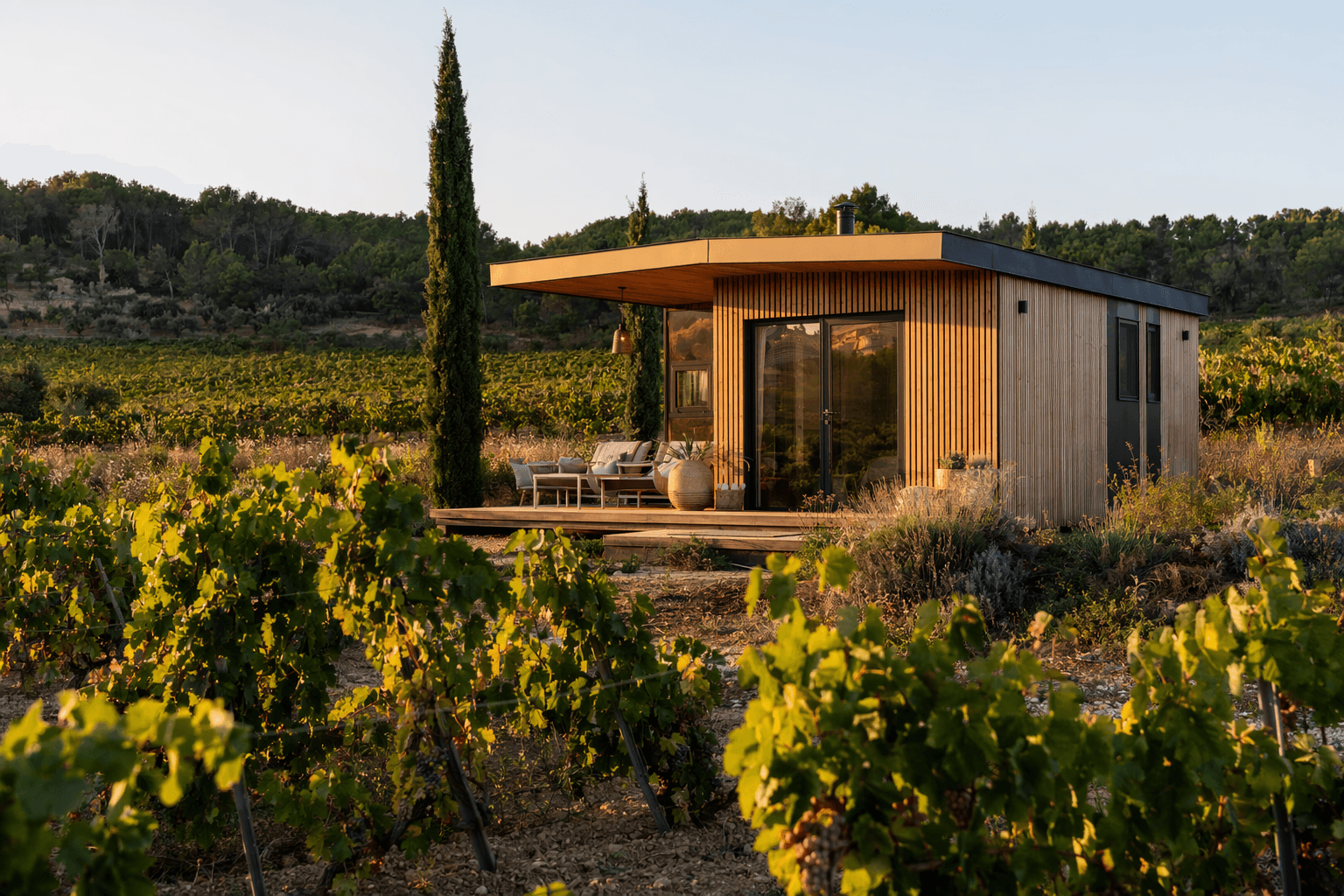
Chamade does not try to look small, and that is exactly why it stands out. Set at Château Boujac near Toulouse, the tiny house feels less like a stripped-down cabin and more like a carefully staged guest suite, built around the idea that environmental restraint and high-end comfort can live in the same footprint.
Serena.House positions Chamade as a custom ecological tiny home with comfort comparable to a 5-star hotel room, and that framing matters. The project is not just about staying small. It is about making a tiny house feel deliberate, calm and elevated, the kind of space where every finish earns its place.
Why the vineyard setting changes the whole experience
Part of Chamade’s appeal comes from where it sits. Château Boujac says its vineyard has been certified organic for ten years and worked by the same family across three generations, which gives the project the sense of being rooted in an actual working landscape rather than dropped into scenery as decoration.
That matters in tiny-house design because the site becomes part of the architecture. The estate is in the Fronton wine area, the appellation closest to Toulouse, and Fronton’s specifications require Négrette as the principal grape. Château Boujac also traces the vineyard back to Roman times and says Négrette arrived in the 12th century, so the stay carries a strong sense of place instead of generic rural chic. Serena.House also ties the project to local and sustainable tourism, with stays that can include breakfast, picnic and tapas boards, walks through the vines, cellar visits and wine tastings.
The Mediterranean look is doing more work than you think
Chamade’s visual language is part of what makes it feel boutique-luxury rather than merely compact. Serena.House describes it as “a bubble in the middle of the vines,” and that image captures the tone: soft, immersive, and intentionally removed from the usual tiny-house idea of bare utility.
The most transferable piece of that feeling is not a specific decorative object. It is the discipline of restraint. The home uses wood throughout, natural-material insulation, custom double-glazed wood windows, ecological paints with 0% VOC, breathable walls, heating, air conditioning and LED lighting. Those choices create a quieter, warmer atmosphere that feels Mediterranean without leaning on excess ornament.
For enthusiast builders, the lesson is clear: a luxury feel often starts with materials, not square footage. Wood surfaces, controlled daylight, breathable construction and a coherent color palette can do more for perceived quality than piling on decor.
The layout is where the tiny house stops feeling cramped
One of Chamade’s smartest moves is going single-level instead of forcing the main living area into a loft. Serena.House says the house includes bed space, a living room, an office, a kitchen and a bathroom, all arranged in a one-level layout. That alone makes the home easier to read and easier to use, especially for guests who want a retreat, not a puzzle.
Inside, the bed sits on an elevated platform with a large window, while the bathroom is separated by a sliding door at the opposite end. Between those points, the kitchen and lounge are arranged so the space can support self-catering, relaxing and working at a foldable bar-style console. That combination gives the home a hospitality polish that many tiny builds miss: it looks composed, but it also behaves like a real guest unit.
For small-space builders, the big takeaway is that circulation and zoning matter as much as finishes. The layout keeps the house from feeling like one continuous compromise.
What makes it eco-aware rather than just eco-branded
Chamade is described as a turnkey habitat for holidays, connected to water and electricity, and it is not fully off-grid. Even so, Serena.House presents it as a model of radical reduction in footprint, one that respects natural resources while still delivering comfort.
That balance is central to the project’s identity. The company says it has been building eco-responsible experiences with local producers since 2017, and its broader mission emphasizes local sourcing, ecological building materials and reducing ethical footprint. In that context, Chamade is not a token “green” rental. It is part of a longer design philosophy built around low-impact hospitality.
The builder’s history reinforces that point. Serena.House says it created the first autonomous tiny house in France in 2016, won a Loire-Atlantique sustainable tourism trophy in 2017, built the first off-grid tiny house in Spain in 2018, and says more than 500 people had spent a night in its tiny houses by 2020. Chamade sits inside that progression, not outside it.
What translates to enthusiast builds, and what does not
Some of Chamade’s appeal is absolutely transferable. Builders chasing a higher-end feel can borrow the one-level flow, the emphasis on natural materials, the use of a large window to anchor the bed zone, and the idea of keeping the interior visually quiet. The same goes for good lighting, breathable finishes and a layout that supports more than one activity without clutter.
Other parts are tied to budget or setting. A vineyard backdrop, a working wine estate, and a hospitality package with tastings and meals cannot be replicated by design alone. Likewise, custom wood windows, ecological paints, and a connected guest habitat on a prepared site require a level of investment and infrastructure that many enthusiast projects simply do not have.
That is what makes Chamade interesting to the tiny-house world. It shows that a small home can cross into boutique-luxury territory without abandoning ecological seriousness, but it also makes clear that the most convincing version of that idea depends on both site and spend. The house feels like a luxury retreat because every decision, from the vineyard it sits in to the way the rooms are arranged, pushes in the same direction.
This article was produced by Prism’s automated news system from verified source data, official records, and press releases, then run through automated quality and moderation checks before publishing. The system is built and supervised by the people who set the standards it runs under. Read our full AI policy.
Did this article answer your question?