Tiny House Costs in 2026: What Builders and Buyers Should Budget
Between $30,000 and $150,000+, tiny house budgets span a wider range than most newcomers expect - and knowing which costs to front-load can save a build.
The number that stops most people mid-scroll is the per-square-foot cost: $150 to $400. That's often steeper than a conventional home, and it surprises people who assumed "smaller" automatically means "cheaper." The compactness that makes a tiny house efficient also makes it expensive to build well. Every square inch has to earn its keep, which means custom detailing, purpose-built storage, and precision engineering that a sprawling suburban ranch never needs. Budget accordingly, and you can build something remarkable. Ignore it, and the overruns will find you.
The Build Type That Shapes Your Budget
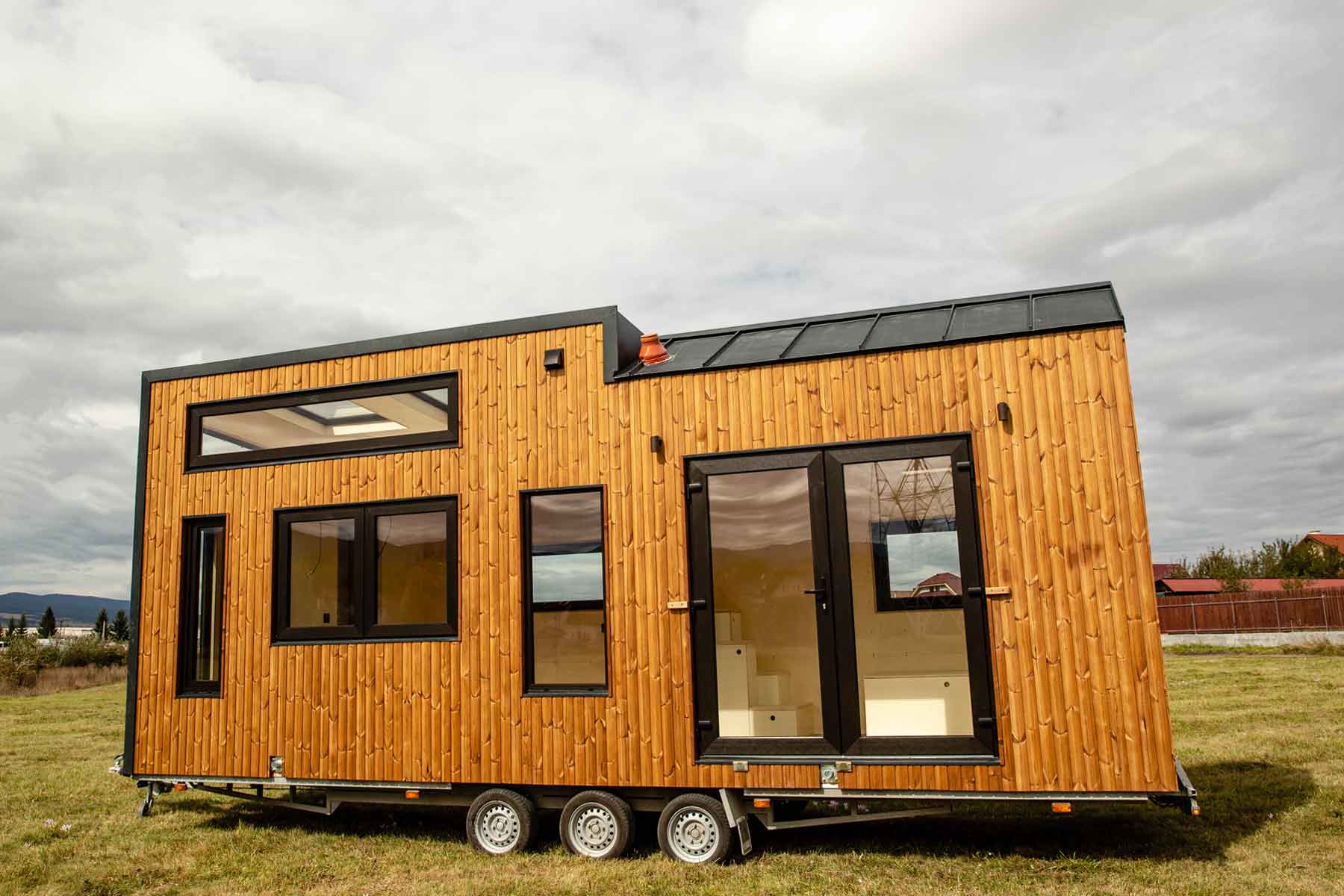
The single biggest variable in any tiny home cost estimate is the type of build. Tiny Homes on Wheels (THOWs) are typically the most affordable entry point because they sidestep two of the biggest line items: foundation work and many permitting fees. A THOW buyer is essentially purchasing a structure built to RV-adjacent standards, which means a different (and often shorter) regulatory path to occupancy.
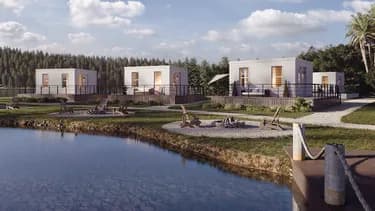
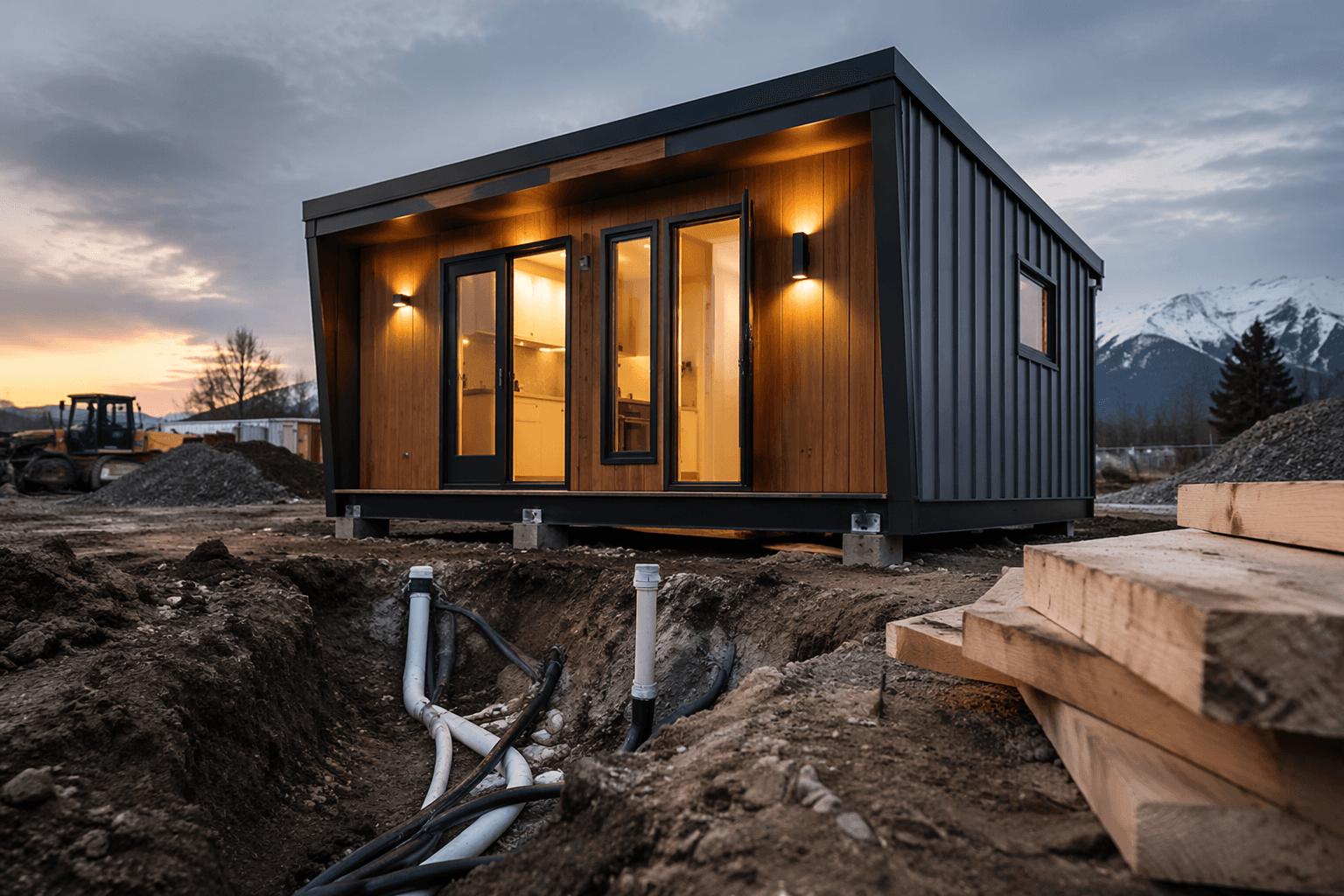
Foundation-based tiny homes and accessory dwelling units (ADUs) sit at the opposite end of the cost spectrum. These builds require site preparation, utility hookups, and full compliance with residential building codes, all of which add substantially to the final number. ADU foundation work, utility connections, and landscaping alone can add $15,000 to $40,000 on top of the structure itself, according to industry data. The tradeoff is durability, long-term value, and in many jurisdictions, clearer legal standing as a permanent dwelling.
Prefab and modular units occupy the middle ground. Prices range from roughly $4,000 for an unassembled kit to over $80,000 for a fully finished, delivered unit. They offer a faster path to occupancy than a fully custom build and carry fewer of the unknowns that come with ground-up construction, making them an appealing option for buyers who want cost predictability without going fully DIY.
What Actually Drives the Price
Once you've chosen a build type, the cost drivers become more granular. For any build that requires land purchase, that expense can easily become the largest single line item in the project, especially in suburban or urban markets where lot prices climb fast. Even rural parcels carry site prep costs that new builders routinely underestimate.
Permitting and inspection fees vary dramatically by jurisdiction and can range from a few hundred dollars in rural counties to several thousand in cities with active code enforcement. For foundation builds in particular, the permitting process can also require architectural or engineering reviews, adding professional service fees before a single board is nailed.
The structural shell of the home, including framing, insulation, windows, and roofing, represents a major portion of the construction budget. These aren't areas where serious builders cut corners. Interior systems are another substantial bucket: plumbing, electrical, and HVAC together represent a significant fraction of total cost, particularly in a space where every run of pipe or wire has to be precisely routed. Custom cabinetry and built-ins, the hallmark of any well-designed tiny home, add further to the interior cost and are almost always more expensive per unit than stock options from a big-box store.
For THOW builders, the trailer is a foundational cost that often gets underweighted. A quality dual-axle trailer designed for residential loads runs $4,000 to $10,000 depending on size and weight capacity; this is not the place to shop by price alone, since the trailer supports the entire structure.
The Hidden Costs That Catch Builders Off Guard
The Brewminate pricing analysis calls specific attention to the costs that don't appear in builder quotes but show up at closing or move-in. Utility hookup fees for water, sewer, and electrical can add thousands to a foundation build's budget, and they're highly variable depending on the distance from existing infrastructure. For factory-built and prefab units, transport and site delivery charges are real line items that buyers sometimes overlook entirely until the invoice arrives.
Specialized insurance is another category worth flagging early. Standard homeowners' policies often don't cover THOWs, and even foundation builds may require non-standard coverage depending on how they're classified in a given jurisdiction. Locking in appropriate coverage before occupancy, not after a claim, is the practical move.
DIY, Prefab, or Pro: Running the Numbers
The three build routes carry meaningfully different cost profiles. A basic DIY build lands between $17,500 and $57,000 in materials, making it the most budget-accessible path for builders with real construction skills. A semi-professional approach, where owners hire out specific trades but manage the overall project, typically runs $41,000 to $87,000. Full turnkey builds from professional contractors sit in the $70,000 to $150,000 range, consistent with the broader $30,000 to $150,000+ total cost range that comprehensive pricing analysis identifies as the realistic span for most tiny builds.
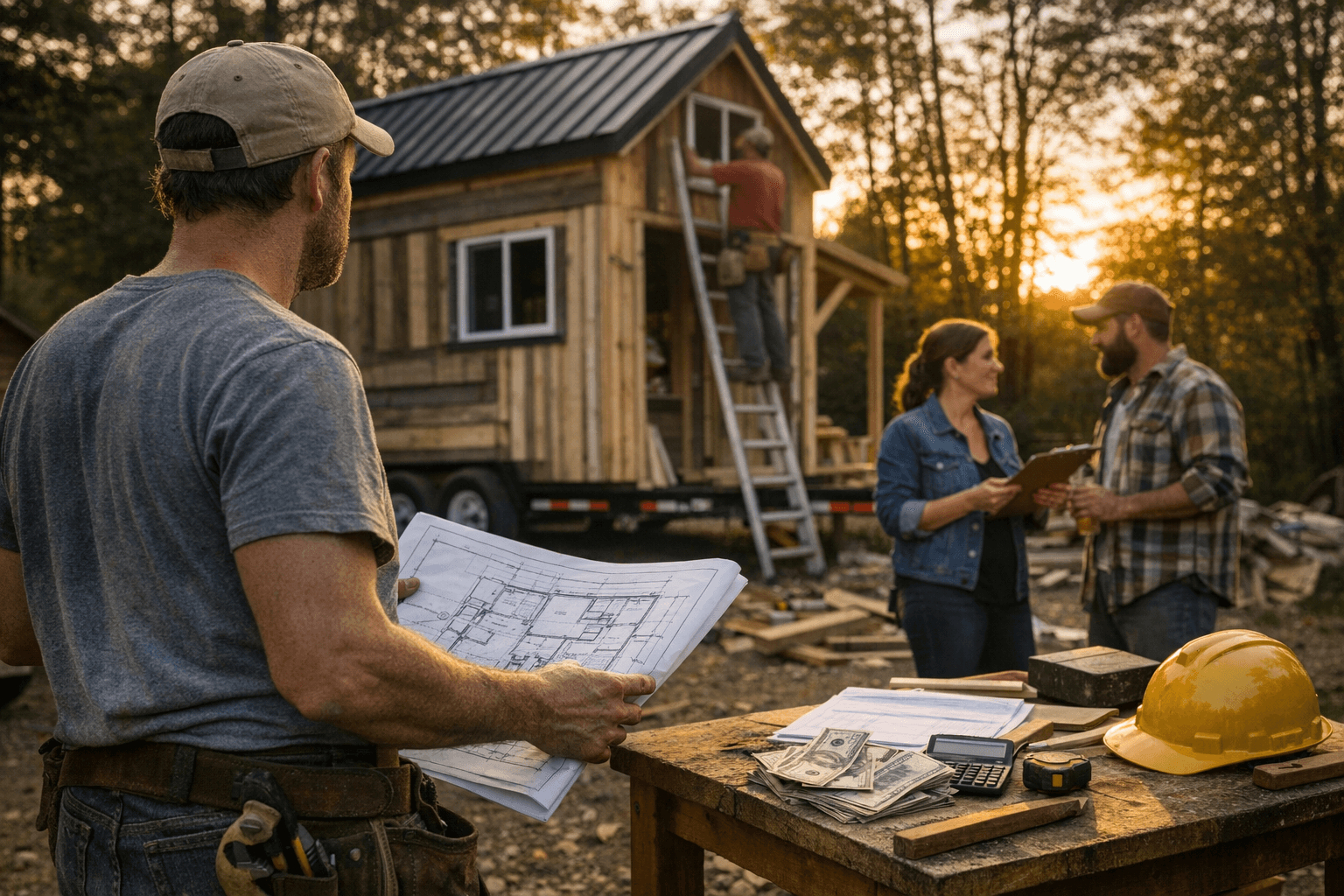
Labor accounts for 30 to 50 percent of total build cost in professionally led projects, which is why the DIY savings are real but conditional. Mistakes in a DIY build can cost more to fix than the original labor savings, particularly when code compliance is involved. A misframed wall or an out-of-spec electrical panel doesn't just cost money to correct; it can stall a project for weeks while waiting for reinspection. Getting multiple quotes from builders and comparing detailed line-item estimates, not just totals, is the most reliable way to evaluate whether a professional build makes financial sense for a given project.
The Upfront vs. Long-Term Tradeoff
One of the more nuanced decisions in tiny home budgeting is how aggressively to invest in performance upgrades at the build stage. High-performance insulation, energy-efficient HVAC systems, and solar installation all raise the upfront price. In a smaller structure, though, the impact of those investments on monthly operating costs is proportionally larger than in a conventional home.
A well-insulated tiny home with an efficient heat pump and a modest solar array can dramatically reduce utility bills over a multi-year ownership period, potentially recovering the upgrade cost well before most conventional renovations would pay back. The Brewminate guide frames this explicitly as a tradeoff worth modeling before finalizing a build spec: knowing your long-term cost priorities shapes which line items deserve a bigger slice of the budget.
How to Build a Budget That Holds
The most consistent advice across experienced builders is to set a budget range before engaging with any builder, prefab company, or land seller, and to build a prioritized features list so you know in advance where you're willing to flex and where you're not. That discipline matters because almost every build surfaces unexpected decisions that require real-time budget calls.
Contingency is not optional. Planning for a 10 to 20 percent buffer above your baseline estimate is standard practice in tiny home projects, where hidden site conditions, permit delays, and material cost changes are routine. Skipping this buffer is one of the most common reasons projects stall mid-build.
For THOW buyers specifically, the regulatory picture extends beyond the build itself. Road transport rules, vehicle weight limits, and the patchwork of state regulations around where a THOW can be parked and lived in full-time all need to be understood before a purchase is finalized. Early communication with local building departments, even for buyers who aren't yet sure which build type they'll pursue, can prevent costly surprises later. The permitting process in many jurisdictions is navigable; it's the builders who skip that conversation who tend to discover the hard way that it wasn't optional.
At $30,000 on the low end and well over $150,000 for a custom-finished foundation build with premium systems, the tiny home cost range is wider than the name suggests. The builders and buyers who navigate it successfully are the ones who treat the budget as a living document from the first sketch, not something to finalize once the build is already underway.
This article was produced by Prism’s automated news system from verified source data, official records, and press releases, then run through automated quality and moderation checks before publishing. The system is built and supervised by the people who set the standards it runs under. Read our full AI policy.
Did this article answer your question?