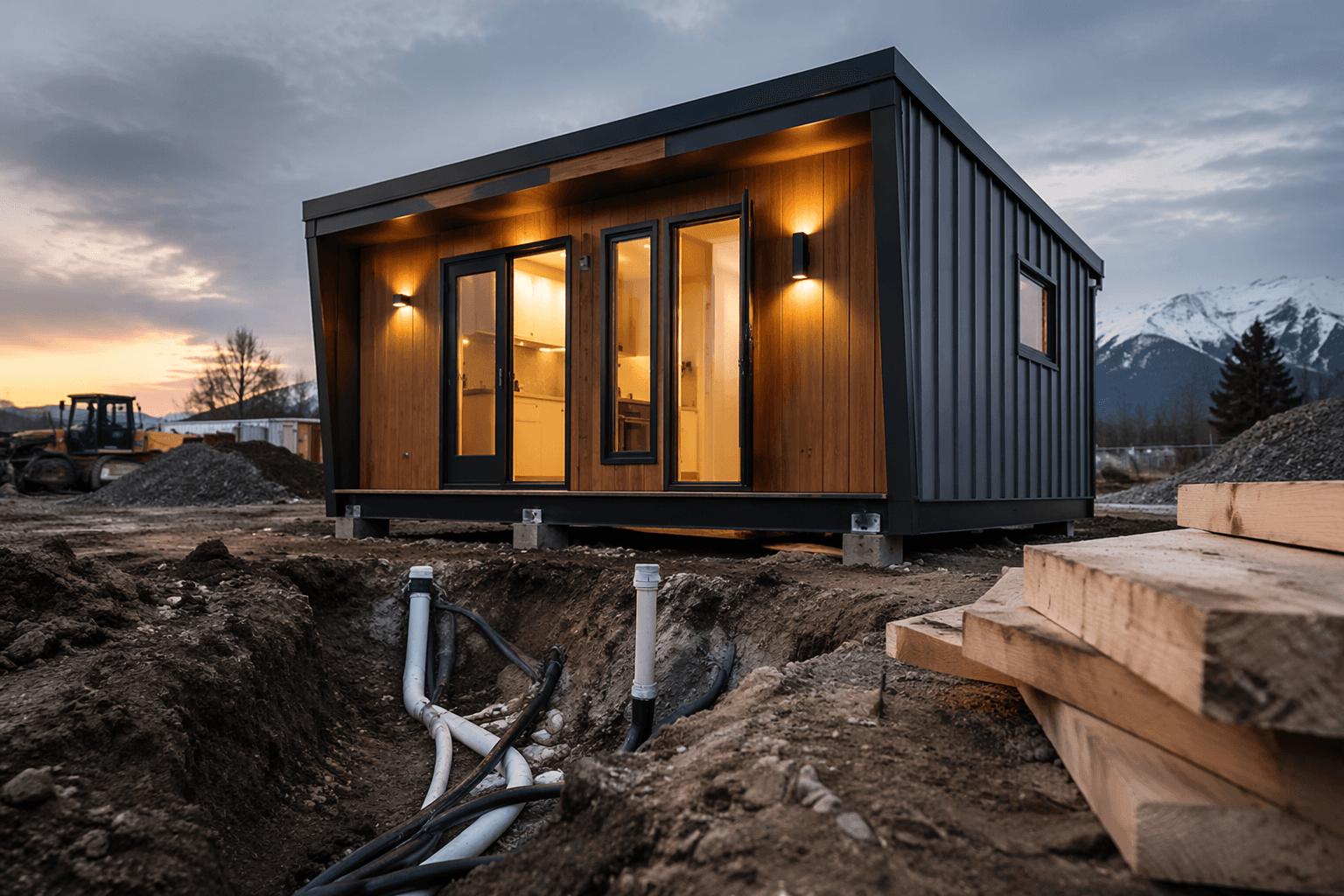
Zoning Laws Block Affordable Cottage Courts, Fueling Costs and Homelessness
Zoning codes that ban cottage courts are quietly pricing out millions and deepening homelessness, and the fight to change that is heating up.
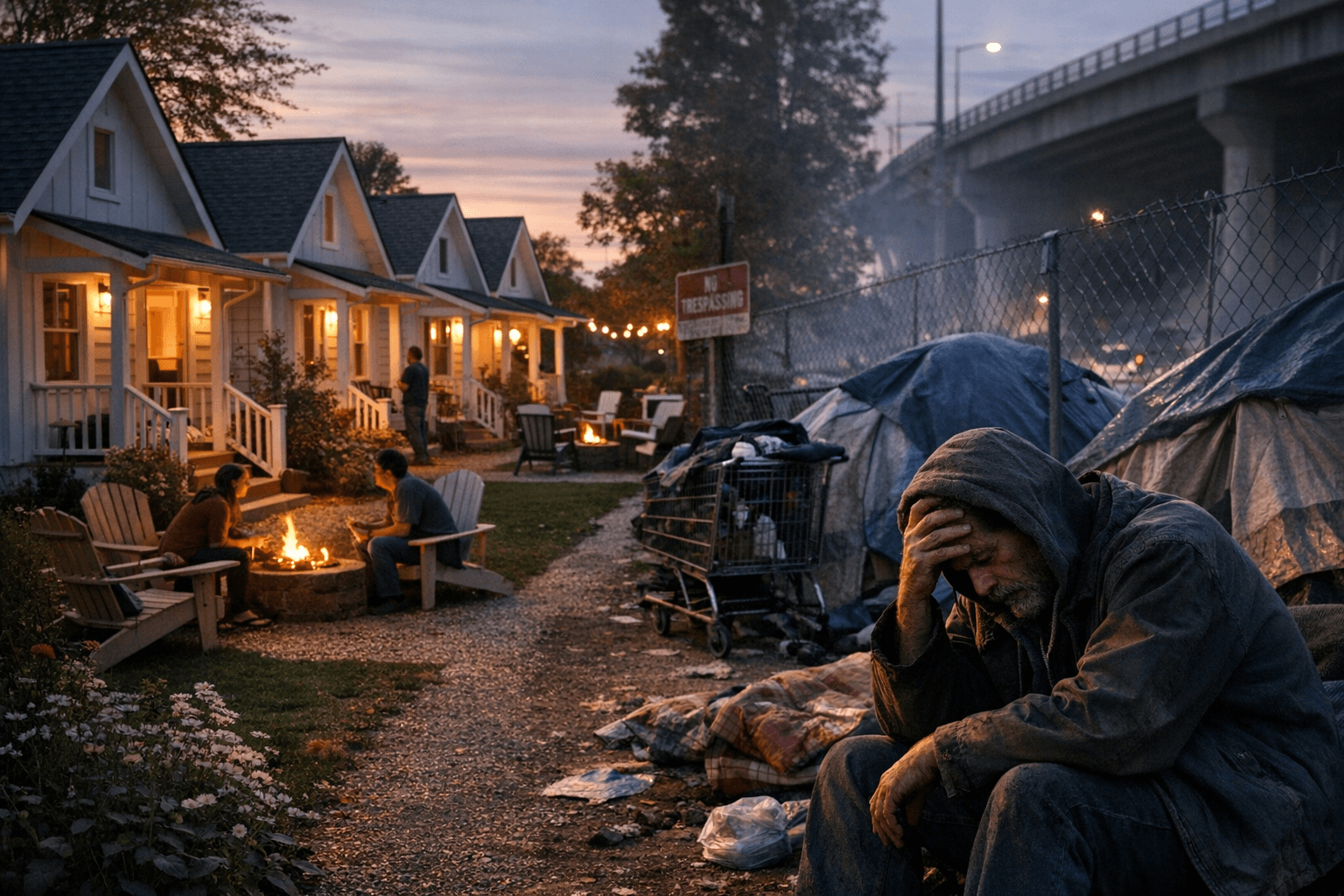
Across the United States, a quiet architectural tradition sits locked out of most cities by a wall of zoning code. The cottage court, a cluster of small homes arranged around a shared courtyard, was once a common feature of American neighborhoods. Today, it is effectively illegal in the majority of U.S. municipalities. That legal barrier isn't just a planning curiosity; advocates, housing economists, and tiny house communities argue it is one of the most direct drivers of rising housing costs and chronic homelessness in the country.
What Is a Cottage Court and Why Does It Matter?
Picture four to twelve small homes, each with its own door that locks, its own modest kitchen, its own sense of private life, arranged around a central green or paved courtyard. Residents share the outdoor space but not the walls. The design is inherently social without being institutional. It is also inherently affordable: smaller footprints mean lower construction costs, lower utility bills, and lower rents.
Cottage courts flourished in the early twentieth century as a middle-ground housing type sitting between single-family homes and apartment buildings. They housed working-class families, traveling workers, and people starting out. Then postwar zoning reform, driven by minimum lot size requirements, minimum square footage rules, and single-family residential designations, systematically pushed the form out of the legal building envelope. Today, a developer who wants to build a cottage court in most American cities faces a labyrinth of variances, conditional use permits, and outright prohibitions that make the project financially impossible before a single nail is driven.
The Zoning Wall
U.S. zoning laws prohibit affordable small home clusters like cottage courts in ways that are both explicit and structural. Explicit prohibitions include minimum dwelling unit size thresholds, often set at 400, 600, or even 800 square feet, that make a 200-square-foot cottage legally uninhabitable regardless of how well it is built. Structural prohibitions include density caps and setback requirements that simply leave no room on a standard parcel for multiple small units facing a shared open space.
The effect is a housing market with a missing middle. Cities have large single-family homes, large apartment complexes, and very little in between. For someone who needs an affordable, dignified, small space, the legal options are nearly nonexistent outside of a handful of progressive municipalities that have begun experimenting with reform.
Costs and Homelessness: The Direct Line
The connection between zoning prohibition and housing cost is not theoretical. When the supply of small, affordable units is legally constrained, demand piles into the units that do exist, driving rents upward across the board. A person priced out of a modest apartment does not simply disappear; they double up with family, move into a vehicle, or lose stable housing entirely.
Advocates point out that the prohibition of small housing forms is directly implicated in homelessness, not as a distant contributing factor but as an active mechanism. If a city's zoning code makes it illegal to build a 180-square-foot cottage that could rent for $400 a month, it has effectively legislated that a person who can only afford $400 a month has no legal housing option within that city's borders. Multiply that across hundreds of municipalities and millions of cost-burdened renters, and the scale of the damage becomes clear.
The Distaste Problem
Zoning codes don't rewrite themselves. They reflect political will, and political will in housing has long been shaped by the preferences of established homeowners, most of them middle class, who associate small, dense, or unconventional housing with neighborhood decline.
The argument that middle-class distaste for units perceived as "distasteful" or low-status blocks the construction of genuinely cheap options is one of the more uncomfortable parts of this conversation, but it is also one of the most important. When a city council votes down a cottage court proposal, the stated objections are usually about parking, traffic, or neighborhood character. The underlying dynamic is often an aesthetic and social judgment: that small homes are for people we don't want nearby. That judgment has enormous material consequences for the people who need those homes.
This is not a fringe critique. It surfaces in housing policy research, in the testimony of developers who have tried to build small-scale affordable projects, and in the experience of tiny house advocates who have watched well-designed communities get rejected on grounds that have little to do with public safety and everything to do with perception.
The Deregulation Movement
Growing calls for zoning deregulation to enable small living have moved from the margins of housing policy toward the mainstream. A handful of states have begun preempting local zoning restrictions that prevent small home development. Some cities have created explicit cottage court ordinances that define the form, set reasonable standards, and allow it by right rather than by variance.
The tiny house community has been a consistent voice in these conversations, pushing city councils and state legislatures to recognize that:
- Minimum square footage requirements eliminate the most affordable housing typologies
- Cottage courts and clustered small homes increase density without high-rise construction
- Shared courtyard designs can meet accessibility, safety, and fire code requirements with thoughtful design
- Legalizing small homes does not require sacrificing neighborhood quality or design standards
Progress is real but uneven. Where cottage courts have been legalized, small developers and community land trusts have moved quickly to build them. The projects that exist demonstrate what the zoning wall has been hiding: well-designed, community-oriented, genuinely affordable housing that fits into existing neighborhoods without displacing their character.
What Reform Actually Looks Like
Meaningful reform in this space doesn't require a single federal mandate. It requires cities and states to take a handful of specific steps: eliminating or dramatically lowering minimum unit size thresholds, creating cottage court as an explicitly permitted use in residential zones, adjusting density calculations to count small units fairly, and removing the variance and conditional use permit requirements that make small-scale affordable projects financially unviable.
Some advocates push further, arguing that deregulation should extend to accessory dwelling units, micro-apartments, and other small-footprint housing forms as part of a comprehensive strategy to rebuild the missing middle of the housing market.
The cottage court is not a silver bullet. It will not, by itself, solve the U.S. housing crisis. But it is a concrete, buildable, historically proven housing form that zoning law has made nearly impossible to construct, and every year it remains illegal is another year of costs that fall on the people least able to bear them. The case for clearing the legal path is straightforward: the homes are needed, the design works, and the only thing standing in the way is a set of rules that were written to prevent exactly this kind of affordability.
This article was produced by Prism’s automated news system from verified source data, official records, and press releases, then run through automated quality and moderation checks before publishing. The system is built and supervised by the people who set the standards it runs under. Read our full AI policy.
Did this article answer your question?