Chicago museum guide shows how to research true crime from primary sources
The Chicago History Museum's guide turns true crime into file work, showing how records, photos, and archives can settle the version everyone repeats.
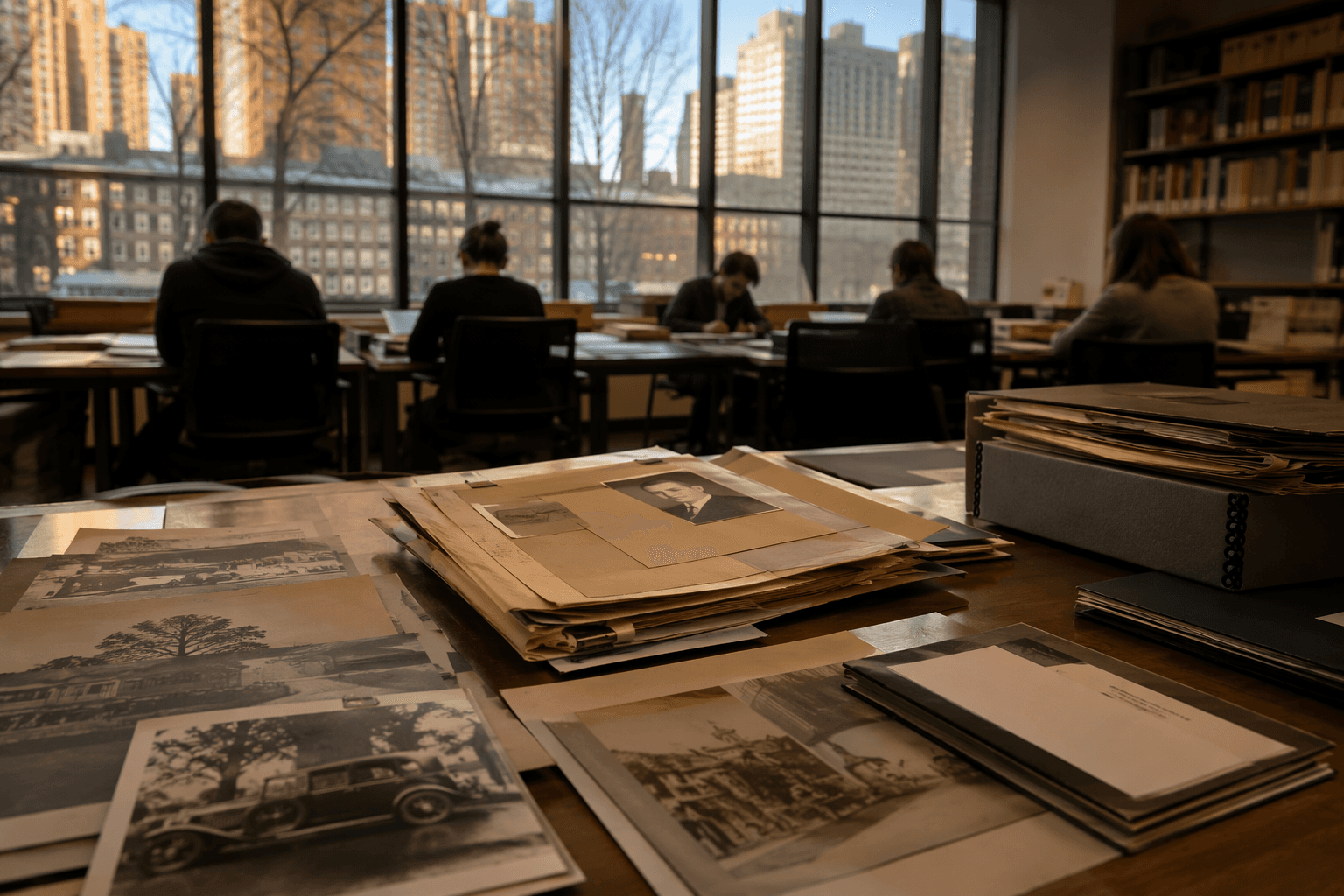
At the Chicago History Museum, true-crime research starts with the paper trail: case files, manuscript collections, and photographs. The museum calls it “a guide to researching crime and the criminal justice system in the Chicago area, with an eye toward the true crime genre.” It puts records, context, and source criticism ahead of speculation.
Start with the record, not the retelling
The true-crime research guide breaks the work into practical sections that map onto a real case file workflow: Specific Cases, Archives and Manuscripts, Published Materials, Image Research, and Online and Other Local Resources. That structure gives readers a way to move from the broad outline of a case into the documents that can verify dates, names, places, and sequence.
The most reliable place to begin is with published material that sketches the basic story, then to move inward toward archives, police files, manuscript collections, and photographs. That approach lets a researcher build a timeline from multiple source types instead of leaning on one viral thread, one documentary cut, or one retelling that has already been cleaned up for entertainment.
A workable case-file workflow
1. Use published materials to establish the first version. Newspapers and published accounts can show when a case entered public view, which details repeated across outlets, and which ones shifted over time.
The workflow starts with those materials before moving into the deeper record.
2. Check archives and manuscripts for what the summary leaves out. Case-related papers, institutional files, and manuscript collections can show how investigators, editors, or later historians framed the same events.
That is where a claim can be confirmed, narrowed, or contradicted.
3. Use images as evidence, not decoration. Photographs can help confirm locations, people, clothing, vehicles, signage, or the physical layout of a scene.
In older cases, they are often the quickest way to test whether a dramatic reconstruction matches the visual record.
4. Pull in local and online resources to cross-check the trail. One collection is not enough.
Careful source work uses a wider ecosystem of local resources to avoid repeating errors from a single account.
5. Keep the timeline open until the record closes. A strong case file often contains more than one version of the same event.
The work is in comparing them, not in choosing the most dramatic one.
Read the warnings before you trust the language
The museum warns that historical materials may include violent acts, offensive language, or negative stereotypes that reflect the period in which they were created. Historical materials may preserve the bias of their time as clearly as they preserve facts.
The museum’s Critical Cataloging page makes that point directly: “If you encounter language in our collections that you find offensive or harmful, or if you have questions about our policy, please contact us at research@chicagohistory.org so that we can learn and adjust our practices.” The language in the record has to be read as evidence, not as neutral description.
Use archives and images to test the story
Catalog records list the “Chicago Police Department, Red Squad selected records, c. 1930s-86 (bulk 1963-74)” as a manuscript collection measuring 205 linear feet. The files concern surveillance of suspected “subversive” groups by the Chicago Police Department, with related Gang Unit files from the same period.
The museum’s Images site has over 370,000 digital images available online. Images can be downloaded and licensed by contacting rightsrepro@chicagohistory.org. The Chicago Daily News collection, covering 1902 to 1933, is especially relevant for crime research, making it a concrete place to verify scenes and compare what was printed with what was photographed.
Put the case in Chicago’s wider history
The specific-cases section highlights the Chicago Race Riots of 1919, which began after a Black teenager drowned and a white man was arrested. The unrest lasted several days and resulted in injuries, deaths, and extensive property damage.
Work where the records live
The Abakanowicz Research Center is the museum’s research facility, and it holds printed materials, archives and manuscripts, prints and photographs, architectural drawings, and assorted ephemera. The center is on the third floor of the Chicago History Museum, and Ellen Keith is director of research and access and chief librarian.
Readers who want to go farther can also pair local archives with library research guides, including primary-source resources from the New York Public Library, to triangulate facts and avoid carrying forward old mistakes. The discipline is the same throughout: start with a claim, test it against a document, then test the document against another source.
This article was produced by Prism’s automated news system from verified source data, official records, and press releases, then run through automated quality and moderation checks before publishing. The system is built and supervised by the people who set the standards it runs under. Read our full AI policy.
Did this article answer your question?