Judge Denies New Trial for Laken Riley's Killer, Cites Overwhelming Evidence
Georgia judge called evidence against Laken Riley's killer "overwhelming and powerful," denying Jose Ibarra a new trial and opening the door to a direct appeal.
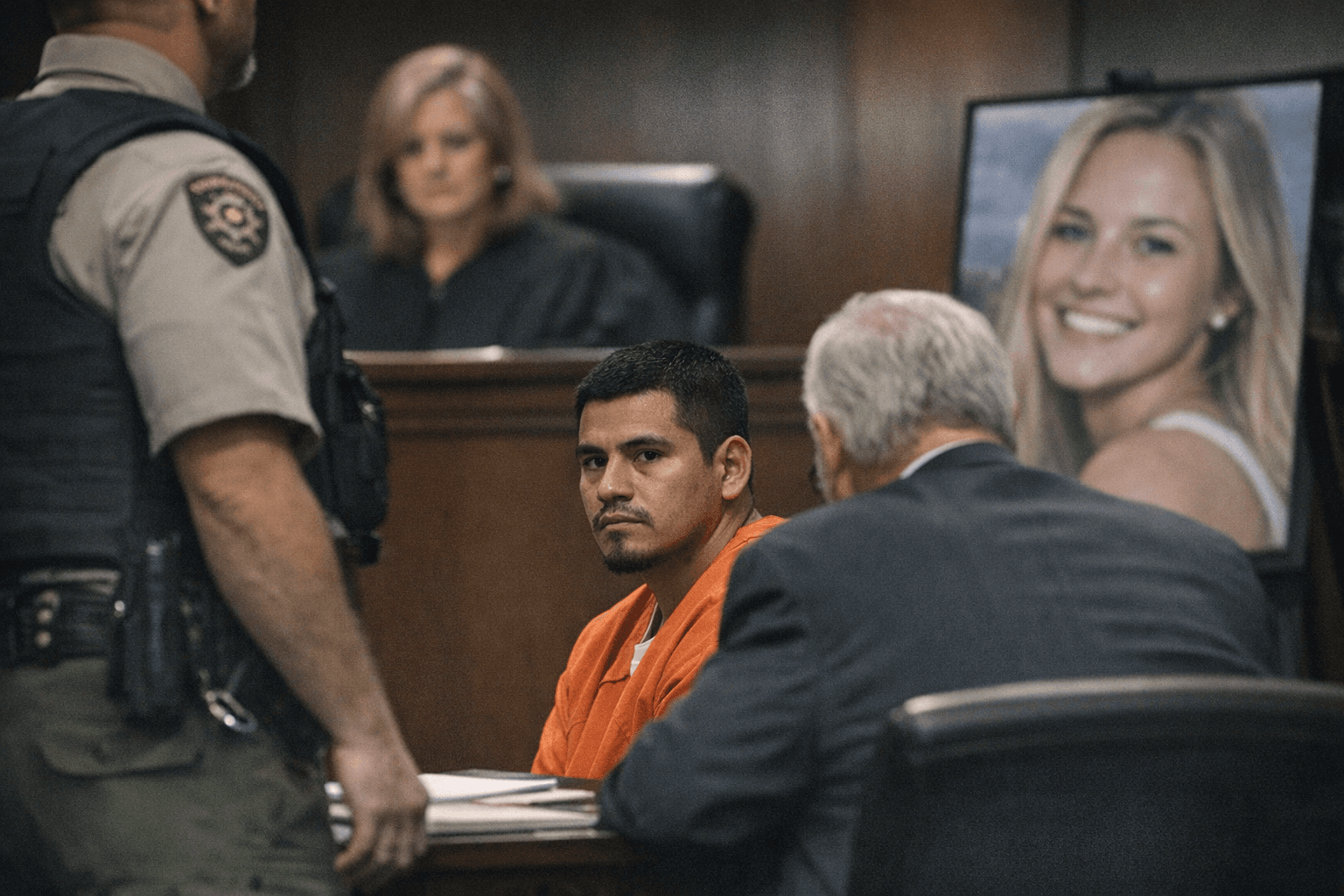
A Georgia judge shut the door on convicted killer Jose Ibarra's bid for a new trial on March 10, 2026, ruling that the evidence against the Venezuelan national who murdered nursing student Laken Riley remained "overwhelming and powerful" and pointing his defense attorneys toward the only remaining path: a direct appeal to a higher court.
Athens-Clarke County Superior Court Judge H. Patrick Haggard rejected both of the defense's central claims. The first argued that Ibarra's constitutional rights were violated when the court denied extra time for a DNA expert to review evidence processed through TrueAllele Casework software, a specialized tool used to interpret complex DNA mixtures. The second sought to suppress cellphone data seized from two of Ibarra's phones, arguing the warrants lacked probable cause. On the DNA delay, Haggard wrote that Ibarra's trial counsel had "a sufficient knowledge and understanding of TrueAllele DNA and effectively cross-examined the expert on the topic," finding that Ibarra suffered no harm from the denied continuance.
Defense attorneys separately contended that Ibarra suffers from a "congenital deficiency" that could have rendered him "incapable of preparing a defense and standing trial." Prosecutors countered there were "no challenges or concerns" about his competency before trial began, a position Haggard had previously backed when he found Ibarra competent based on a court-reviewed mental evaluation.
Riley, 22, was killed on February 22, 2024, while jogging near the University of Georgia campus in Athens. She had been enrolled at Augusta University College of Nursing, which operates a satellite campus in Athens roughly 70 miles east of Atlanta. Prosecutors told the court she died after she "refused to be his rape victim." Ibarra, who does not speak English and followed proceedings through a Spanish interpreter, had waived his right to a jury trial, leaving Judge Haggard as the sole finder of fact across four days of hearings beginning November 18, 2024. On November 20, Haggard found him guilty on all 10 counts, including malice murder, felony murder, kidnapping with bodily injury, aggravated assault with intent to rape, aggravated battery, hindering a 911 call, tampering with evidence, and peeping tom. He was sentenced the same day to life without the possibility of parole, the maximum under Georgia law.
Ibarra filed for a new trial in December 2024, and arguments were heard on January 29 and 30, 2025. Under Georgia law, filing that motion froze the appeal clock, making the March 10 denial the procedural unlock that allows his team to file a formal notice of appeal. His attorneys have already announced they intend to do so. Direct appeals in Georgia murder cases typically take one to two years to complete, as the appellate court reviews the trial record for errors of law rather than rehearing evidence.
Ibarra illegally crossed the southern border near El Paso, Texas, on September 8, 2022, and was released into the country while his immigration case was pending. He was housed in a New York City shelter and later received a taxpayer-funded ticket south to Georgia. Federal authorities have documented him as a member of Tren de Aragua, the notorious Venezuelan prison gang. His brother, Diego Ibarra, who briefly worked as a dishwasher in a UGA cafeteria, was arrested separately and charged with possessing a fake green card; federal documents linked Diego to Tren de Aragua as well.
At sentencing, Riley's mother, Allyson Phillips, addressed the court directly: "This monster took away our chances to see Laken graduate from nursing school. He took away our ability to meet our future son-in-law... And he took my best friend." Her roommate, Connolly Huth, described a quieter loss: "I no longer run every day. I cannot imagine running when I constantly am looking over my shoulder in public." Riley's father has filed a separate civil lawsuit accusing the Georgia university system of negligence.
The case reached beyond the Athens courthouse into federal law. On January 29, 2025, President Donald Trump signed the Laken Riley Act, the first bill of his second term, mandating federal detention of illegal immigrants accused of theft, burglary, assaulting a law enforcement officer, or any crime causing death or serious bodily injury. The measure passed with bipartisan support, drawing 46 House Democrats and 10 Democratic senators.
WHAT COMES AFTER A CONVICTION: THREE LEGAL STAGES
A motion for a new trial, filed in the original trial court, argues that procedural or constitutional errors during the proceedings warrant starting over. That is what Ibarra pursued and lost here. The next step is a direct appeal, filed with a higher court that reviews the trial record for legal errors but does not take new testimony or re-examine physical evidence. If a direct appeal fails, a defendant can pursue post-conviction relief, the broadest challenge available, which can raise claims outside the original trial record, including newly discovered evidence, ineffective assistance of counsel, or constitutional violations that were not raised before. Post-conviction proceedings can run for years and, in the most serious cases, represent the final legal arena before a sentence is carried out. Ibarra faces life without parole, not execution, but the same three-stage ladder applies.
This article was produced by Prism’s automated news system from verified source data, official records, and press releases, then run through automated quality and moderation checks before publishing. The system is built and supervised by the people who set the standards it runs under. Read our full AI policy.
Did this article answer your question?