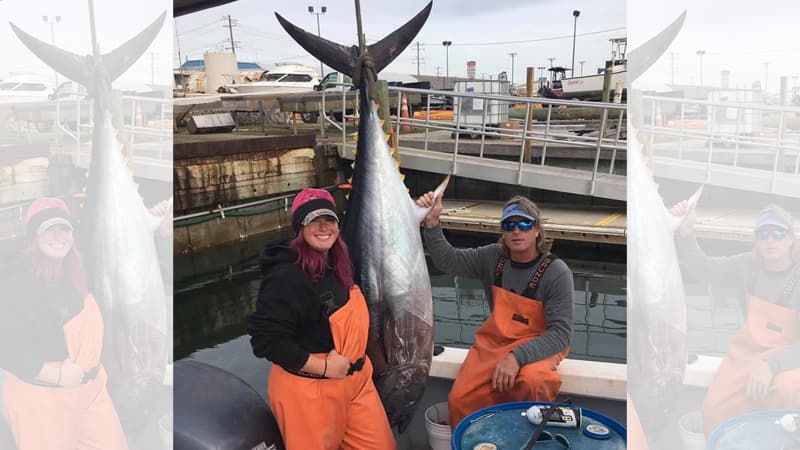
Aggressive Live-Bait Tactics Produce 50-60 lb Yellowfin Off Mississippi Rigs
Capt. Zach Lewis' live-bait prop-wash tactic ignited surface feeding and produced 50-60 lb yellowfin off Horn Mountain rigs. It shows northern Gulf rigs still deliver when blue-water and bait line up.

Capt. Zach Lewis is turning heads at the mouth of the Mississippi by pushing aggressive live-bait tactics around Horn Mountain and neighboring rigs, producing rapid surface feeding and multiple yellowfin in the 50-60 lb range. The action highlights that oil and gas structures in the northern Gulf remain reliable yellowfin producers in late January when blue-water and bait conditions align.
Lewis' approach leans hard on disruption. By dumping remaining live bait into the prop-wash to disorient schooling baitfish, he triggers immediate surface breaks and fast strikes. When fish do not stay on top, crews combine bump-trolling floaters with careful electronics work to find and stalk the schools. Captains mark fish on sonar, switch to clearer blue-water spots when the birds and current allow, and drop a heavy weight or "bomb" when tuna hold subsurface.
The tactics matter because they are repeatable and practical. Anglers preparing for similar trips should expect to run Shimano Talica reels spooled with 80-lb PowerPro braid and an 80-lb mono top-shot, tied to 100-lb fluorocarbon leaders. Hooks in the 7/0 circle range are the go-to for reliably setting into big yellowfin without sacrificing hookup rates. Those specific gear choices let anglers hold bottom, pitch baits through chop, and handle headshakes once a 50-60 lb fish goes airborne.
Electronics and quick decision-making are equally important. Marking fish on the screen guides where to place floaters and where to drop live bait bombs. Bump-trolling allows boats to cover water and keep baits in the strike zone without running past active birds or bait schools. Switching from stained to blue-water lanes often separates slow, bait-choked days from boil-ups.
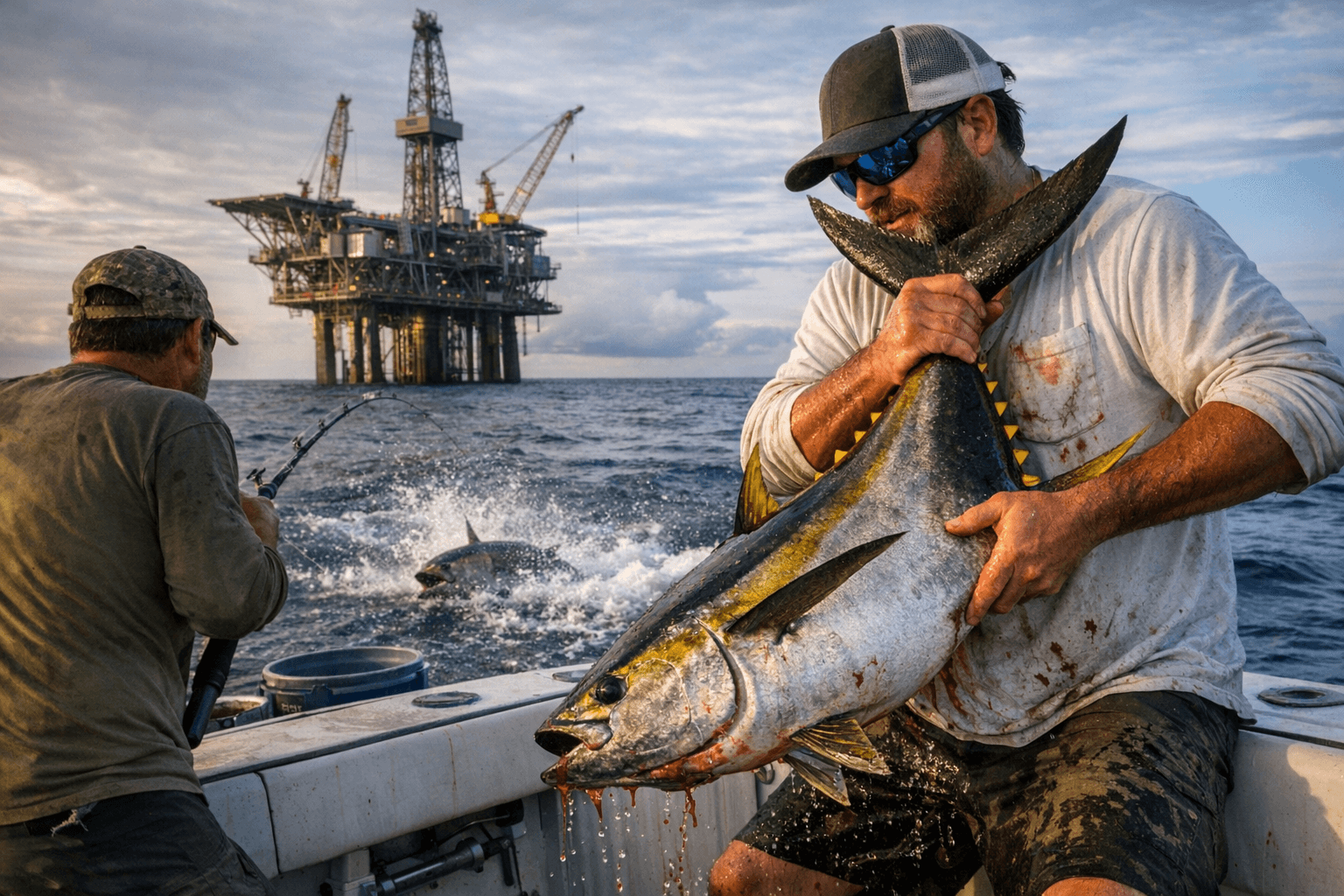
For the Mississippi rig fleet and weekend anglers alike, the wider takeaway is clear: rigs still produce when the blue-water windows open. Success hinges on combining active live-bait deployment with adaptive boat handling, confident electronics work, and the right tackle. Bring heavy braid, a long mono top-shot, stout fluorocarbon leaders, and 7/0 circle hooks if you plan to chase this bite.
Expect more short, electrified windows rather than steady drifts. When the current and bait line up, be ready to dump live bait, mark fish, and go to work. The northern Gulf rigs remain willing partners for anyone ready to match their tactics to the conditions.
Know something we missed? Have a correction or additional information?
Submit a Tip