Baja tuna bite heats up with triple-digit fish offshore
Triple-digit yellowfin are still mixing into the Baja bite, but the right run now depends on whether you want numbers, size, or a marlin-and-dorado mixed bag.
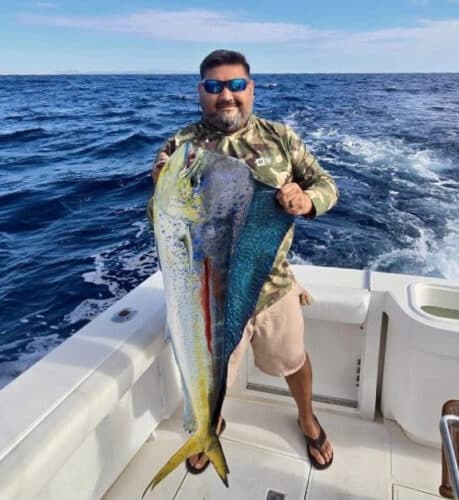
Triple-digit yellowfin are still in the mix off Baja Sur, but the real call now is where to point the bow. East Cape, San José del Cabo, and Cabo San Lucas are all fishing, and each zone is offering a different version of the same early-summer pattern: warm water, bait moving close, and enough billfish around to keep every offshore run honest.
East Cape: where size and mixed-bag action still intersect
Out of Los Barriles on the East Cape, offshore boats stayed on steady dorado, yellowfin tuna, and billfish through the June 21 to June 27 window. Most of the yellowfin here ran 20 to 25 pounds. Local boats also connected on several triple-digit tuna, with fish topping 100 to 200 pounds.
The billfish side was just as lively. Striped marlin were strong, sailfish sightings and hookups increased, and early blue marlin showed along the temperature breaks. Wahoo remained a smaller but consistent bycatch on high-speed lures and live bait, while roosterfish were showing along beaches and sandy drop-offs during the calm morning hours.
San José del Cabo: the most reliable all-around tuna zone
If the goal is the cleanest blend of tuna, dorado, and billfish, San José del Cabo is the most balanced piece of water in the corridor. Warm summer currents pulled bait schools closer to the coast, and that movement showed up in both offshore and inshore action. The most consistent tuna fishing centered on the Outer Gordo Bank and Iman Bank, where yellowfin were typically 15 to 30 pounds, but boats also landed larger tuna over 60 pounds on live chunk bait.
Dorado pushed in better numbers too, generally 10 to 15 pounds with a few bigger bulls around floating debris. Striped marlin led the billfish story again, with multiple releases a day and more sailfish activity in the mix, while inshore boats added roosterfish, dogtooth snapper, and amberjack to the picture.
Cabo San Lucas: shorter runs and fast mixed-bag possibilities
Cabo San Lucas is the zone for anglers who want to stay close to the corridor and still touch fish. Crews were seeing very good striped marlin and yellowfin action around the 1150 Spot, Cabeza de Ballena, and Lighthouse area, with some yellowfin in the 8 to 12 pound class found 10 to 16 miles offshore.
The mix here is tuna and marlin, with the ability to move quickly between spots without burning a long offshore run. Cabo San Lucas was not the zone for triple-digit tuna, but the concentration of striped marlin plus school-size yellowfin makes it a practical option.
How to choose your zone right now
The Baja Sur pattern is easy to read if you match the run to the goal. East Cape gives you the best chance to combine tuna numbers with genuine size, San José del Cabo offers the most dependable all-around yellowfin program, and Cabo San Lucas makes sense when you want a quicker offshore shot at marlin and smaller tuna.
- For the best shot at triple-digit yellowfin, start on the East Cape where the larger fish are still mixing with 20- to 25-pound school fish.
- For the steadiest yellowfin program, focus on San José del Cabo, especially the Outer Gordo Bank and Iman Bank, where 15- to 30-pound tuna have been the core bite.
- For a mixed-bag day with a shorter offshore run, Cabo San Lucas around the 1150 Spot, Cabeza de Ballena, and Lighthouse area is the most efficient play.
This article was produced by Prism’s automated news system from verified source data, official records, and press releases, then run through automated quality and moderation checks before publishing. The system is built and supervised by the people who set the standards it runs under. Read our full AI policy.
Did this article answer your question?