Atlantic and Pacific bluefin tuna rebound as catch limits rise
Bluefin tuna are rebounding because quotas finally held, and that comeback now depends on keeping the science-based limits that made both stocks fishable again.

Bluefin came back because managers finally treated them like a fish that can run out. Atlantic bluefin were pushed to the edge of collapse about 20 years ago, while Pacific bluefin were driven down to about 2 percent of historical population levels, a 98 percent drop by 2014. The rebound now showing up in both oceans is the payoff from restraint, hard caps, and rules that take the politics out of the numbers.
Atlantic bluefin: the comeback was built on limits
The Atlantic turn started when ICCAT adopted its first management procedure for Atlantic bluefin tuna in November 2022. That harvest strategy set annual total allowable catches for 2023 through 2025, including a stable western Atlantic TAC of 2,726 metric tons, so the fishery stopped living on year-to-year quota fights and started following a pre-agreed framework. By 2025, ICCAT was still leaning on science-based tools, and U.S. officials have pointed to that approach as a landmark in rebuilding the species.
That matters beyond conservation talk. Atlantic bluefin still support real livelihoods, and one Canadian fisheries group said the fish brought in $7.7 million in 2020 for Atlantic Canadian harvesters and coastal communities. When a fishery is managed well enough to stay open and valuable, that is what the payoff looks like: fewer boom-and-bust swings, more dependable seasons, and a stock that can actually keep producing.
For anglers, the lesson is blunt. Bluefin do not rebound because people wish them well; they rebound because quotas hold, harvest is measured, and the rules are built to keep tomorrow’s fish alive. Atlantic bluefin are fishable again because management stopped pretending the ocean was infinite.
Pacific bluefin: from collapse to measurable recovery
The Pacific side tells the same story with even starker numbers. NOAA said Pacific bluefin exceeded international rebuilding targets a decade ahead of schedule, and a 2024 stock assessment confirmed the stock reached its second rebuilding target in 2021. That is not a lucky break. It is what happens when international regulators, scientists, and conservation groups keep pressure on a stock long enough for the age structure to rebuild instead of getting chopped off every season.
The commercial numbers show why this matters to working boats, not just conservation charts. NOAA Fisheries said U.S. commercial fishers harvested 368 metric tons of Pacific bluefin in 2022, generating more than $2.2 million in on-the-dock revenue. U.S. fishing represented about 10 percent of total Pacific bluefin landings that year, which tells you the U.S. fleet is part of the story but not the whole story.
That recovery has changed the way the fish is viewed on the West Coast too. Monterey Bay Aquarium’s Seafood Watch moved some Pacific bluefin fisheries out of its red “species to avoid” category in October 2024, the first time that had happened. Seafood Watch said the species had been hammered down to about 2 percent of historical levels, and the organization has spent decades pushing recovery through tagging, tracking, science, and policy work. Around California, that is why chefs and fisheries folks are talking about the fish with cautious optimism instead of the old fatalism.
What the higher catch limits really mean
NOAA said the U.S. Pacific bluefin biennial catch limit for 2025-2026 is 1,872.85 metric tons, nearly 80 percent higher than the previous limit. NOAA tied that increase to a straightforward finding: the Pacific bluefin stock is no longer overfished or experiencing overfishing. That is the part recreational tuna anglers should pay attention to, because a higher limit is not a license to swing hard at the resource. It is proof that the resource can be managed hard enough to grow back.
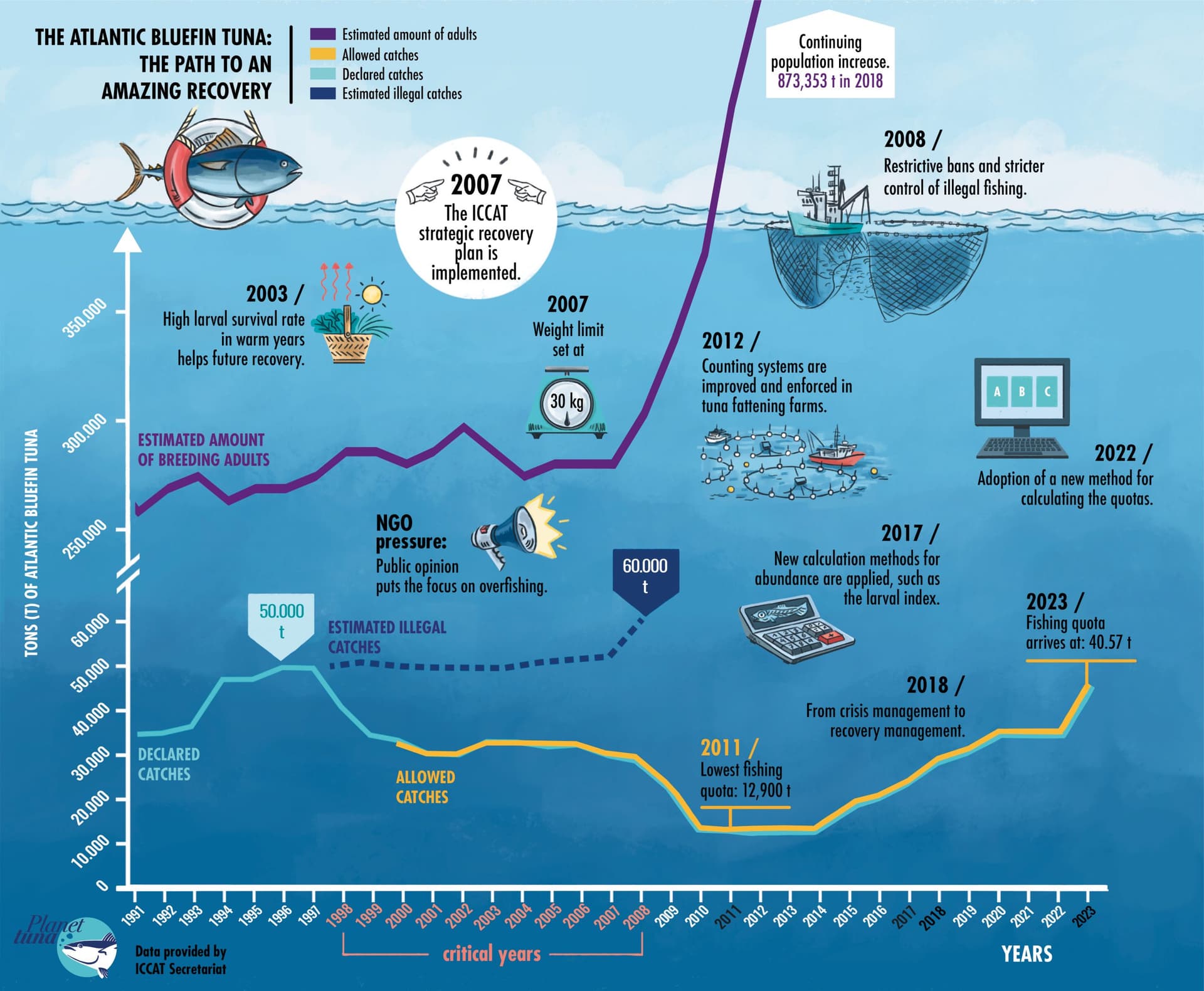
The economics explain why discipline still matters. Seafood Watch says a single bluefin tuna can sell for tens of thousands of dollars at auction in Japan, and the first fish of the new year has sold for as much as $3 million. A fish that valuable will always attract pressure, which is exactly why the rulebook has to stay stronger than the market. When the incentive to catch every last one gets that high, the only thing standing between a rebound and another collapse is management that does not blink.
What responsible management means for your next bluefin trip
If you fish bluefin, the practical takeaway is simple: the fishery works when the rules are tight enough to match the biology. ICCAT’s 2022 management procedure in the Atlantic and NOAA’s rebuilding benchmarks in the Pacific both point to the same playbook, one built around science-based limits rather than emotional quota battles. That is why the stock can improve, the limits can rise, and the fish can still be there next season.
The comeback is real, but it is not self-sustaining. Bluefin are back in the conversation because somebody finally put a hard ceiling on the take and kept it there long enough for the oceans to answer. That is the part worth remembering the next time a bluefin streaks under the boat: this fishery is fishable again because restraint became the rule, not the exception.
This article was produced by Prism’s automated news system from verified source data, official records, and press releases, then run through automated quality and moderation checks before publishing. The system is built and supervised by the people who set the standards it runs under. Read our full AI policy.
Did this article answer your question?