Blackfin Tuna, Mahi Show Offshore as Hatteras Spring Bite Begins
Ocean surface temps hit 70°F off Hatteras on April 4, blackfin tuna were already there, and the window for a one-day offshore run is open now.
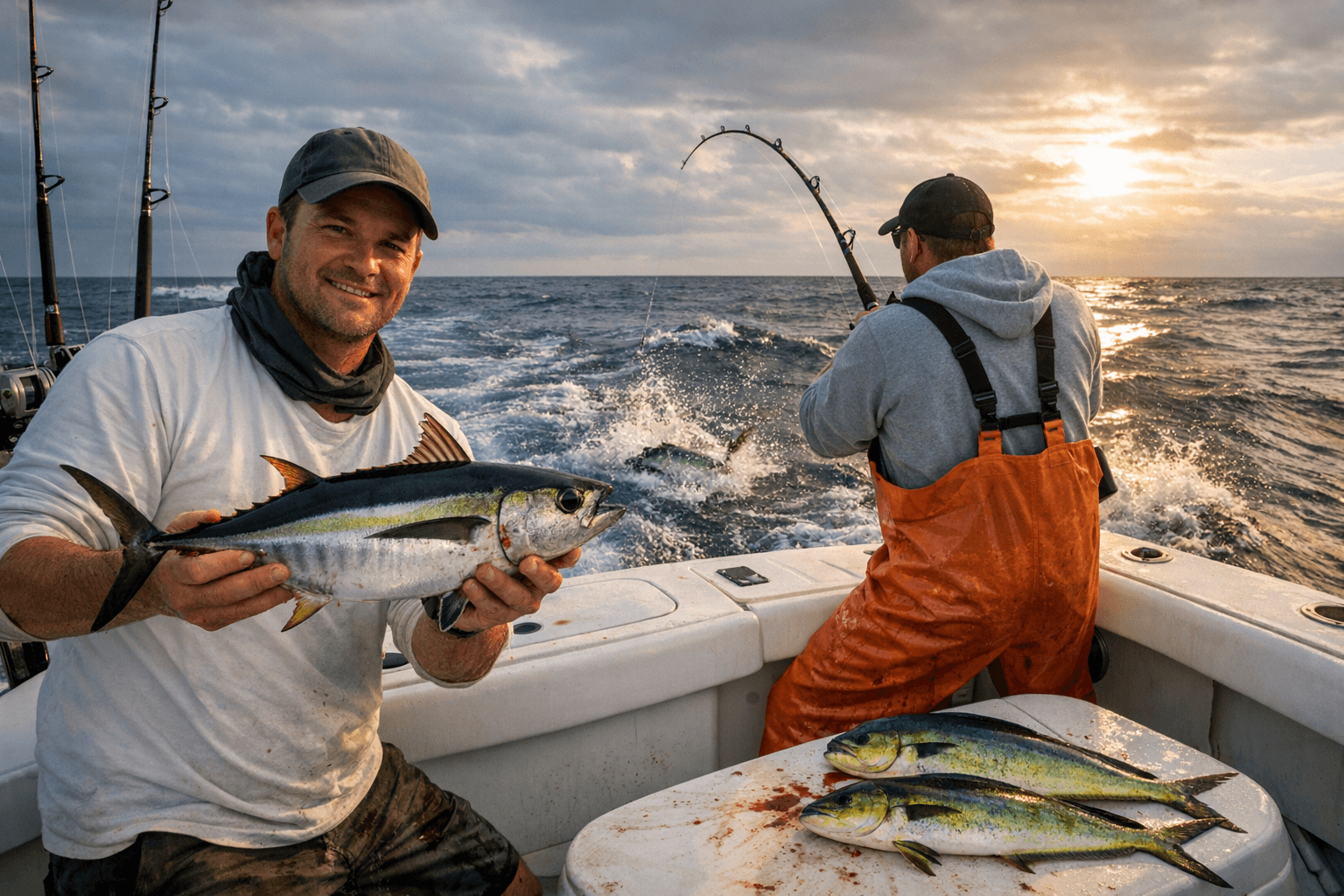
Ocean surface temps on the Hatteras shelf measured 70°F on April 4, and the blackfin tuna were already there.
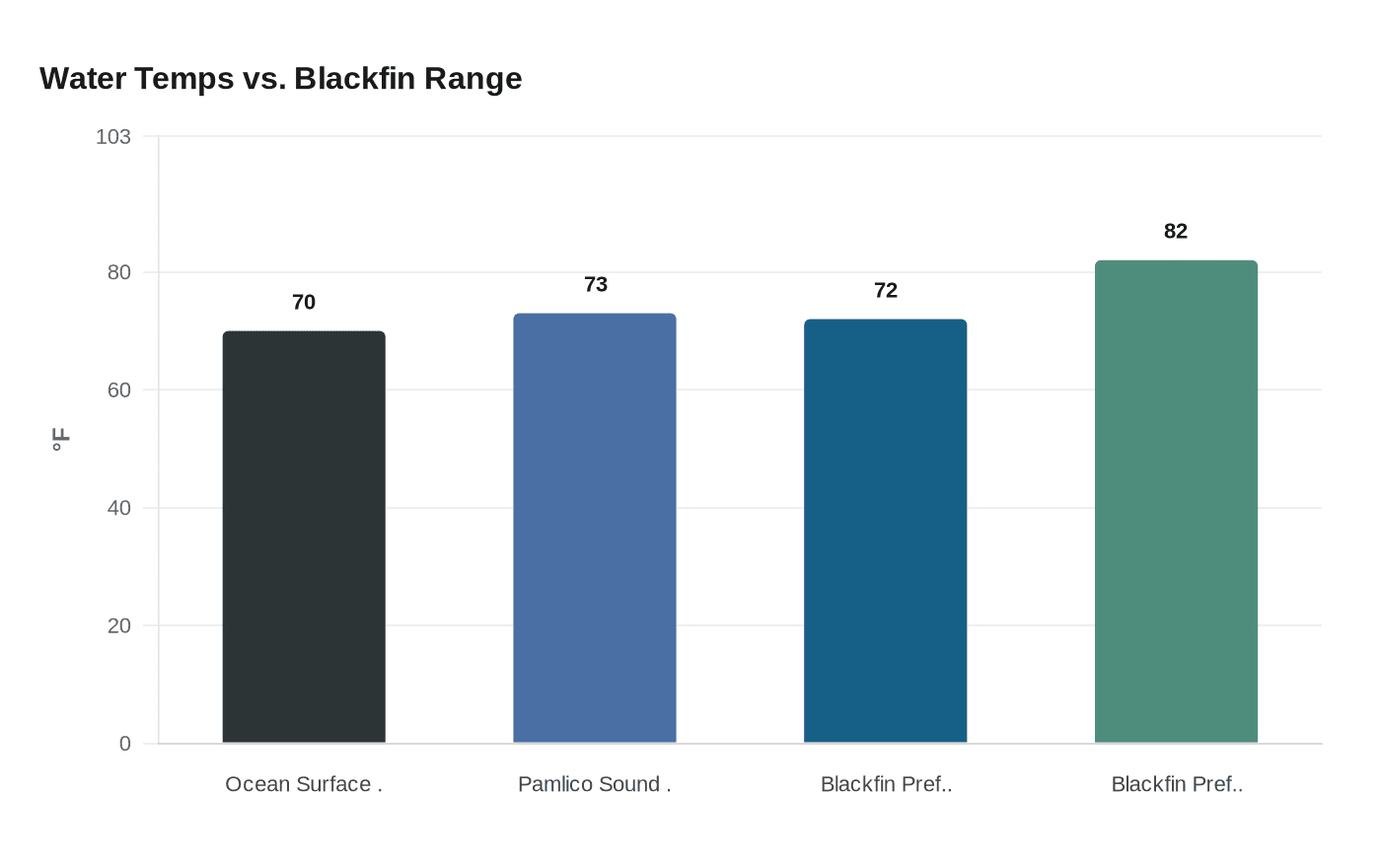
That number, recorded in the Frisco Rod & Gun daily Hatteras Island fishing report, is the one worth acting on. Blackfin prefer water between 72 and 82 degrees, which means the fish showing up in those April 4 offshore catches weren't holding in the main body of 70°F water. They were stacked at the color change where the warm Gulf Stream blue pushes against the green continental shelf, drawn to the edge and holding on current rips. On the same day, Pamlico Sound measured 73°F, a three-degree lead over the ocean that confirms Gulf Stream influence is already pressing north and warming the water column from both sides. Once ocean surface temps cross 72°F consistently, the blackfin bite doesn't just exist; it becomes predictable. That threshold is days away, not weeks.
This is the trip to plan right now, before the rest of the fleet figures it out.
Boats launching from Ramp 49 near Frisco or from the Hatteras Village docks should budget for a minimum 30-mile run to reach productive water. Leave before sunrise to arrive at the shelf break around first light. The transition zone worth fishing will show on the chartplotter as a sharp temperature break and visually as a color change from blue-green shelf water to deep Gulf Stream blue. Current rips along that edge are your primary landmark. Baitfish concentrate against them, and both blackfin and mahi follow. Do not leave a rip without working it properly, because the fish holding those rips on a falling tide in April water are the reason you drove to Hatteras in the first place.
Run six rods on the transit out to cover water efficiently. April conditions favor dark-skirted presentations over bright: black/purple or dark green Sea Witch-style skirted ballyhoo on the flat lines, set at the first and second wake. Put small Ilanders or cedar plugs in pink/white on the short riggers. A high-speed lure on the long rigger handles any wahoo that decides to crash the spread. Pull at 7 to 8 knots, which keeps skirts swimming without smoking past fish that are still cooler-water sluggish. If you're only running two rods, make them both flat lines. Blackfin routinely charge up from depth and take a flat-line ballyhoo right at the prop wash edge before they ever see a rigger bait. Rig your ballyhoo on 80-pound fluorocarbon rather than wire at this stage of the season. The fish are sharp-eyed in cooler, clearer water.
Dolphin were also in the April 4 report alongside the blackfin, and the mahi bite at Hatteras historically starts building from early April onward, ramping toward its peak as spring deepens. The same spread that catches blackfin will catch dolphin. If you find weedlines loaded with bailers, keep one angler working the school on a light spinning rod with a small bucktail or pitch bait, but do not pull your trolling spread out of the water. The blackfin are the primary objective for this temperature window. Mahi are the bonus.
Make the switch to chunking when you're marking fish on the sounder but can't draw them up to trolling presentations. This happens most often on slack-current windows during a falling tide, when fish suspend below the thermocline and won't rise for surface lures. Set the boat just uptide of the mark, cut butterfish or menhaden into two-inch chunks, and let the slick work back into the school. Freeline with no weight and 60-pound fluorocarbon. The gear switch from trolling to chunking should take under 10 minutes, which means having the chum bucket ready before the boat ever leaves the dock. If you're seeing surface activity, birds working, or fish busting bait, stay on the trolling spread. Chunking is a secondary tool, not a first instinct.
One number worth knowing before you book: North Carolina's state record blackfin sits at 40 pounds 11 ounces, caught from these same offshore waters. That is not a fish you stumble into. The blackfin showing in the April 4 Frisco Rod & Gun report represent the leading edge of a migration that typically runs four to six weeks before yellowfin and wahoo take over the deeper offshore bite in earnest. Frisco Rod & Gun, at 53610 Highway 12 across from Billy Mitchell Airstrip and Ramp 49, posts daily fishing updates and is the most reliable real-time read on conditions before you launch. The store is open year-round.
Water is moving north. The edge is forming. The fish are already showing three miles closer to the surface than they were a week ago. That is as clean an opening signal as the spring offshore season at Hatteras ever gives you.
This article was produced by Prism’s automated news system from verified source data, official records, and press releases, then run through automated quality and moderation checks before publishing. The system is built and supervised by the people who set the standards it runs under. Read our full AI policy.
Did this article answer your question?