Hervey Bay Offshore Tuna Action Picks Up for Weather-Savvy Anglers
Longtail tuna are mobile off K'gari right now, but "a few around" is fishing-report code: here's what separates a 150-litre offshore push from a quick limit.
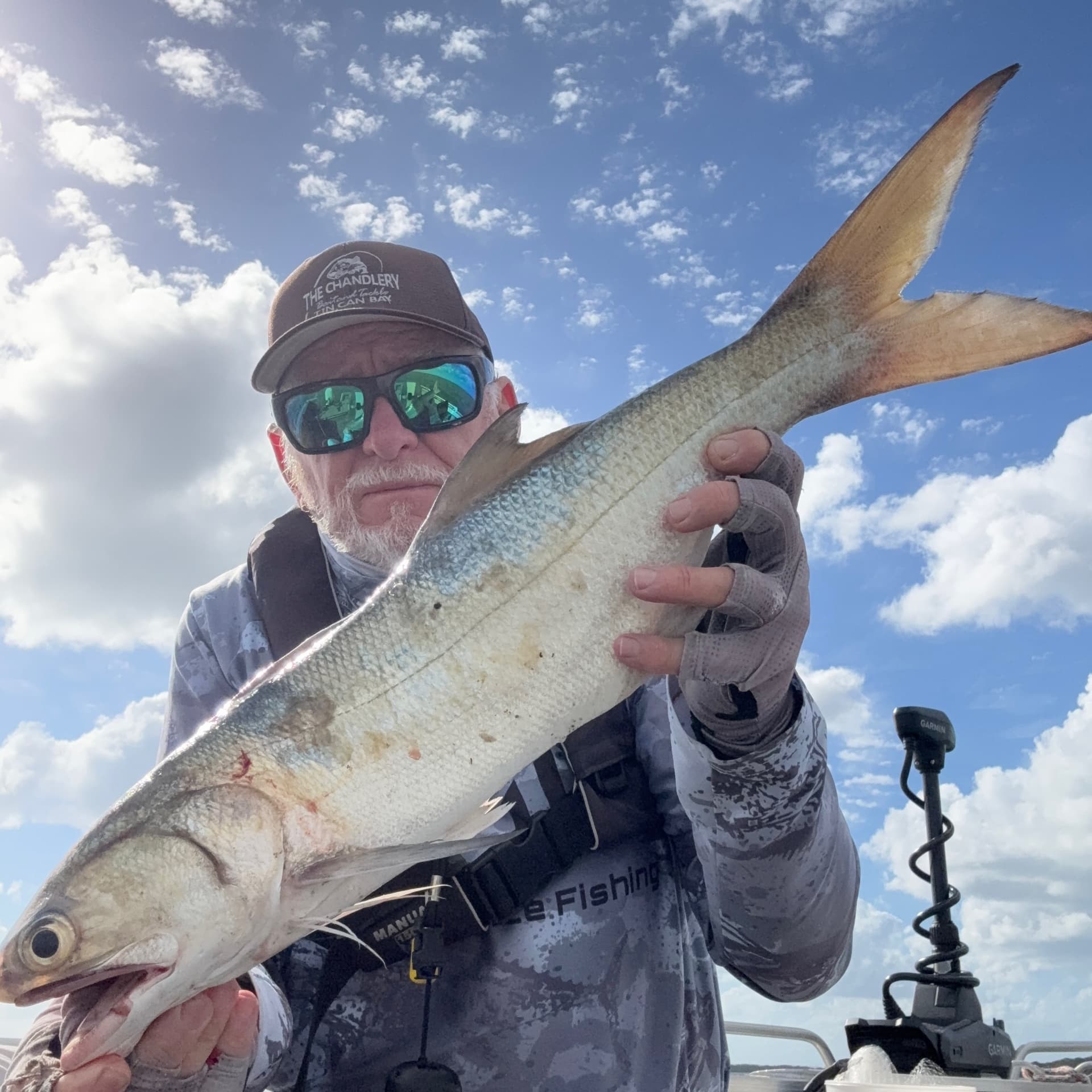
The phrase "a few tuna around" in any regional fishing report carries more weight than it earns on first read. In Coastwatch's 2 April 2026 report for Hervey Bay and K'gari (Fraser Island) waters, that line came attached to a critical qualifier: longtail tuna were "remaining highly mobile and turning up in strong numbers on some days." That second half of the sentence is the whole decision.
Coastwatch confirmed school mackerel in Platypus Bay and Spanish mackerel holding through the bay system on 2 April, both steady enough to anchor a productive inshore session without the offshore gamble. The longtail bite is a different calculation entirely, one that hinges on four conditions and an honest fuel budget.
The variables that separate a donut day from a quick limit offshore are the wind window, bait presence, surface signs, and the real distance to workable grounds. Early April on the Queensland east coast sits in the shoulder between summer humidity and the building southeast trades. A flat calm to 10-knot morning offers the window; once the SE fills above 15 knots, surface feeding shuts down and you are running home into chop with nothing in the box.
Bait is non-negotiable. The 2 April report flagged live or natural bait as directly influential for offshore success, and longtails confirm it every time. These fish chase anchovies, sardines, squid and prawns; pulling dead strip over unproductive water burns fuel and tide simultaneously. Live yakkas or slimies sourced the morning of the trip change the odds meaningfully over a dead offering.
Surface signs are the final permission slip. Longtails surface feed aggressively, and crashing terns, nervous water and spray on the horizon are your only reliable locators east of K'gari. No bird activity and no slicks in the first 45 minutes means move or abort. The fish are highly mobile, and without visible bait-school disturbance, there is no logic to holding on any given mark.
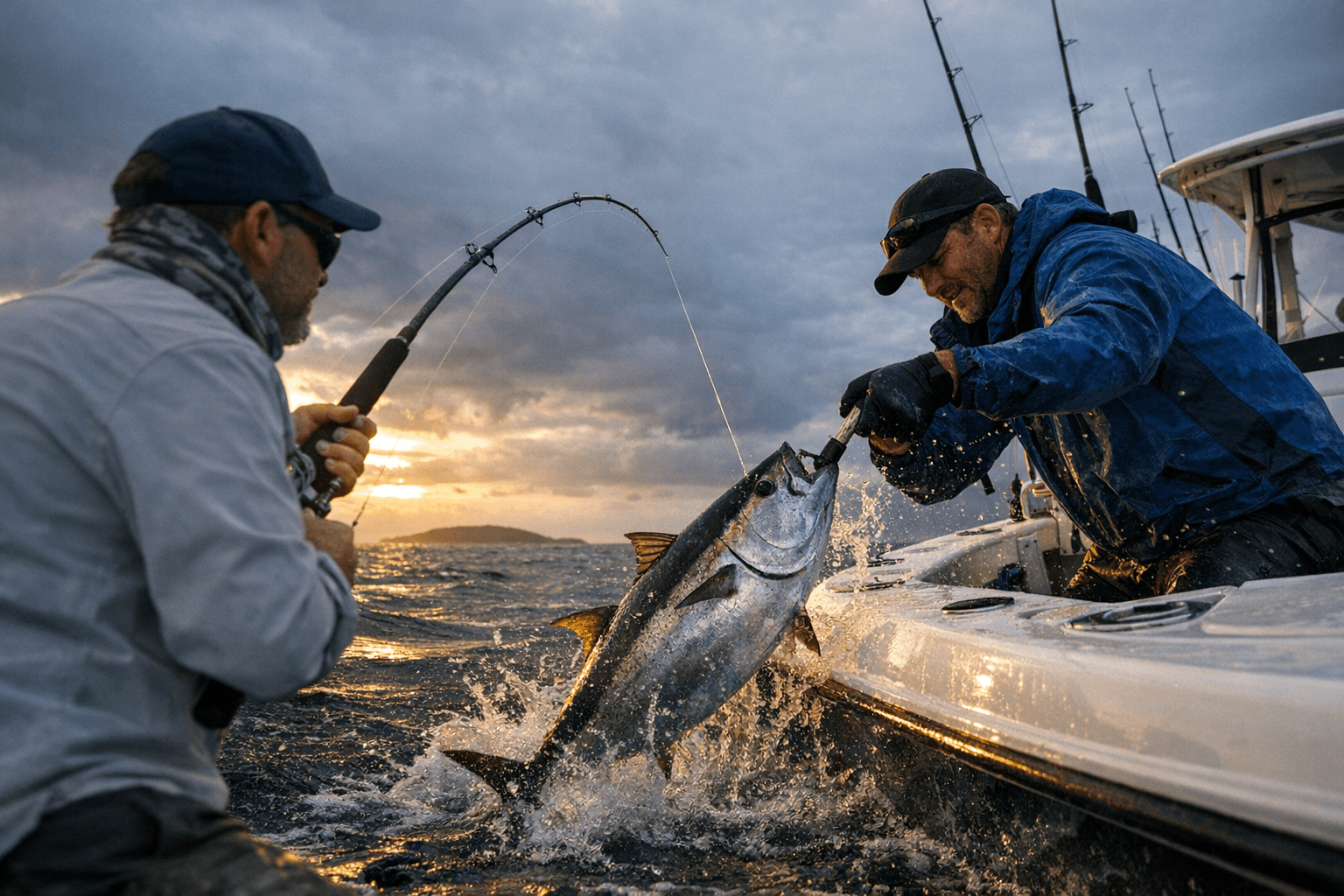
Then there is the distance, which is the detail that rarely appears in a report. A productive offshore push from the Urangan area means working ground well east of K'gari, a run that realistically sits between 40 and 60 nautical miles depending on routing and where fish are holding. At 25 knots in a seaworthy 7 to 8 metre centre console, that is 90 minutes to two hours each way and a round-trip fuel burn of 150 to 200-plus litres before you've wet a line. The Coastwatch report's reference to "wider boats" finding fish is not incidental; it reflects both the distance required and the conditions encountered once you clear the shelter of the island.
The go/no-go decision for Hervey Bay and K'gari anglers in early April comes down to this: commit to the run if forecast winds are under 15 knots, swell is below 1.5 metres, you have a confirmed four-hour weather window before the SE builds, and you are leaving the ramp on live bait with enough fuel for the full circuit. Stay inshore if wind is already up at first light, swell is above 1.5 metres, or you have no live bait and no surface sign from boats out ahead of you. The school mackerel in Platypus Bay will still be there.
Inshore reefs are producing well alongside the mackerel action, with grassy sweetlip leading, and cod, coral trout and mixed reef species also featuring when conditions allow. For straits anglers, threadfin salmon, blue salmon and grunter are coming reliably from deeper channels and current lines. None of it requires a 200-litre commitment.
The longtails are genuinely present right now. On a right-forecast morning with live bait on deck and birds working at first light, the offshore bite can deliver exactly what the report hints at. The fuel question is simply whether this particular morning is that day.
This article was produced by Prism’s automated news system from verified source data, official records, and press releases, then run through automated quality and moderation checks before publishing. The system is built and supervised by the people who set the standards it runs under. Read our full AI policy.
Did this article answer your question?